
What the Three Categories Actually Mean
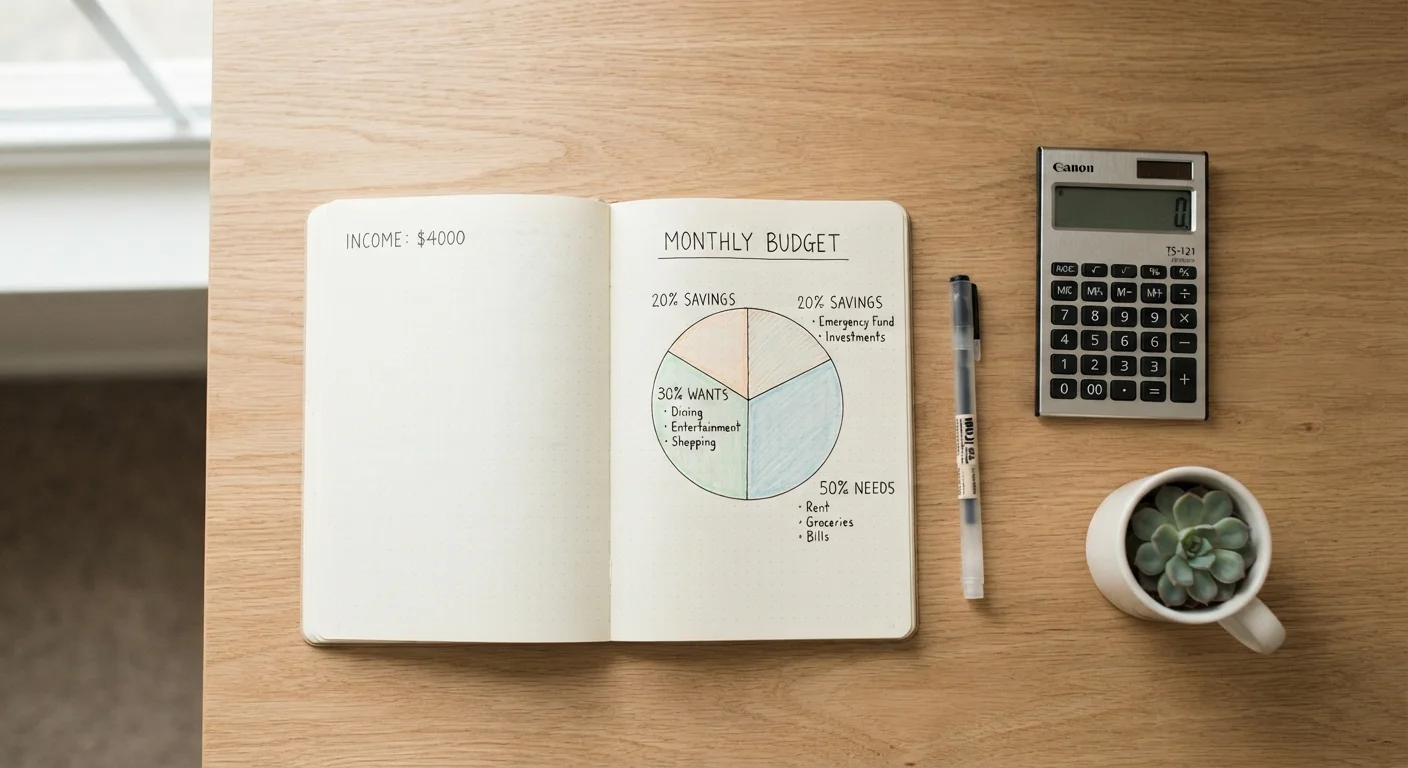
Understanding the 50/30/20 rule starts with getting precise about what belongs in each bucket. The labels - needs, wants, savings - sound obvious, but the details matter.
50%: Needs
Needs are expenses you cannot reasonably avoid without disrupting your ability to work or live safely. This includes rent or mortgage payments, utility bills, groceries, health insurance premiums, minimum loan payments, and basic transportation to get to work. The key test: would skipping this payment create an immediate, serious problem?
Notice what's not included: a streaming subscription, a gym membership, or restaurant meals. Even if you pay them every month without thinking, recurring expenses that provide comfort rather than necessity belong in wants. The distinction isn't always comfortable, but it's clarifying. For a deeper look at how expenses get sorted, our guide to fixed, variable, and discretionary spending covers the underlying categories in detail.
30%: Wants
Wants cover everything that improves your quality of life but isn't strictly required. Dining out, entertainment subscriptions, travel, hobby supplies, clothing beyond the basics, and upgrades (a newer phone when the current one works fine) all live here. This category isn't about guilt - it's about awareness. Knowing that 30% is the guideline helps you make intentional choices rather than spending passively.
20%: Savings and Debt Repayment
This category does double duty. It covers contributions to an emergency fund, retirement accounts, and other savings goals - as well as any extra payments on debt beyond required minimums. The logic is that both saving and accelerated debt paydown improve your net financial position. Our breakdown of how 50/30/20 handles saving explores the savings side in more depth.
Use After-Tax Income, Not Your Salary
A common mistake is plugging in your gross salary rather than your actual take-home pay. Using gross income makes the numbers look more flexible than they really are. Always start with the amount that hits your bank account after taxes, insurance premiums, and retirement contributions are deducted from each paycheck.
How to Apply It to Your Own Income
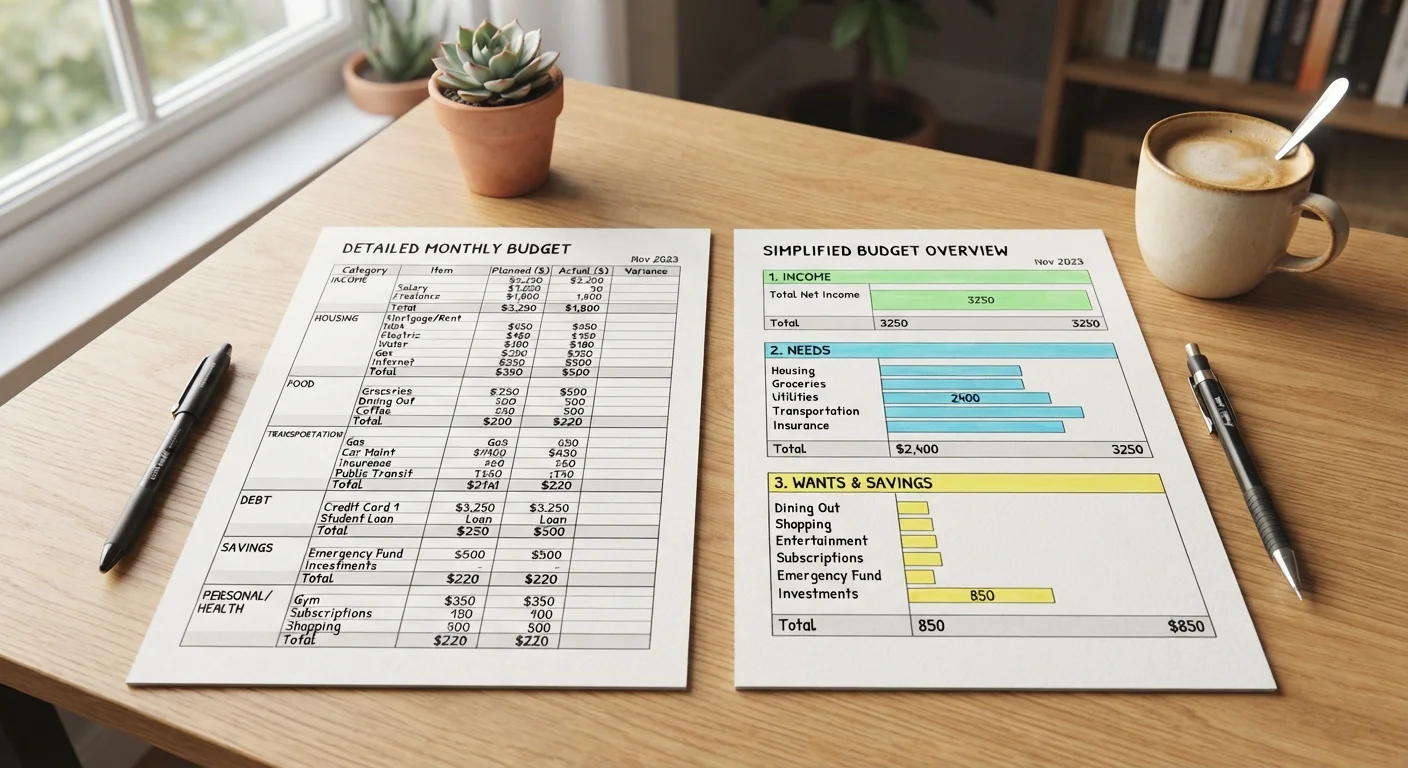
Applying the rule takes three steps: find your baseline, sort your current spending, and compare.
- Start with take-home pay. Add up your actual monthly income after taxes and payroll deductions. If your income varies month to month, use a conservative average from the past three to six months.
- Multiply by each percentage. Take-home pay × 0.50 gives your needs ceiling. Multiply by 0.30 for your wants allowance. Multiply by 0.20 for your savings and debt target.
- Sort your current spending. Pull three months of bank and credit card statements and categorize each expense. Don't judge yet - just sort. Then compare your actual category totals to the guideline amounts.
The comparison usually reveals something useful: perhaps housing is consuming 40% of income on its own, or wants are running double the 30% guideline. Either finding tells you where to focus - and where you have room to breathe.
50%
Maximum recommended spending on needs
The 50/30/20 framework designates no more than half of after-tax income for essential expenses like housing, food, and utilities.
1 in 3
Americans with no formal budget
Surveys by the National Foundation for Credit Counseling have consistently found that a significant share of U.S. adults do not follow any structured budget.
20%
Income target for savings and debt paydown
Financial educators broadly recommend saving at least 15-20% of income, a range the 50/30/20 rule encodes as its savings floor.
Once you have a handle on your spending picture, a monthly budget checklist can help you turn that snapshot into an ongoing system.
When the Rule Works Well - and When It Doesn't
The 50/30/20 rule is a strong entry point for people who have never used a formal budget. Its categories are broad enough to be manageable without requiring a spreadsheet for every coffee purchase. It also provides a natural check on lifestyle inflation: if wants are expanding, the 30% ceiling makes that visible.
That said, the framework has real limitations. In high-cost cities, housing alone can consume more than 50% of a median income, leaving no room to hit the needs target without adjusting the entire model. People with very low incomes may find that necessities consume everything, making the wants and savings categories theoretical. And high earners may find 20% savings to be far below what their goals actually require.
The Framework Is a Starting Point
The 50/30/20 percentages were designed for a broad audience and average conditions. They are not optimized for every income level, cost-of-living situation, or financial goal. Think of the rule as a default setting you can - and often should - adjust. What matters most is that you have a clear view of where money is going and whether that allocation lines up with your priorities.
The 50/30/20 rule also pairs naturally with other approaches. For example, it can serve as the outer structure while the pay-yourself-first principle handles the mechanics of the 20% - automating savings before anything else gets spent. And for those who want more precision than broad categories allow, zero-based budgeting offers a more granular alternative worth understanding.
“A good budget isn't about perfection - it's about knowing your numbers well enough to make real choices.”
— Elizabeth Warren, U.S. Senator and co-author of All Your Worth, the book that popularized the 50/30/20 framework
The bottom line: the rule's value is not in hitting exactly 50/30/20 every month. It's in having a clear, consistent framework for thinking about where money goes - and whether that picture reflects your actual priorities.
This article is for general informational and educational purposes only and does not constitute personalized financial advice. For guidance specific to your financial situation, consider consulting a qualified financial professional.