How Each Method Actually Works
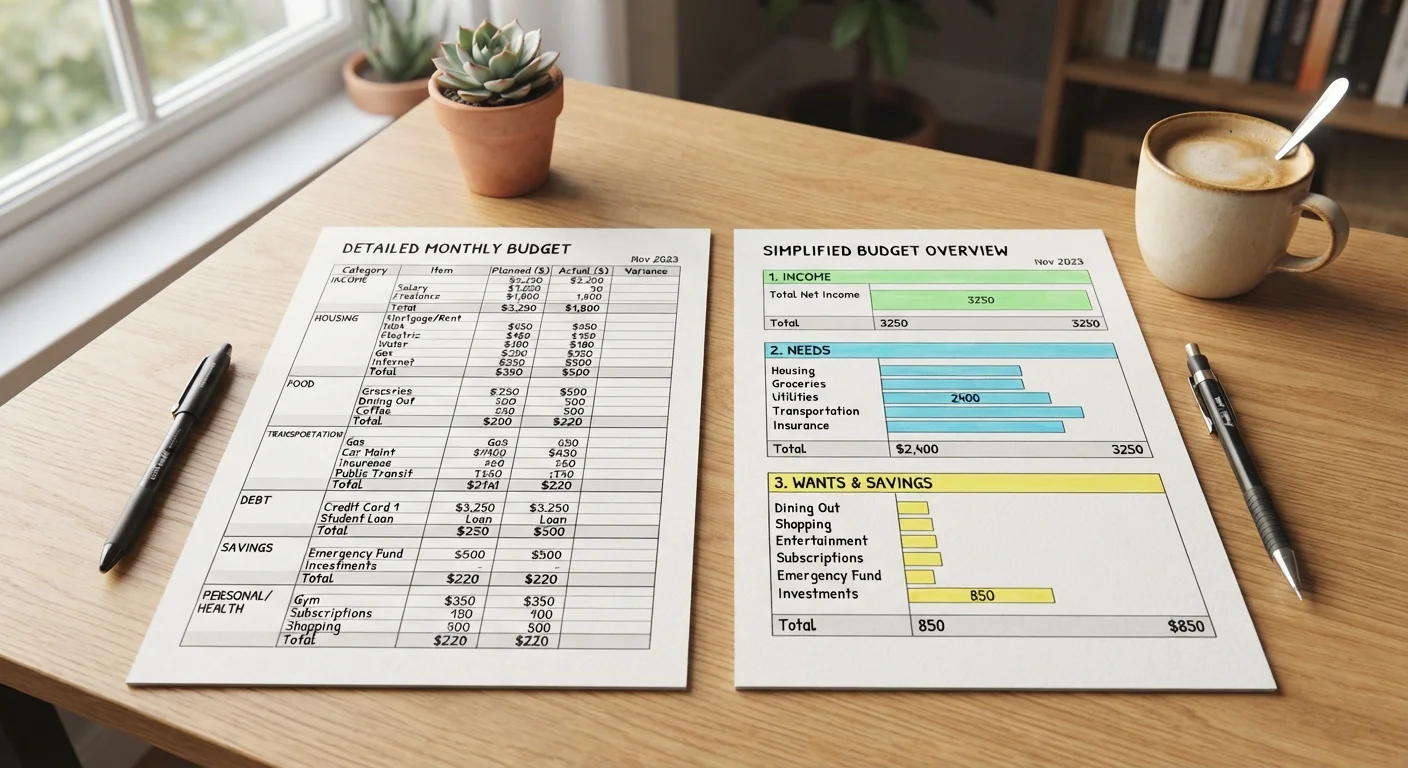
Zero-based budgeting starts with your total monthly income and requires you to allocate every single dollar until the remaining balance is zero. That doesn't mean spending everything - savings, debt payments, and investments count as allocations too. The idea is that no dollar is left unassigned and therefore unaccounted for. You typically rebuild this plan from scratch each month, which gives you a fresh look at your priorities but also requires consistent effort.
The 50/30/20 rule, popularized as a straightforward framework in personal finance circles, divides your after-tax income into three broad categories: roughly 50% toward needs (rent, utilities, groceries), 30% toward wants (dining out, subscriptions, entertainment), and 20% toward savings or debt repayment. Learn exactly what each category means and when the rule tends to work well. Rather than itemizing every expense, you're working within percentage boundaries - a looser structure that trades precision for simplicity.
Understanding how your spending already breaks down helps with both methods. Knowing the difference between fixed costs, variable costs, and discretionary spending is a useful foundation - see the field guide to fixed, variable, and discretionary spending for clear definitions and examples.
| Criterion | Zero-Based Budgeting | The 50/30/20 Rule |
|---|---|---|
| Core mechanic | Assign every dollar a job | Split income into three percentages |
| Setup time | Higher - detailed line items needed | Lower - three categories only |
| Ongoing effort | Regular tracking and adjustments | Periodic check-ins on proportions |
| Best income type | Variable or irregular income | Stable, predictable income |
| Flexibility | High within categories, requires reallocation | High within each bucket, less granular |
| Savings visibility | Explicit - savings is a named allocation | Built-in - 20% target is a fixed rule |
| Learning curve | Steeper for first-time budgeters | Gentle - easy to understand quickly |
Time Investment and Ongoing Effort
Zero-based budgeting is more labor-intensive by design. Because you're assigning amounts to specific categories - groceries, gas, clothing, pet care, and so on - you need a reasonably complete picture of your anticipated spending before the month begins. Mid-month adjustments are common and expected: if one category runs short, you pull from another. This flexibility is a strength, but it requires you to stay engaged.
The 50/30/20 rule asks less of you on a day-to-day basis. Once you calculate your after-tax income and know your approximate category targets, the main task is periodically checking whether your actual spending is tracking close to those proportions. It's a workable system for someone who wants guardrails without a detailed map. The tradeoff is less visibility into where money quietly disappears within, say, the 30% wants category.
~74%
Americans living paycheck to paycheck
A 2023 LendingClub report found that roughly three in four Americans reported living paycheck to paycheck, underscoring the widespread need for accessible budgeting frameworks.
1 in 3
Adults with no written budget
Gallup polling has consistently found that a significant share of American adults do not follow any formal or written household budget.
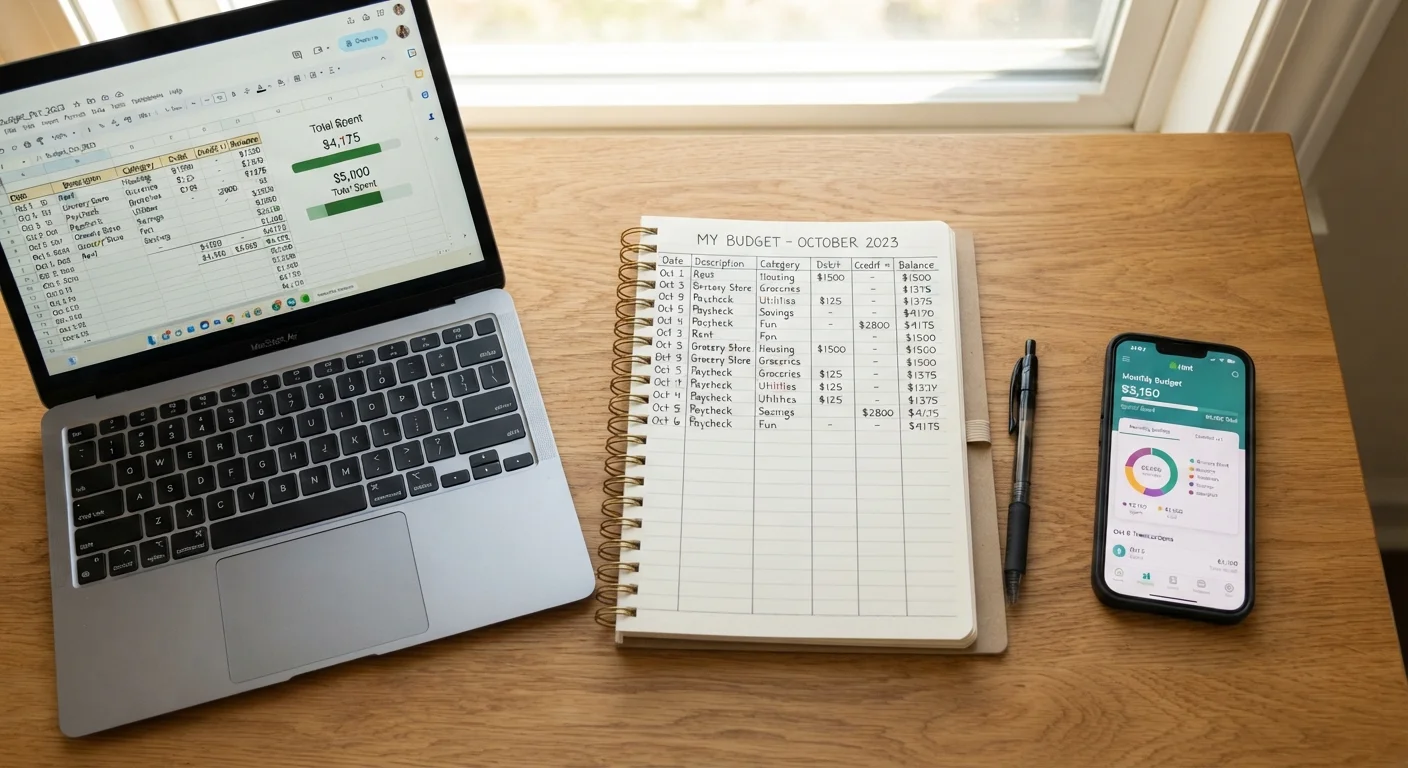
If you're deciding which tool - a notebook, spreadsheet, or app - fits your chosen method, the comparison of pen-and-paper, spreadsheet, and budgeting app approaches covers the practical tradeoffs of each format.
Which Situations Each Method Handles Better
Zero-based budgeting tends to perform better when income varies month to month - freelancers, hourly workers, and anyone with commission-based pay can rebuild their plan around what they actually bring home rather than a fixed percentage of an assumed number. It's also useful for people working through debt, since the process of assigning every dollar often surfaces spending that can be redirected.
The 50/30/20 rule is well-suited to people with predictable, salaried income who simply want a framework to prevent overspending without a detailed accounting process. It's also a reasonable starting point before graduating to something more structured. See how the 50/30/20 rule specifically handles savings allocations within its structure.
Neither Method Requires Perfection
A budget that you actually use - even imperfectly - is more valuable than a theoretically ideal system you abandon after two weeks. Both zero-based budgeting and the 50/30/20 rule are frameworks, not rigid rules. Many people start with the 50/30/20 rule for simplicity, then shift toward zero-based budgeting once they want more control. Mixing elements of both to fit your life is a reasonable approach, and no formal system requires you to follow it exactly as described.
Whichever method you choose, connecting it to concrete goals - an emergency fund, a vacation, a down payment - tends to improve follow-through. The Saving & Goals hub covers practical concepts for building savings across different time horizons. When you're ready to put either method into practice, the monthly budget setup checklist walks through every step from gathering income figures to scheduling a regular review.
This article is for general informational and educational purposes only and does not constitute personalized financial advice. Please consult a qualified financial professional for guidance specific to your situation.