How the Three Categories Work
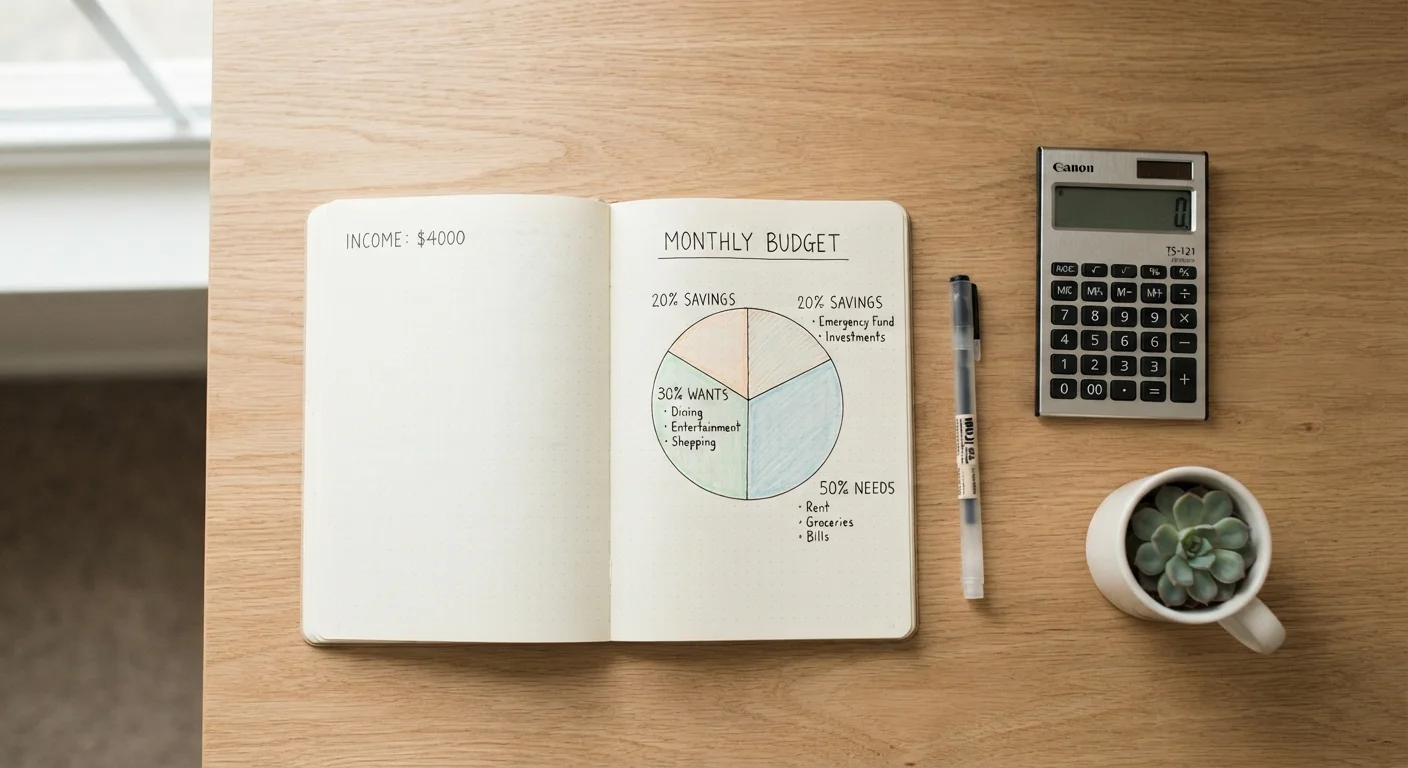
The 50/30/20 rule organizes spending into three broad buckets, each drawing from your monthly after-tax income. Understanding what goes into each category is the first step toward applying it.
50% - Needs
Needs are the non-negotiable expenses required to maintain a basic standard of living. This includes rent or mortgage payments, utility bills, groceries, basic clothing, health insurance premiums, minimum loan payments, and essential transportation costs. The defining test: if skipping the expense would meaningfully harm your health, housing, or employment, it likely qualifies as a need.
30% - Wants
Wants cover everything that improves quality of life but isn't strictly essential. Streaming services, restaurant meals, gym memberships, vacations, and hobby spending fall here. The line between needs and wants can blur - a phone plan is a need, but a premium data tier may be a want. The framework encourages honest self-assessment rather than rigid categorization.
20% - Savings and Debt Repayment
The final 20% is directed toward building financial security. This includes contributions to an emergency fund, retirement accounts (such as a 401(k) or IRA), other investment or savings accounts, and any debt payments beyond required minimums. This category is where the framework most directly serves long-term financial health.
The Rule Uses After-Tax Income
A common point of confusion is whether to apply the percentages to gross or net income. The 50/30/20 framework is designed around take-home pay - the amount deposited into your account after taxes and pre-tax deductions (like employer-sponsored health insurance) are removed. Applying it to gross income overstates what's actually available to allocate.
The Role of Savings Within the Framework
One of the rule's clearest contributions is that it treats saving as a structured obligation rather than a leftover activity. By allocating a fixed 20% before discretionary spending crowds it out, the framework nudges users toward consistency.
Within that 20%, the order of priorities often matters. Many financial educators suggest building a basic emergency fund first, then directing funds toward high-interest debt, then retirement contributions - though the right sequence depends on individual circumstances. Consulting a qualified financial adviser can help you determine the order that fits your situation.
The framework also distinguishes between short- and long-term savings goals, even if implicitly. An emergency fund is short-to-medium term; retirement savings are decades-long. The 20% bucket can hold both, but knowing which goals you're funding - and their timelines - helps determine how to allocate within the category.
Automate Your 20% First
One practical way to follow through on the savings portion of the 50/30/20 rule is to set up an automatic transfer to a savings or retirement account on payday. When savings move before you have a chance to spend, the 30% wants category naturally adjusts to what remains. This removes the willpower equation from the equation entirely.
A complementary approach is the pay-yourself-first principle, which involves directing savings contributions automatically before spending anything else. The two ideas pair well: the 50/30/20 rule defines how much to save; pay-yourself-first addresses when and how to move the money.
When the Rule Works - and When It Doesn't
The 50/30/20 rule is widely recognized for its simplicity, but it isn't universally applicable without adjustment.
57%
Americans who don't follow a formal budget
According to a Gallup survey, a majority of U.S. adults say they do not maintain a detailed household budget, underscoring the appeal of simple frameworks like the 50/30/20 rule.
~30%
Of take-home pay spent on housing alone (national median)
The U.S. Bureau of Labor Statistics Consumer Expenditure Survey shows housing consistently ranks as the largest single spending category for American households.
20%
Target savings rate under the framework
While the 20% figure is a guideline, the Federal Reserve's Survey of Consumer Finances indicates median household savings rates vary considerably by income level and age group.
When it tends to work well: For moderate-income earners in average cost-of-living areas, the percentages often align reasonably with real spending patterns. The rule is also useful as a diagnostic - if you've never budgeted before, plotting your current spending against these three categories quickly reveals where money is actually going.
Where it can fall short: In cities with high housing costs, rent alone can consume 40-50% of take-home pay, leaving almost nothing for other needs - let alone savings. Similarly, people with significant medical expenses, student loan debt, or caregiving responsibilities may find the needs bucket overflows the 50% ceiling regardless of their habits.
The rule also doesn't offer guidance on which savings vehicles to use - it simply identifies how much to set aside. Decisions about where to place that 20% (taxable brokerage, 401(k), high-yield savings account, etc.) require more tailored thinking and, for many, professional input.
For a deeper look at building a complete budget around this structure, the monthly budget setup checklist walks through the practical steps from income gathering to monthly review. You can also explore other budgeting frameworks to find the approach that fits your situation.
This article is for general informational and educational purposes only and does not constitute personalized financial, tax, investment, or legal advice. Consider speaking with a qualified financial professional before making decisions about your own financial situation.