
Where the Phrase Comes From - and What It Really Means
The phrase "pay yourself first" has been a staple of personal finance advice for decades. At its core, it reframes how you think about saving: instead of spending your paycheck and saving the remainder, you reserve savings at the very start - before groceries, rent payments, or a single discretionary purchase.
The logic is straightforward. Most people intend to save but find that month after month, the money is already gone by the time they think about it. Paying yourself first removes that gap between intention and action by treating savings like a non-negotiable bill.
This doesn't mean ignoring your actual bills. It means deciding in advance that a fixed portion of each paycheck belongs to your future self - and moving it before anything else gets a chance to claim it. You can learn more about the broader framework behind this approach in our article on the pay-yourself-first principle.
“The secret to getting ahead is getting started. The secret to getting started is breaking your complex, overwhelming tasks into small manageable tasks, and then starting on the first one.”
— Mark Twain, Author and essayist, widely quoted in discussions of habit formation
How It Works in a Real Budget
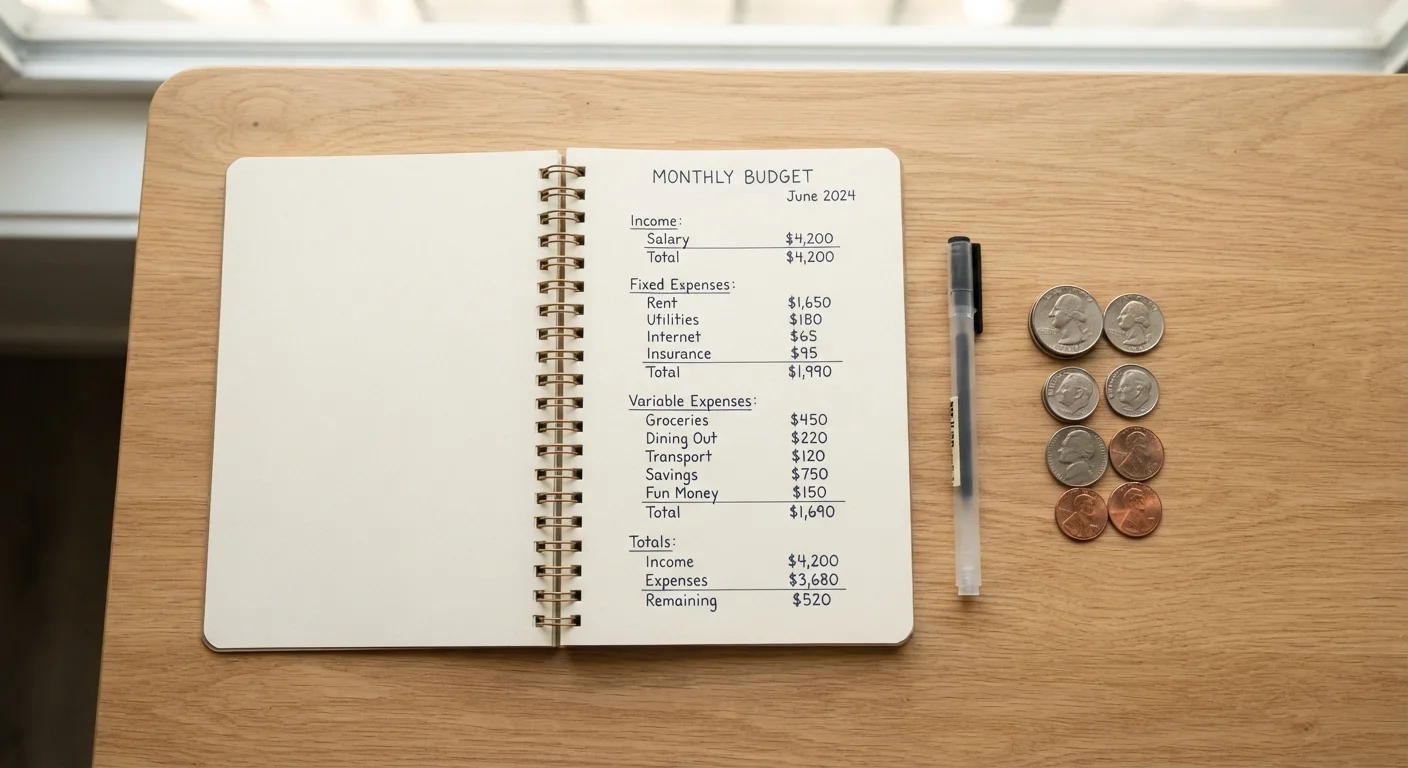
Paying yourself first doesn't exist in isolation - it fits inside a broader budget. If you're new to budgeting, it helps to first understand what a personal budget actually is before layering in a savings strategy on top.
In practice, the sequence looks like this:
- Your paycheck arrives.
- A set amount is moved to savings immediately - ideally via an automatic transfer scheduled for payday.
- The remaining balance is what you use to cover rent, utilities, food, transportation, and everything else.
The difference from traditional budgeting is in step two. Rather than funding savings last, you fund it first and then build your spending plan around what's left. For a practical starting point, building your first monthly budget from a pay stub can walk you through the mechanics.
The Trade-Offs You Should Know About
Paying yourself first works well for many people, but it comes with real considerations worth understanding before you start.
It requires accurate knowledge of your fixed expenses. If your savings transfer leaves your checking account short for rent or utilities, you could incur overdraft fees or miss a payment - both of which cost more than you saved. Before automating a savings transfer, total up your non-negotiable monthly expenses carefully. Our article on expenses people forget when building a budget is a useful checklist for this step.
A rigid approach can backfire in lean months. If your income varies - common for hourly workers, gig workers, or anyone with irregular hours - a fixed dollar transfer might be too inflexible. Using a percentage of each paycheck instead of a flat amount gives your savings habit more room to breathe.
It doesn't address the whole picture. Paying yourself first is a saving mechanism, not a complete financial plan. Debt repayment, building an emergency fund, and planning for irregular expenses all deserve attention alongside it.
Making the Habit Stick
The most reliable version of paying yourself first involves removing willpower from the equation entirely. Automating the transfer - so it happens on payday without any action on your part - is what separates people who consistently save from those who plan to but don't.
Many employers allow split direct deposits, sending a portion of your paycheck directly to a savings account. If that's not available, most banks let you schedule automatic transfers for a specific day each month. Either approach works. The goal is to make saving the default, not the decision.
Once the habit is in place, revisiting the amount periodically matters too. A fixed $25 per paycheck is a solid start, but as your income grows or your expenses shift, raising that amount - even slightly - compounds over time. Our guide to building your first savings plan from scratch covers how to turn this initial habit into a longer-term strategy with clear goals.
This article is for general informational purposes only and does not constitute personalized financial advice. For guidance tailored to your situation, consider consulting a qualified financial professional.