
How to Use This Glossary
Credit and debt come with a vocabulary of their own - and lenders, credit bureaus, and loan servicers use that vocabulary constantly. Whether you're reading a credit report for the first time or trying to decode a debt collection letter, knowing what these terms actually mean helps you ask better questions and make more informed decisions.
This glossary covers the most commonly encountered credit and debt terms, defined in plain language. It's designed as a reference you can return to - not a one-time read. For a broader introduction to how credit and debt work together, see our beginner's overview.
| Typical credit report retention for negative items | 7 years (Fair Credit Reporting Act (FCRA)) |
| Bankruptcy retention period (Chapter 7) | 10 years (Fair Credit Reporting Act (FCRA)) |
| Standard grace period on credit cards | 21-25 days (Credit CARD Act of 2009 mandates a minimum of 21 days) |
| Typical charge-off timeline | 120-180 days past due (General industry practice; varies by creditor and account type) |
| Number of major U.S. credit bureaus | 3 (Equifax, Experian, TransUnion) (Consumer Financial Protection Bureau (CFPB)) |
This article is for general informational purposes only and does not constitute financial, legal, or tax advice. For guidance specific to your situation, consult a licensed financial professional.
Core Credit Terms
These terms appear most often on credit reports, score explanations, and loan applications.
APR (Annual Percentage Rate)
The yearly cost of borrowing expressed as a percentage, including interest and certain fees. APR gives a more complete picture of borrowing cost than the interest rate alone, making it useful for comparing loan and credit card offers.
Amortization
The process of paying off a loan through scheduled, regular payments over time. Each payment covers a portion of interest and a portion of the principal - in early payments, more goes to interest; over time, more goes to principal.
Credit Utilization
The percentage of your total available revolving credit that you're currently using. For example, a $2,000 balance on a $10,000 credit limit equals 20% utilization. This ratio is a significant factor in most credit scoring models.
Hard Inquiry
A credit check initiated by a lender when you apply for new credit - such as a loan, credit card, or mortgage. Hard inquiries are recorded on your credit report and can have a small, temporary effect on your credit score.
Soft Inquiry
A credit check that does not affect your credit score. Examples include checking your own credit report, pre-qualification checks by lenders, or background checks by employers. Soft inquiries may appear on your report but are not visible to other lenders.
Derogatory Mark
Negative information on a credit report that signals past repayment problems, such as late payments, collections, charge-offs, bankruptcies, or foreclosures. Derogatory marks typically remain on a credit report for seven years.
Charge-Off
When a creditor writes off a debt as a loss after extended nonpayment - typically after 120 to 180 days past due. A charge-off does not eliminate the debt; the balance may still be collected by the original creditor or sold to a collection agency.
Debt-to-Income Ratio (DTI)
A measure of how much of your gross monthly income goes toward debt payments. Lenders use DTI to assess your capacity to take on additional debt. It is calculated by dividing total monthly debt payments by gross monthly income.
Principal
The original amount borrowed, not including interest or fees. When you make loan payments, a portion reduces the principal balance and a portion covers accrued interest.
Grace Period
A window of time - typically 21 to 25 days on credit cards - between the end of a billing cycle and the payment due date. If the full balance is paid within the grace period, no interest accrues on new purchases.
Secured vs. Unsecured Debt
Secured debt is backed by collateral - an asset the lender can claim if you default (such as a home for a mortgage or a car for an auto loan). Unsecured debt, like most credit cards and personal loans, has no collateral attached.
Collection Account
A delinquent debt that has been transferred to a collection agency, either by the original creditor or through purchase. Collection accounts appear on credit reports and can significantly lower credit scores.
Understanding how credit utilization fits into your score is a topic worth exploring separately - the ratio carries more weight than many consumers expect. Credit utilization and how it shapes your score covers the mechanics in detail.
Debt and Repayment Terms
These terms describe how debt is structured, tracked, and resolved - whether through normal repayment or more difficult circumstances.
77%
Americans with at least one credit card
According to the Federal Reserve's Report on the Economic Well-Being of U.S. Households.
7 years
How long most negative items stay on a credit report
Governed by the Fair Credit Reporting Act; bankruptcies under Chapter 7 may remain for 10 years.
~$6,000
Average U.S. credit card balance per borrower
Based on Federal Reserve Bank of New York consumer credit data; figures fluctuate over time.
If you're carrying debt across multiple accounts, understanding how payments are applied - and what happens when they're missed - can significantly affect the total cost of borrowing. Managing debt over time offers practical framing for staying on top of what you owe.
For consumers exploring ways to simplify multiple balances, the full picture on debt consolidation explains how consolidation works, what it costs, and when it may not be the right fit.
Your Credit Report vs. Your Credit Score
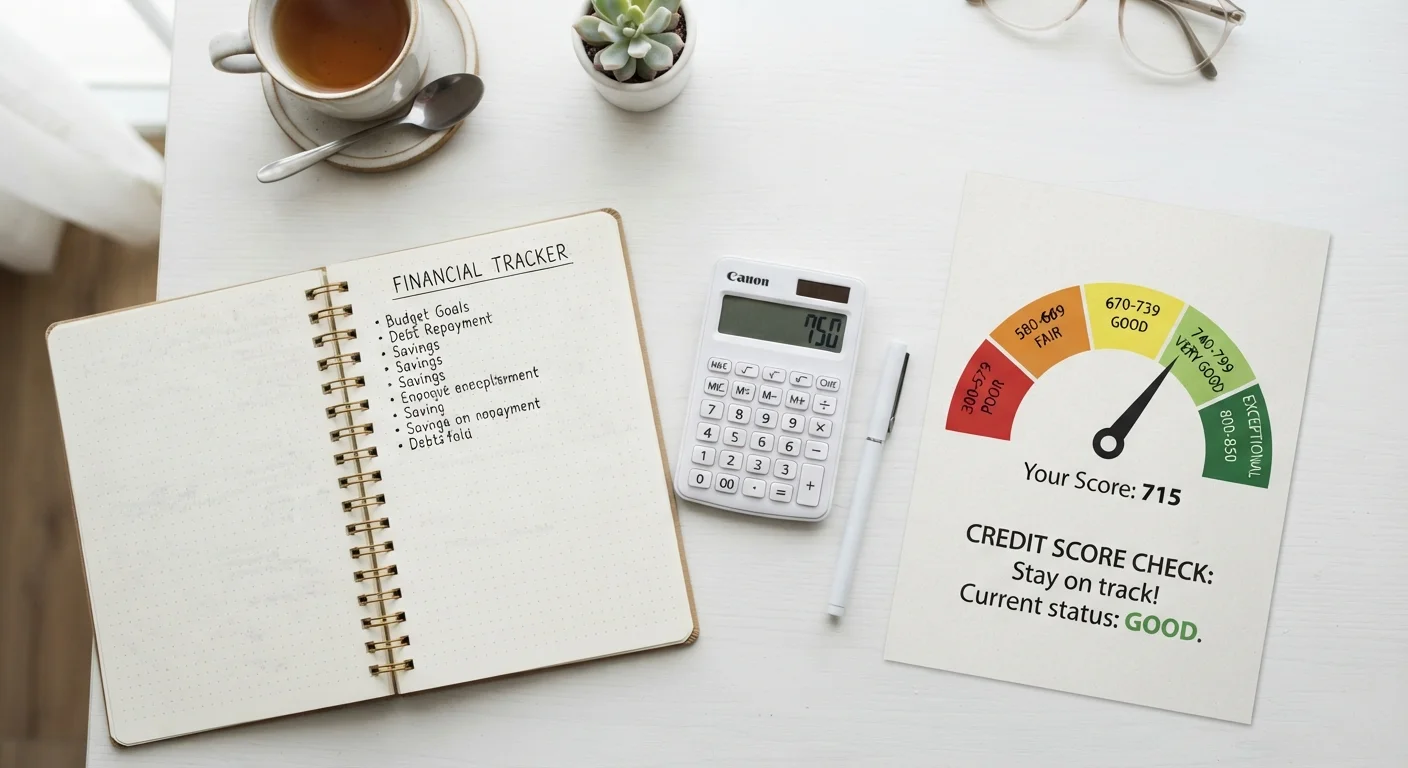
These two things are related but not the same. Your credit report is a detailed record of your credit history - accounts, payment history, inquiries, and public records - compiled by each of the three major bureaus. Your credit score is a numerical summary calculated from that report using a scoring model such as FICO or VantageScore. Errors on your report can affect your score, which is why reviewing your report periodically is worth doing. You can request free reports at AnnualCreditReport.com, the official site authorized under federal law.