What a Credit Score Actually Represents
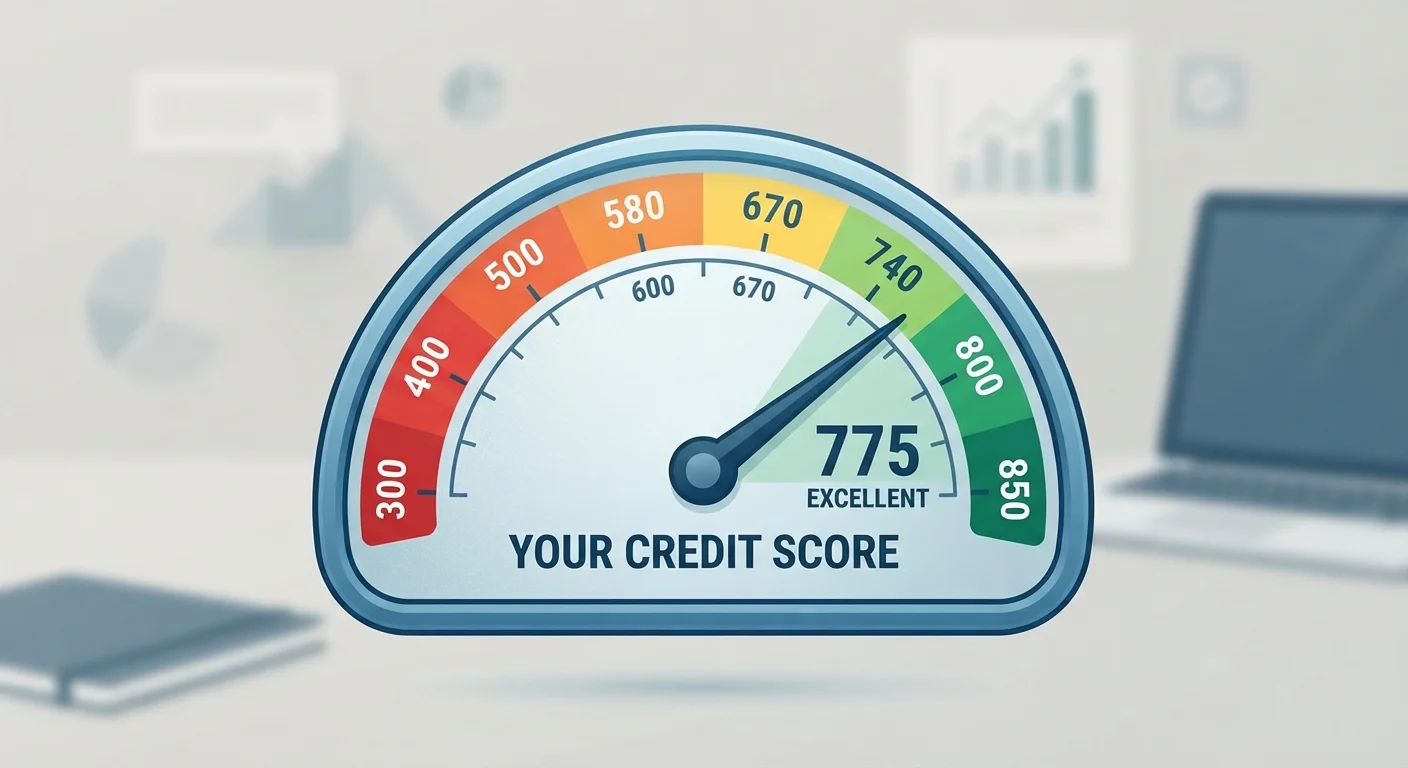
Think of a credit score as a compressed translation of your credit history into a single number. It does not reflect how much money you earn, how much you have saved, or your overall financial health. What it measures is narrower and more specific: the patterns in how you have borrowed and repaid money over time.
That underlying history lives in your credit report - a detailed record maintained by the three major credit bureaus (Equifax, Experian, and TransUnion). A scoring model reads that report and outputs a number. Understanding the difference between those two documents matters more than most people realize. See our explainer on credit reports vs. credit scores for a full comparison of how the two relate.
The score itself is a risk prediction tool. It estimates the statistical likelihood that someone will miss a significant payment within the next 24 months. A lower number suggests higher predicted risk; a higher number suggests lower risk. Lenders use this estimate to make faster decisions across thousands of applicants.
“A credit score is not a judgment of character - it is a statistical estimate of behavior based on the data available at a given moment.”
— Consumer Financial Protection Bureau, U.S. federal consumer finance regulatory agency
How the Number Is Calculated
While every scoring model has its own formula, most major models weight five broad categories of credit behavior. Payment history - whether you pay on time - typically carries the largest share, often around 35% in widely used models. The amounts you owe relative to your available credit (known as credit utilization) usually comes next. Credit utilization deserves its own attention: even small balance changes can ripple through your score more quickly than most people expect.
The remaining weight is split among three other factors: the length of your credit history, the mix of account types you carry (credit cards, installment loans, etc.), and new credit inquiries - meaning recent applications for additional credit.
~35%
Weight of payment history in FICO scoring
Payment history is consistently the largest single factor in widely used credit scoring models, reflecting the emphasis lenders place on on-time repayment.
300-850
Standard score range for most major models
Both FICO and VantageScore use this range, though specialized industry scoring versions may use wider scales such as 250-900.
3
Major U.S. credit bureaus maintaining reports
Equifax, Experian, and TransUnion each maintain separate credit files, which means your score may differ slightly across bureaus if your account data varies.
One important nuance: scoring models do not have access to your income, employment status, bank balances, or assets. Those factors may matter to a lender's broader underwriting process, but they are absent from the score itself.
Why Multiple Scores Exist
Most consumers are surprised to learn they have dozens of credit scores, not one. Two major scoring companies - FICO and VantageScore - each release multiple versions of their models, and lenders do not all use the same version. A mortgage lender may pull a FICO model optimized for home lending, while an auto dealer pulls one calibrated for car loans. The underlying data is the same; the weighting differs.
This also means the score you see through a free consumer tool may not match the one a lender pulls. The gap is usually small, but it exists. Rather than fixating on a precise number, most financial educators suggest focusing on the behaviors that improve scores across all models: paying on time, keeping balances manageable, and avoiding unnecessary new credit applications in a short window.
Focus on Behaviors, Not the Exact Number
Because different models produce different scores, it is more productive to focus on consistent, score-positive habits - paying on time, keeping credit card balances low relative to limits, and applying for new credit sparingly. These behaviors tend to move all major scoring models in a positive direction over time.
If you want to understand what is actually inside the report that generates your score, a field-by-field breakdown of a credit report can show you exactly what lenders see and how they interpret it.
What the Score Cannot Tell You
A credit score is a useful but limited tool. It cannot tell a lender whether you can afford a payment - only whether you have historically made payments. It has no way to account for a job loss that happened last month, an unexpected medical expense, or any life event not yet reflected in reported account activity.
It also cannot capture context. Two people with identical scores may have arrived there through very different paths, and their actual financial situations may be worlds apart. If you are new to credit and want a broader foundation before diving deeper, this beginner's guide to credit and debt covers the core concepts without assuming prior knowledge.
This article is for general informational and educational purposes only and does not constitute personalized financial or credit advice. For guidance specific to your situation, consider consulting a licensed financial professional.