
What Each Entry Permit Actually Means
A tourist visa (pre-arranged) is an official authorization you obtain before departing the United States. You apply through the destination country's embassy, consulate, or an official government portal, submitting documents such as a completed application form, passport photos, proof of travel plans, and a fee. Once approved, the visa is either stamped into your passport or issued as an electronic document, and you present it upon arrival.
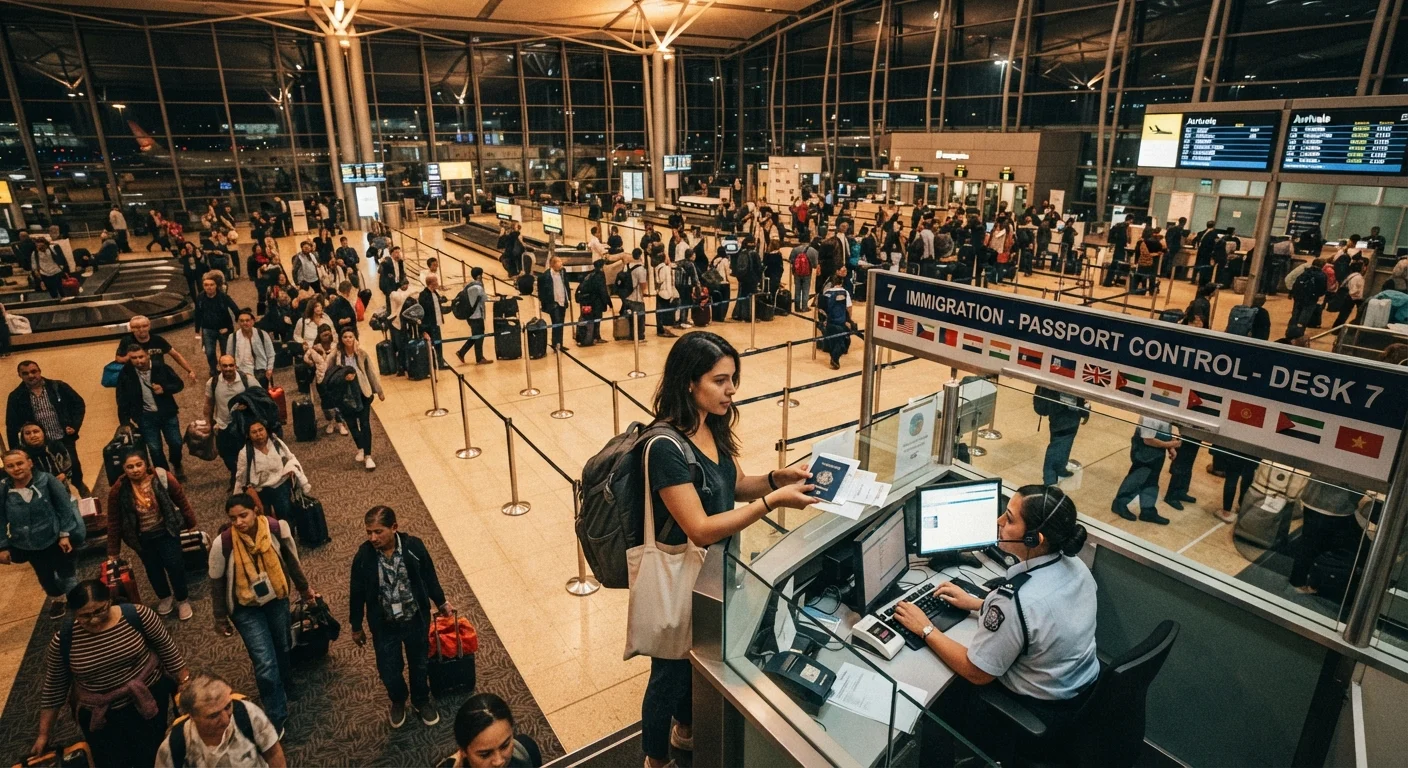
A visa on arrival, by contrast, is issued at the destination's airport, seaport, or land border crossing after you land. Eligible travelers queue at a designated counter, present their passport, fill out a short form, pay a fee (if applicable), and receive a stamp or sticker that authorizes their stay. The process happens in the country itself - no embassy appointment required in advance.
Both are legitimate forms of entry authorization, but they differ fundamentally in timing, process, and who qualifies. For a broader look at all the documentation involved in international travel, see our full-scope international trip planning reference.
| Criterion | Tourist Visa (Pre-Arranged) | Visa on Arrival |
|---|---|---|
| When obtained | Before departure, from embassy/consulate | Upon arrival at port of entry |
| Application method | Embassy, consulate, or official portal | On-site counter at border/airport |
| Processing time | Days to several weeks | Minutes to ~1 hour on arrival |
| Advance planning required | Yes - significant lead time needed | Minimal - just bring required documents |
| Eligibility basis | Country-specific rules; most nationalities can apply | Bilateral agreements; not all passports qualify |
| Typical stay duration | 15-90 days (varies by country) | 15-90 days (varies by country) |
| Fee payment | Paid during application (online or in person) | Paid on arrival (cash often required) |
| Risk of denial timing | Before travel - allows time to appeal or reapply | At the border - may result in same-day return |
Eligibility, Timing, and What Can Go Wrong
Eligibility for a visa on arrival is governed by agreements between countries, and these arrangements change. As a US passport holder you currently enjoy visa-on-arrival or visa-free access to a significant number of destinations - but that list is not universal. Some countries that previously offered on-arrival access have shifted to an electronic authorization system (sometimes called an eVisa or eTA), which is still applied for in advance online but processed faster than a traditional consular application.
Pre-arranged tourist visas carry their own timing risks. Processing windows vary widely: some countries turn applications around in three to five business days, while others routinely take four to six weeks or longer. Applying too close to your departure date is one of the most avoidable travel mistakes Americans make. Our article on international travel planning for Americans covers passport validity rules and other logistical details that interact with your visa timeline.
eVisas: A Third Category Worth Knowing
A growing number of countries - including India, Sri Lanka, and Kenya - have replaced traditional on-arrival stamps with an electronic visa (eVisa) system. An eVisa is applied for online before travel but processed faster and more conveniently than a standard consular application. It's not quite a tourist visa and not quite a visa on arrival, so check whether your destination uses this model - it requires advance action even if it feels like an on-arrival process.
What can derail either option? For pre-arranged visas: incomplete applications, passport validity that doesn't meet the destination's minimum requirement (often six months beyond your travel dates), or applying too late. For visas on arrival: arriving at a crossing that doesn't offer the service, carrying an ineligible passport, or not having sufficient cash for the fee (some counters don't accept cards).
186
Countries accessible to US passport holders
According to the Henley Passport Index, US passport holders can access around 186 destinations with visa-free or visa-on-arrival entry as of recent rankings, though this figure shifts with policy changes.
6 months
Passport validity many countries require
A common entry requirement at many destinations is that your passport must remain valid for at least six months beyond your planned departure date - a rule that catches many travelers off guard.
4-6 weeks
Typical processing window for some tourist visas
Several popular destinations, including certain Asian and African nations, may take four to six weeks or more to process standard tourist visa applications during peak periods.
How to Confirm What You Actually Need
Entry requirements are set by sovereign governments and can shift with little public notice - a policy that was accurate when you booked a trip may have changed by the time you fly. There is no substitute for checking official sources close to your departure date.
Start with the U.S. Department of State's country information pages (travel.state.gov), which summarize entry requirements for US citizens by destination. Cross-reference with the destination country's official embassy website for the most authoritative application instructions and fee schedules. If you're traveling as part of a group or handling someone else's paperwork, verify whether each traveler's specific passport triggers different requirements.
A few practical checkpoints before you fly:
- Confirm your passport has enough blank pages - some countries require at least one or two full pages for stamps.
- Check whether your destination has transitioned from a visa on arrival to an eVisa system, which still requires advance action.
- Budget for on-arrival fees in local currency or USD cash, as card acceptance varies by location.
- Print or download copies of any pre-approved visa documentation in case your phone battery or connectivity fails at the border.
Understanding entry requirements is just one piece of international logistics. If you're weighing a domestic trip instead, our end-to-end US domestic travel guide covers what that planning process looks like on the home side of the border.
This article provides general travel information only. Entry requirements, fees, and eligibility rules change frequently. Always verify current requirements with official government sources and the destination country's embassy or consulate before traveling.