
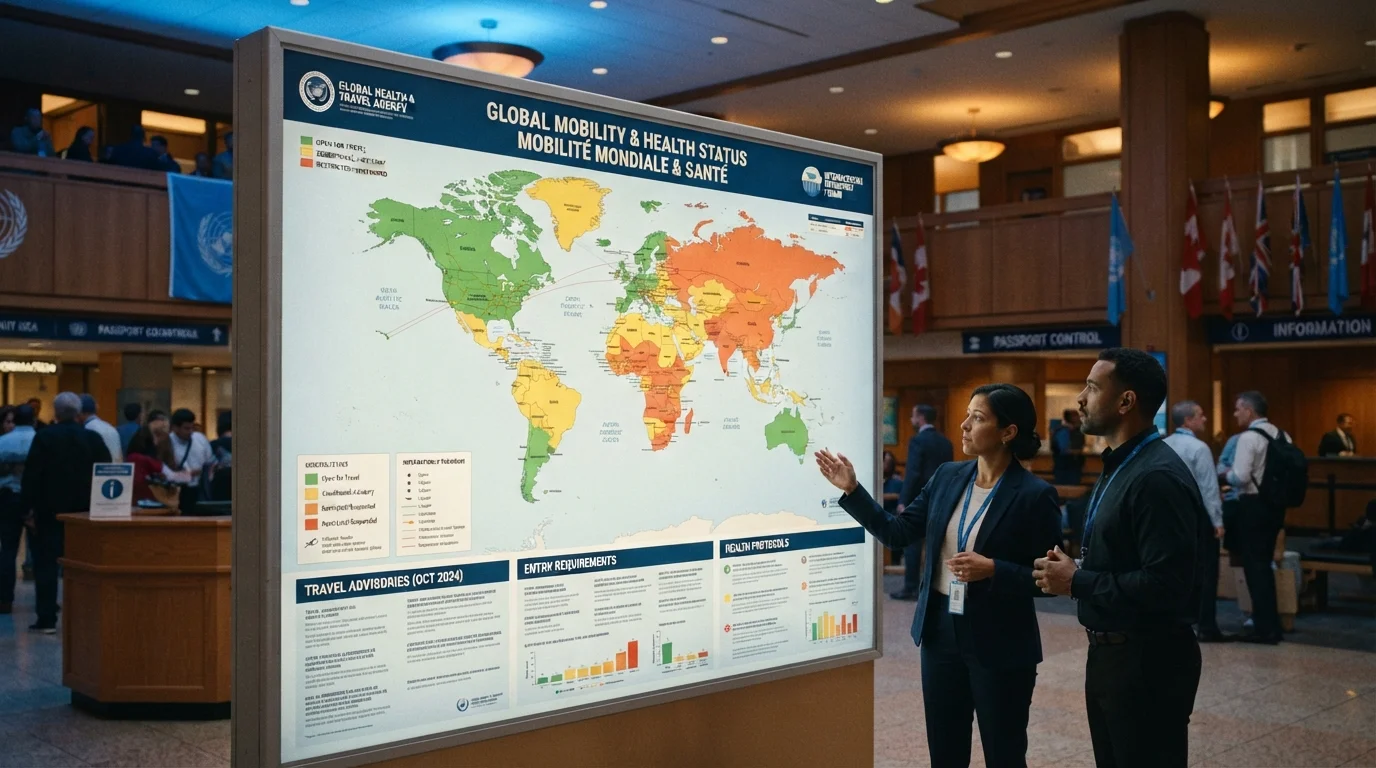
The Four Advisory Levels at a Glance
Before booking an international trip, checking the U.S. Department of State's travel advisory for your destination is one of the smartest moves you can make. The system is straightforward: every country in the world receives one of four numbered levels, each signaling a different degree of caution. Understanding what those levels actually represent - and what they don't - helps you make informed decisions rather than relying on word-of-mouth or outdated assumptions.
| Issuing Agency | U.S. Department of State, Bureau of Consular Affairs |
| Number of Advisory Levels | 4 (Level 1 through Level 4) |
| Countries Assessed | Every country in the world |
| Where to Check Advisories | travel.state.gov |
| Update Frequency | Rolling - updated as conditions change |
| Enrollment Program for Travelers | Smart Traveler Enrollment Program (STEP) (U.S. Department of State) |
For a broader overview of international trip logistics, see the International Trip Planning reference, which covers everything from passport rules to entry requirements.
What Each Level Signals
Level 1 - Exercise Normal Precautions
This is the lowest advisory level and indicates that the State Department has identified no unusual security concerns. It does not mean the destination is risk-free - every country carries some inherent risk - but it signals that conditions are comparable to what a traveler might expect in a generally safe international environment. Most Western European nations typically fall here.
Level 2 - Exercise Increased Caution
At this level, the State Department has identified specific risks - such as elevated crime, civil unrest, terrorism, or health concerns - that are worth noting but don't rise to a category that would deter most travel. Travelers are encouraged to be more alert, review the specific advisory details, and consider how those risks apply to their itinerary.
Level 3 - Reconsider Travel
A Level 3 designation is a meaningful caution. It reflects serious and ongoing risks - political instability, significant crime, armed conflict in certain areas, or other factors that could directly affect traveler safety. The State Department recommends reconsidering whether the trip is necessary, and if traveling anyway, taking heightened precautions and registering with the Smart Traveler Enrollment Program (STEP).
Level 4 - Do Not Travel
This is the most severe designation, reserved for countries experiencing active armed conflict, extreme danger, or situations where the U.S. government has limited ability to assist citizens. The State Department strongly advises against all travel. U.S. embassies in Level 4 countries may have restricted operations or be closed entirely.
Travel Advisory
An official government assessment of the safety conditions in a foreign country, issued to inform citizens considering travel there. The U.S. State Department issues advisories on a four-level scale.
Bureau of Consular Affairs
The division of the U.S. Department of State responsible for issuing passports, providing services to Americans abroad, and publishing travel advisories.
STEP (Smart Traveler Enrollment Program)
A free service that allows U.S. citizens traveling or living abroad to register their trip with the nearest U.S. embassy or consulate, enabling emergency notifications and assistance.
Sub-regional Advisory
A nuanced rating applied to a specific area within a country rather than the nation as a whole, reflecting that risk levels can vary significantly by region.
How Ratings Are Determined and Where to Check Them
Advisory levels are determined by analysts at the State Department's Bureau of Consular Affairs, who evaluate a wide range of factors: crime rates, terrorism threat assessments, civil unrest, health infrastructure, natural disaster risk, and the government's stability in a given country. Ratings are updated on a rolling basis as conditions change - not on a fixed annual schedule - so a country's level can shift with little notice.
To check the current advisory for any country, visit travel.state.gov and search by destination. Each advisory page goes beyond the level number, offering sub-regional breakdowns (some areas of a country may be listed as Level 4 while others sit at Level 2), specific risk categories, and practical guidance for travelers who proceed anyway.
Advisory Levels Apply to Countries, Not Cities
A country-level advisory doesn't always mean uniform risk throughout. Many advisory pages include detailed sub-regional breakdowns - one province might carry a Level 4 designation while the capital sits at Level 2. Always read the full advisory page, not just the top-line level, before drawing conclusions about a specific destination within a country.
It's also worth noting that advisory levels are one input among many. Travel insurance requirements, airline policies, and embassy guidance may all reference these levels differently. For end-to-end preparation, the complete international travel planning reference covers the full range of logistics every American traveler should understand before departing.
This article provides general informational context about U.S. government travel advisory designations. Always verify current advisory levels directly with the U.S. Department of State at travel.state.gov before making travel decisions, as conditions and ratings can change.