
The Six Core Categories Every Trip Budget Needs
Most people start planning a trip by searching for flights, then hotels, and stopping there. That approach misses roughly a third of what a trip actually costs. A complete travel budget breaks into six core categories: transportation, lodging, food and drink, activities and experiences, travel logistics, and a contingency buffer. Every dollar you spend on a trip lands in one of these buckets.
Transportation includes not just your flight or gas, but airport parking, rideshares to and from the terminal, and any transit passes you'll use at the destination. Lodging costs extend beyond the nightly rate to include taxes and, increasingly, mandatory resort or destination fees charged at checkout. For a practical comparison of transportation trade-offs, see our road trip vs. flying breakdown.
~35%
Share of trip budget spent on transportation
Transportation-including flights, airport transfers, and local transit-typically represents the single largest slice of a domestic travel budget.
15-25%
Extra cost from hidden fees and add-ons
Resort fees, baggage charges, foreign transaction fees, and similar costs can add a substantial amount beyond an initial budget estimate.
10-15%
Recommended contingency buffer
Travel planning guides broadly suggest reserving this portion of the total estimated budget to absorb unexpected costs.
The Hidden Fees That Quietly Inflate Your Total
Hidden costs are where carefully planned budgets fall apart. Resort fees at hotels can run $30-$50 per night and are rarely included in the listed room rate. Airline baggage fees, seat upgrades, and change fees can add hundreds of dollars to a single round-trip ticket. For international travelers, foreign transaction fees from banks and unfavorable exchange rates at airport kiosks are easy to overlook until you're reviewing your credit card statement at home.
Activity and experience costs-tours, museum admissions, national park entry fees, equipment rentals-are another category travelers routinely underestimate. A good rule of thumb: research the two or three experiences you most want to have and price them out specifically rather than guessing.
Build Your Budget in a Spreadsheet First
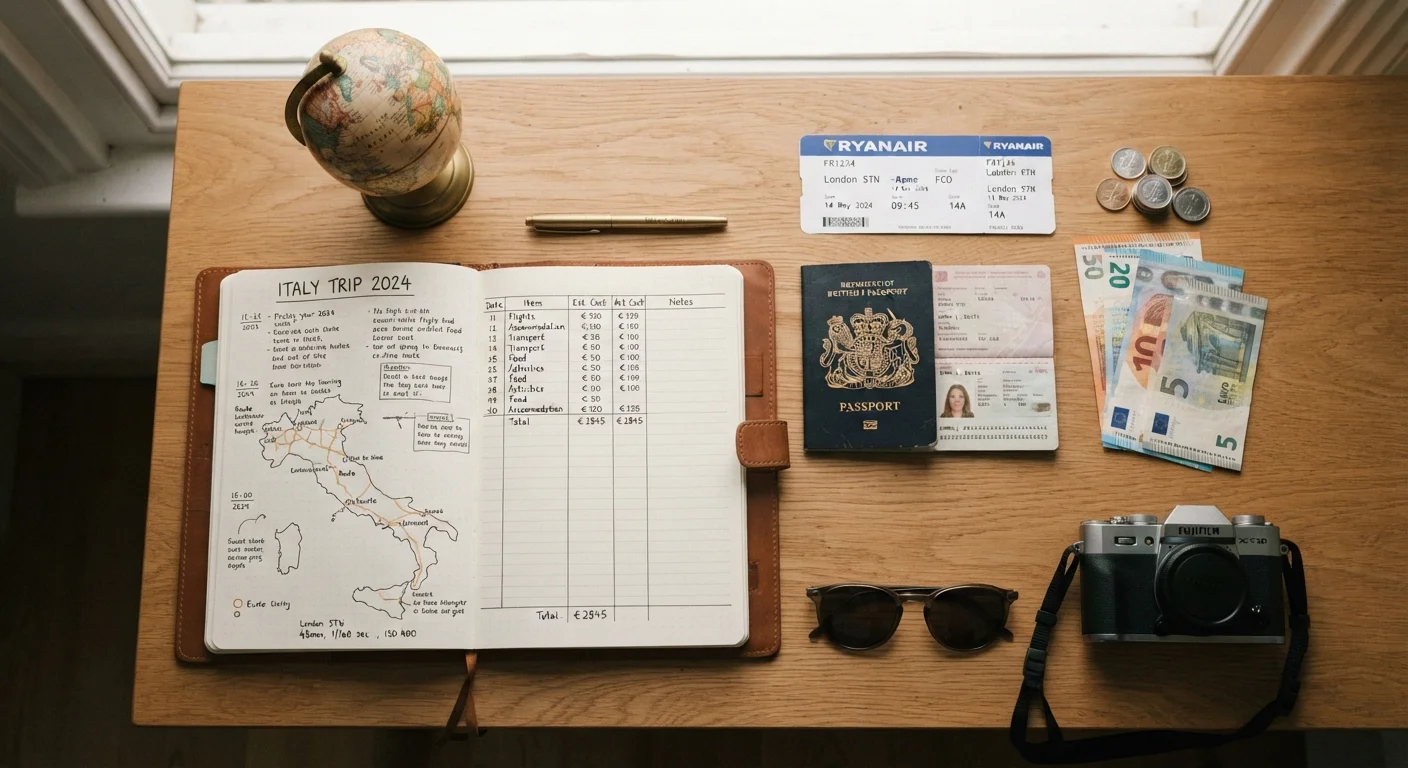
Before booking anything, list every category in a simple document-transportation, lodging, food, activities, logistics, and buffer-with a column for your estimate and a column for actuals. This structure makes it easy to spot gaps and compare your plan against what you actually spend. Even a basic notes app works if a spreadsheet feels like too much.
It's also worth accounting for travel insurance as a formal line item. Understanding what a policy covers before you buy matters-our guide to travel insurance coverage walks through the key categories and common exclusions.
Food, Daily Spending, and the Costs You Pay Every Day
Daily spending is where budgets have the most room for variance-and the most opportunity for honest self-assessment. A traveler eating street food and cooking occasionally in an Airbnb kitchen will spend a fraction of what someone dining at sit-down restaurants for every meal. Neither approach is wrong; the key is estimating daily food spend in a way that reflects your actual habits, not an idealized version of them.
The same logic applies to incidental spending: souvenirs, laundry, phone data roaming charges, tipping customs that differ from home. These feel small in isolation but aggregate into meaningful sums over a week or more. The habit of tracking where your money goes before a trip gives you a baseline that makes daily estimates far more accurate.
Once you've left home, maintaining that awareness is a separate challenge. Our piece on keeping a trip on budget once you've left home covers practical approaches for tracking in real time.
Putting It All Together: Building Your Budget Before You Book
The most effective travel budgets are built before a single booking is made. Start by listing every category, assign a realistic estimate to each, then add a contingency buffer of 10-15% to the subtotal. This isn't pessimism-it's the margin that keeps a minor surprise from becoming a financial stressor.
Many of the expenses people forget when budgeting in everyday life show up in travel too: travel-sized toiletries, travel adapters, passport photo fees, or the cost of a travel wallet. Small items, but they confirm that a detailed category list beats a back-of-envelope guess every time.
For international trips, the complexity compounds. Currency considerations, entry fees, travel health requirements, and communication costs all deserve their own line items. Our guide to international travel friction points addresses many of the logistical costs that catch first-time international travelers off guard. And if you're coordinating a trip budget with a partner, budgeting as a couple offers a useful framework for handling shared and separate travel spending.
This article is for general informational and educational purposes only. It does not constitute financial or investment advice. Readers should verify current fees, costs, and policies directly with airlines, hotels, and financial institutions before booking travel.