Why International Rail Feels Different to American Travelers
The U.S. rail network is extensive by geography but limited in frequency and city-center reach compared with the dense systems found across Europe, Japan, and other parts of the world. For Americans used to flying or driving between cities, boarding a train in a foreign country introduces a genuinely different set of conventions - from ticket validation rituals to reserved car numbers and split-second departure schedules.
The good news: once you decode the logic, international rail is one of the most rewarding ways to travel. City-center-to-city-center journeys, no security theater, panoramic scenery, and predictable timing make trains a joy. This guide walks you through the core skills you need to navigate confidently. For broader trip logistics, see our international trip planning reference, and if this is your first time abroad, pair this read with what Americans need to know before leaving.
What you will need
What You'll Need Before You Start
Gathering the right tools and information before you arrive at the station is half the battle. Rail systems reward the prepared traveler - those who already know their train code, car number, and platform procedure move through stations with ease while others scramble.
Official Rail Operator Website or App
Primary source for accurate timetables, fares, seat reservations, and ticket purchase.
Offline Mapping App (e.g., Maps.me or Google Maps with offline area saved)
Navigate to and between stations without relying on a data connection.
Rail Pass (if applicable)
Provides multi-day or multi-country network access; must be activated before first use.
Physical or Digital Timetable PDF
Backup reference for departure and arrival times when connectivity is unavailable.
Download Everything Before You Leave
Roaming data and station Wi-Fi are never guaranteed. Download the rail operator's app, save PDF timetables, and screenshot your booking confirmations before departure. Many rail apps - including those for Deutsche Bahn, SNCF, and Renfe - have robust offline modes that display your ticket QR code without a data connection. Pair this with an offline mapping app loaded with the city's transit layer.
For a broader look at the friction points that catch even experienced travelers off guard - including transit strikes and last-minute schedule changes - check out how experienced travelers handle international friction points.
Step-by-Step: Navigating a Foreign Rail System
Follow these steps in sequence the first time you book and board an international train. After one or two trips, the process becomes second nature.
Identify the Rail Operator(s) for Your Route
Unlike the U.S., where Amtrak is the dominant intercity rail provider, most countries operate through one or more national or regional rail companies. Germany has Deutsche Bahn, France has SNCF, Japan has JR Group, Spain has Renfe, and so on. Cross-border routes may involve multiple operators or a unified booking portal. Before you do anything else, identify which operator(s) serve your specific cities and visit their official websites directly - these are your authoritative sources for schedules, passes, and tickets.
Learn to Read the Timetable Format
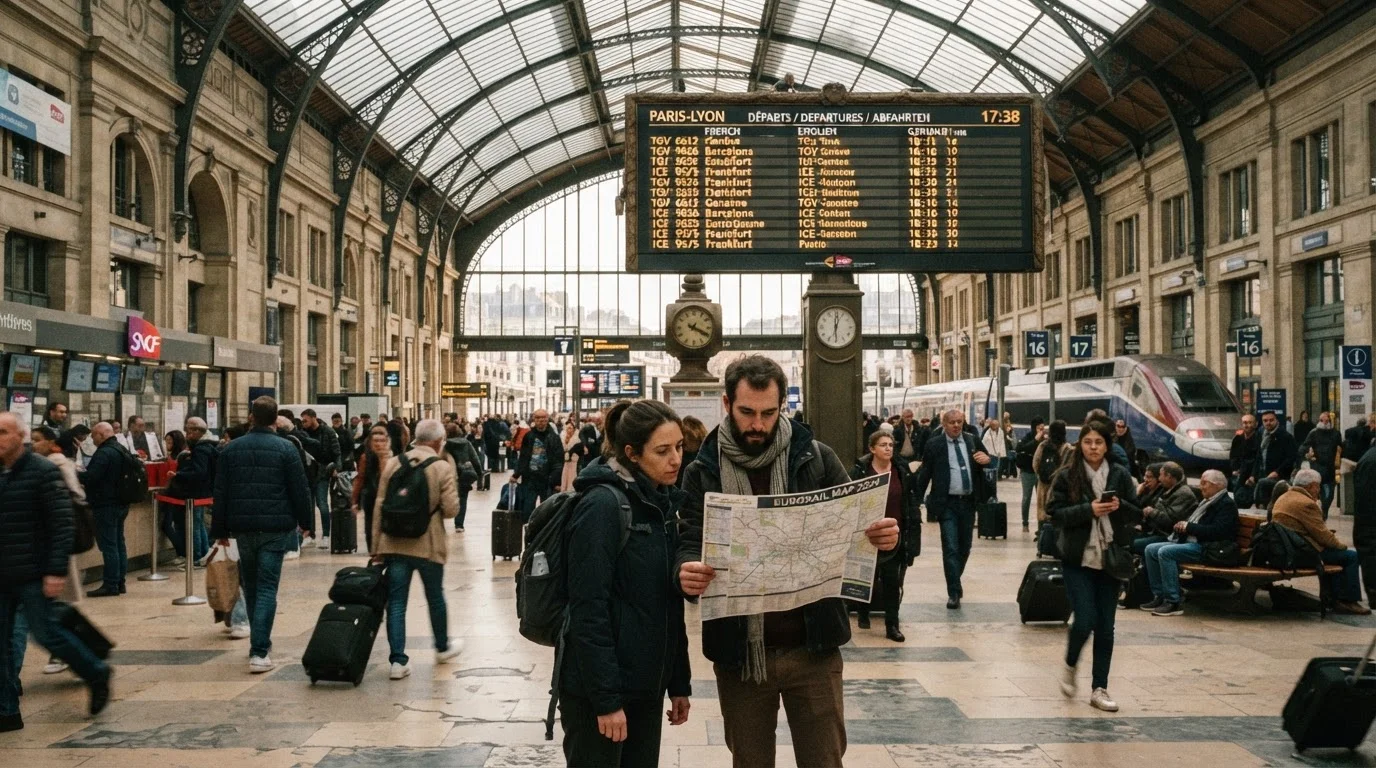
Foreign timetables use 24-hour (military) clock notation universally - 14:35 means 2:35 p.m., and 08:05 is 8:05 a.m. Departure and arrival columns are clearly labeled, and platform numbers (often called Gleis in Germany, Voie in France, or Binario in Italy) appear alongside the train code. The train code itself - a letter-number combination like IC 512 or TGV 6201 - uniquely identifies your service and is what conductors reference. Note whether your service requires a change (Umstieg, Correspondance, or Transbordo in local languages) and how much transfer time is built in.
Understand Ticket Types and Classes
Most systems offer at least two fare classes (equivalent to economy and first class) and several ticket flexibility tiers - fully flexible fares allow date changes or refunds, while non-flexible discount fares are fixed to a specific train. Identify which tier fits your plans before purchasing. Some countries also offer city-to-city day passes or regional rover tickets that unlock significant savings if you're making multiple stops in one area.
Decide Whether a Rail Pass Makes Sense
Multi-country passes (such as the Eurail Pass) and single-country passes can offer value if you're making four or more long-distance journeys within a set period. However, they are not universally cheaper than point-to-point tickets, especially in countries where advance booking yields deep discounts. Map out your specific routes, look up current point-to-point fares on the official operator's site, and compare honestly before committing to a pass. Remember: the pass itself may still require paid seat reservations on premium services.
Purchase and Store Your Tickets Correctly
Most major rail operators now offer e-tickets delivered via app or email. Download the app, log in, and confirm that your ticket appears in its offline-accessible section before you leave the hotel or accommodation. If you prefer printed tickets, use the station's self-service kiosks (which typically offer English-language menus) rather than queuing at a staffed window, which can have long lines during peak hours. Keep booking reference numbers accessible - conductors may ask for ID alongside your ticket in some countries.
Validate, Board, and Locate Your Car
At stations that require validation, stamp or scan your ticket at the machine before passing through to the platform. On the platform itself, look for car composition boards (usually posted on pillars or displayed on screens) that show which section of the platform each car number will stop at. High-speed trains are long - walking to the wrong end wastes precious boarding time. Locate your car letter and seat number on your ticket, match them to the car exterior markings, and board confidently.
Validate Your Ticket Before Boarding
In many European and Asian rail systems - particularly in Italy, France, Spain, and Japan - tickets and passes must be validated or activated before you step onto the train. Validation machines are typically yellow or orange boxes near the platform entrance. Riding without a validated ticket, even with a purchased one, can result in on-the-spot fines from conductors. Check the specific rules for every country on your itinerary before you travel.
Rail Pass ≠ Reserved Seat
A rail pass grants you access to the network, but many high-speed and overnight trains still require a separate, paid seat reservation on top of the pass. Assuming your pass alone guarantees a seat on a premium service like France's TGV or Italy's Frecciarossa can leave you standing - or removed from the train entirely. Check reservation requirements route by route on the official operator's website.
If you're comparing international rail travel to road-tripping or flying domestically, our domestic U.S. travel planning resource provides useful contrast. And for a complete end-to-end international logistics reference, see international travel as an American.
This article provides general travel information only. Schedules, fares, pass rules, and validation requirements vary by country and operator and may change without notice. Always verify current details directly with the relevant rail operator and consult official government travel advisories before your trip.