Why Climate-Smart Dressing Actually Matters
Getting dressed shouldn't feel like a gamble. Whether you're navigating a muggy Southern summer, a blustery Midwest spring, or a dry desert winter, what you wear has a direct effect on your comfort, confidence, and how well your day actually goes.
Climate-smart dressing isn't about buying a separate wardrobe for every season - it's about understanding which principles carry across conditions. The same strategies that keep you cool in August can, with small adjustments, keep you comfortable when temperatures drop. And when your clothes work with your environment, you spend less mental energy managing discomfort and more time just living.
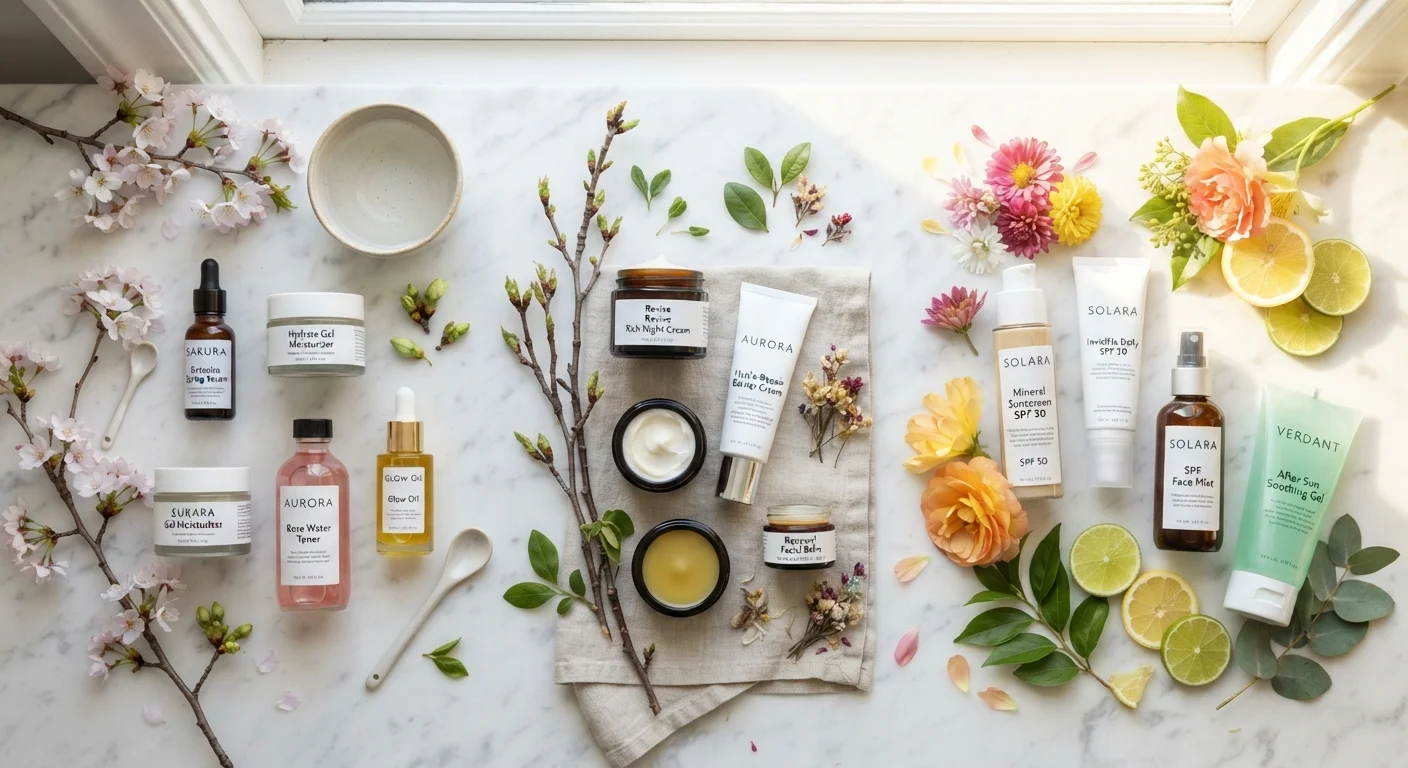
This guide also pairs well with your seasonal skincare audit, because what you put on your skin and what you put on your body both respond to the same environmental shifts.
72°F
Average U.S. comfort temperature range threshold
Research in thermal comfort science generally identifies 68-76°F as the range where most people feel neither too hot nor too cold without clothing adjustment.
3x
More outfit combinations from layering basics
Wardrobe styling research suggests that a core set of layerable, neutral-toned basics can generate significantly more outfit combinations than the same number of statement pieces.
Fabric First: What Works in Heat, Cold, and Humidity
Fabric is the foundation of everything. No silhouette trick or layering strategy can fully compensate for a material that fights your climate.
- Cotton: Breathable and absorbent - great for dry heat. In high humidity, it holds moisture against your skin, so lighter weaves and looser cuts help.
- Linen: The warm-weather standout. It wicks moisture and dries quickly, making it ideal for humid and hot conditions. Expect natural wrinkles - they're part of the look.
- Merino wool: A genuine year-round performer. It regulates temperature in both cold and mild conditions, resists odor, and is far less scratchy than traditional wool.
- Synthetic moisture-wicking fabrics: Designed for movement and sweat management. Useful for active days or high-humidity travel, though they can trap heat in still air.
- Silk and lightweight rayon: Elegant options for warmer climates that still need a polished look. Both breathe well but require careful laundering.
Avoid heavy polyester blends in any warm climate - they trap heat and don't release moisture effectively. In cold climates, layering a thin merino base under other pieces outperforms a single thick synthetic sweater.
When shopping for warm-weather fabrics, hold the fabric up to a light source - if you can see your hand through it clearly, it has the open weave that allows genuine airflow.
Breathability in warm climates depends on the weave structure as much as the fiber content; a tight-weave linen, for example, performs worse than a looser cotton in humid heat.
Test a layering combination at home before committing to it for a full day out - put on all layers and walk around for five minutes to check that nothing bunches, rides up, or restricts movement.
Layers that feel fine statically often shift during movement, creating bulk or discomfort that undermines the whole outfit.
Layering Without Looking Bulky
Layering has a reputation for adding visual bulk, but that's mostly a result of layering the wrong weights together. The key principle: keep each layer thin enough that they lie flat against each other.
A functional three-layer approach works across most climates:
- Base layer: Fitted, moisture-managing, close to the skin. Think a lightweight merino tee or a soft cotton tank.
- Mid layer: Adds warmth without thickness. A fitted cardigan, a French terry sweatshirt, or an unlined blazer all work here.
- Outer layer: Manages wind, rain, or extreme cold. A packable shell jacket or a structured trench coat handles most non-arctic conditions.
The advantage of this system is flexibility. You can shed layers as temperatures rise throughout the day without sacrificing style. A linen blazer over a moisture-wicking tank is genuinely useful from a cool morning commute through a warm afternoon.
The Packable Layer Rule
If your outer layer can't fold into a bag or be tied around your waist without looking out of place, reconsider whether it's truly versatile. Packable shells, lightweight scarves, and unlined blazers all pass this test. A bulky puffer that can't compress is a commitment - save it for days when you know you'll need it all day.
Silhouette Choices That Travel Well Across Seasons
Silhouette - the overall shape of what you're wearing - affects both how clothing feels in different temperatures and how easy it is to layer. Extremes in either direction (very fitted or very oversized) tend to be harder to adapt.
Some reliable middle-ground silhouettes:
- Straight-leg trousers: Loose enough to layer thermal leggings underneath in winter, comfortable enough to wear unlined in summer.
- Midi skirts with some structure: Work over tights in cool weather and barefoot in warm weather without the silhouette changing dramatically.
- Relaxed (not oversized) button-down shirts: Can be worn open over a base layer or tucked in as a standalone. The relaxed fit allows air circulation.
- Wrap-style tops and dresses: Naturally accommodating to body changes and easy to style up or down across seasons.
The concept of flattering is worth revisiting here - the most climate-functional silhouettes are also often the most comfortable, and comfort is its own form of style confidence.
Adapting Your Wardrobe for Specific Climates
Different climate types call for slightly different priorities:
Hot and Humid (Southeast, Gulf Coast, Hawaii)
Prioritize linen, gauze cotton, and open-weave fabrics. Loose silhouettes that allow airflow matter more than moisture-wicking synthetics, which can feel clammy. Light colors reflect rather than absorb heat. UV protection - via tightly woven fabrics or a lightweight long-sleeve layer - is worth considering.
Hot and Dry (Southwest, Desert Regions)
Lightweight long sleeves actually protect against sun and keep you cooler than bare skin in direct sunlight. Cotton and linen work well here. Hydration and skin protection are separate concerns - see how climate affects skincare for guidance on that side of things.
Cold and Wet (Pacific Northwest, New England Winters)
Wind- and water-resistant outer layers are the priority. Merino wool mid-layers handle temperature variation well. Rubber-soled footwear and water-resistant coatings on bags and outerwear extend the usefulness of your wardrobe significantly.
Variable or Four-Season Climates (Midwest, Mid-Atlantic)
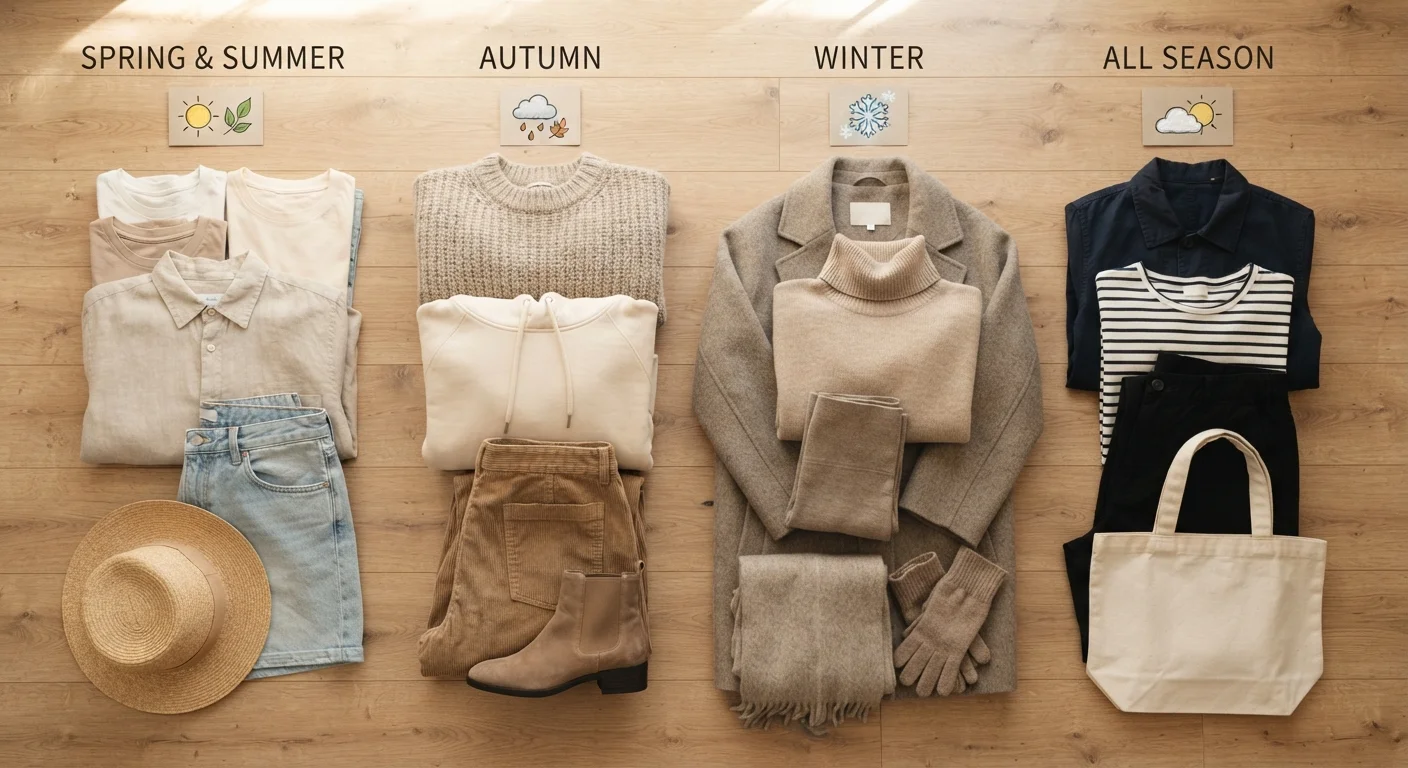
This is where the layering system shines most. Invest in transitional pieces - trench coats, cardigans, lightweight scarves - that do the heavy lifting between extreme seasons. The seasonal wardrobe transition guide is a useful companion for managing this practically.
Don't Underestimate Wind Chill and UV
Temperature readings alone don't tell the full story of what to wear. Wind chill can make a 45°F day feel significantly colder, making an outer wind-resistant layer essential even when the forecast seems mild. Similarly, UV radiation in dry climates or at altitude can be intense even when it doesn't feel hot. Factor in these conditions alongside the thermometer reading when choosing your outfit.
Building a Climate-Ready Capsule Wardrobe
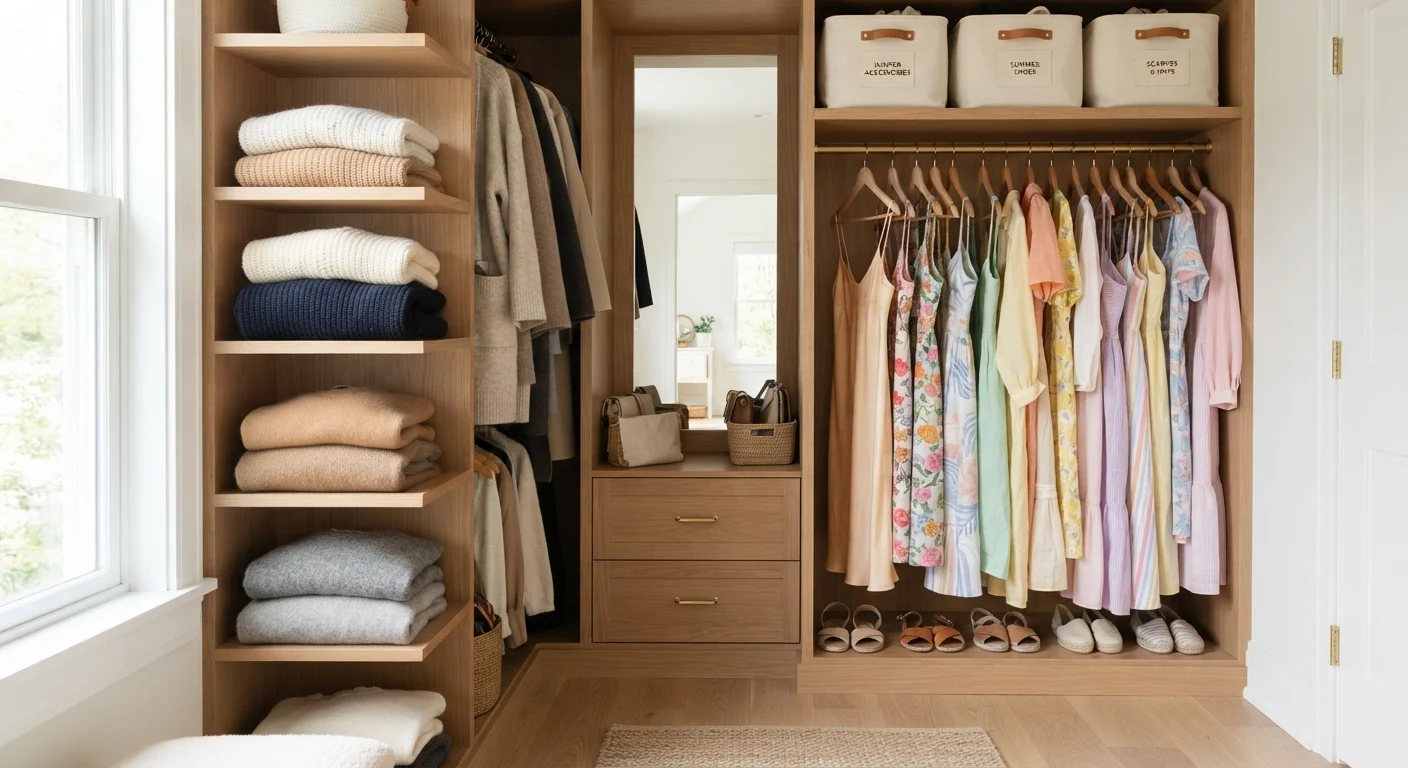
A climate-ready wardrobe doesn't require a large number of pieces - it requires the right ones. Before adding anything new, it's worth shopping your own closet first to identify what you already have that crosses seasons.
Core items worth prioritizing across most climates:
- 2-3 lightweight, breathable base layers in neutral colors
- 1-2 merino wool pieces (a crewneck or cardigan covers a lot of ground)
- A packable, water-resistant outer layer
- Straight-leg or wide-leg trousers in a medium-weight fabric
- One versatile midi-length skirt or dress
- Comfortable, weather-appropriate footwear that can pair with multiple outfits
Once you have a working climate core, rotating seasonally becomes a matter of swapping in a few pieces rather than rebuilding from scratch. And for those navigating dress codes across different settings and temperatures, understanding dress code expectations helps ensure your climate-smart choices still land appropriately in context.
“The most sustainable garment is the one you already own and keep reaching for. Versatility isn't a compromise - it's the point.”
— Tim Gunn, Fashion educator and author
This article is for general informational and educational purposes only. Clothing choices are personal and depend on individual needs, budget, and lifestyle. Always consider your specific climate conditions and personal comfort when making wardrobe decisions.