
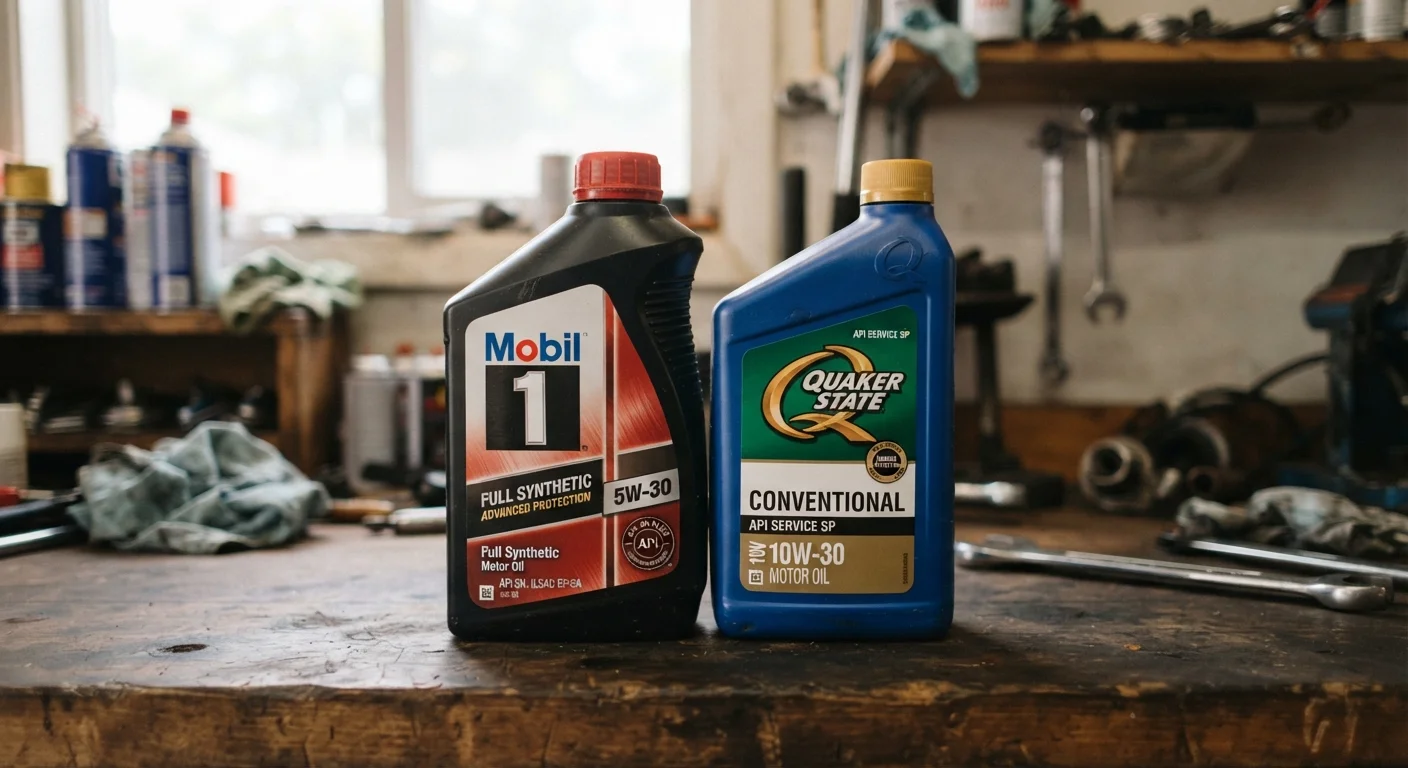
What Sets Synthetic and Conventional Oil Apart
Conventional motor oil is refined directly from crude petroleum. It contains naturally occurring molecules of varying sizes and shapes, along with trace impurities that remain even after refining. Additives are blended in to improve performance, but the base stock is fundamentally what comes out of the ground.
Synthetic motor oil is engineered in a lab. Its base molecules are chemically built to be uniform in size and structure, which gives the oil more predictable behavior under stress, heat, and cold. This consistency is the core reason synthetics resist breakdown longer and protect more effectively across a wider range of operating conditions.
Both types are available in multiple viscosity grades - such as 5W-30 or 0W-20 - and both must meet industry standards set by organizations like the American Petroleum Institute (API). The differences lie in how long each type holds up, how it performs at temperature extremes, and what your vehicle's manufacturer actually requires. As noted in our look at common car maintenance myths, the old "change oil every 3,000 miles" rule was built around conventional oil in older engines - it simply doesn't apply universally today.
| Criterion | Synthetic Motor Oil | Conventional Motor Oil |
|---|---|---|
| Typical change interval | 7,500-15,000 miles | 3,000-7,500 miles |
| Cost per quart | Higher (roughly 2-4x) | Lower upfront cost |
| Temperature performance | Excellent in extremes | More limited range |
| Engine compatibility | Required by many modern engines | Suitable for many older engines |
| Breakdown resistance | High - uniform molecules | Lower - natural variability |
| Availability | Widely available | Widely available |
Oil Change Intervals: How Long Does Each Type Last?
Change intervals vary by vehicle, driving conditions, and oil type. General industry guidance suggests:
- Conventional oil: Typically requires changes every 3,000-7,500 miles, depending on the vehicle and driving habits.
- Synthetic oil: Generally rated for 7,500-15,000 miles per change; some full-synthetic formulations and vehicle manufacturers extend this even further under normal driving conditions.
"Normal" driving conditions matter here. Short trips under 10 miles, frequent stop-and-go traffic, towing, or operating in extreme temperatures all qualify as severe service, which shortens recommended intervals for both oil types. Your vehicle's oil life monitoring system - if equipped - accounts for many of these variables automatically.
7,500-15,000 mi
Typical synthetic oil change interval
Many vehicle manufacturers now specify full synthetic oil with intervals well beyond the traditional 3,000-mile guideline, per published owner's manual data.
~2-4×
Synthetic vs. conventional cost per quart
Synthetic oil generally costs two to four times more per quart than conventional oil, though fewer annual changes can offset some of that difference.
0W-20
Increasingly common factory-specified grade
Thinner grades like 0W-20 - which require synthetic formulations to hold their properties - are specified by a growing number of automakers for fuel efficiency and cold-start protection.
The single most reliable source for your specific interval is your owner's manual. Understanding the maintenance sections of your owner's manual can help you interpret what your manufacturer actually specifies - including whether it mandates synthetic, recommends it, or leaves the choice to you.
Cost, Practicality, and When to Switch
Synthetic oil typically costs two to four times more per quart than conventional oil. A full synthetic oil change at a shop often runs $70-$100 or more, compared to $35-$55 for a conventional change - though prices vary by region and vehicle. Over time, fewer synthetic changes can narrow that gap, but the math depends on your specific vehicle, mileage, and how strictly you follow intervals.
Switching from conventional to synthetic mid-life is generally considered safe by engineers, as modern synthetics are compatible with conventional oil. However, if your engine has high mileage with known seal wear, it's worth discussing the switch with a qualified mechanic before making the change. Keeping an eye on fluid levels between service visits is wise regardless of which oil type you use, since even top-tier synthetics can be consumed by engines with aging seals or high mileage.
Always Check Your Owner's Manual First
No general guideline overrides what your vehicle's manufacturer specifies. Some engines are engineered exclusively for full synthetic oil and using conventional oil may void warranty coverage or accelerate wear. Others give you a choice. Your owner's manual is the definitive reference - not the sticker on your windshield from the last shop, and not a general rule of thumb.
For a broader look at how oil change decisions fit into your vehicle's full service timeline, see our guide to your car's maintenance schedule. And if you've heard claims like "premium oil is always better for any car," our breakdown of costly car ownership myths addresses why that's not always true.