
Why Car Ownership Myths Are Expensive
Vehicle ownership costs the average American household tens of thousands of dollars over the life of a car. That makes every avoidable expense meaningful - and widely held myths about maintenance, fuel, warranties, and insurance quietly drive unnecessary spending year after year.
Many of these beliefs originated from legitimate advice that simply hasn't kept pace with changes in vehicle engineering, federal consumer law, or insurance underwriting practices. Others were never accurate. The result is drivers routinely paying more than they need to, or making ownership decisions based on incomplete information.
The myths below are among the most financially consequential. Each one is corrected with an explanation of what's actually true - and why it matters to your wallet. For a broader look at costs new owners commonly miss, see car ownership costs first-time buyers routinely underestimate.
Myth
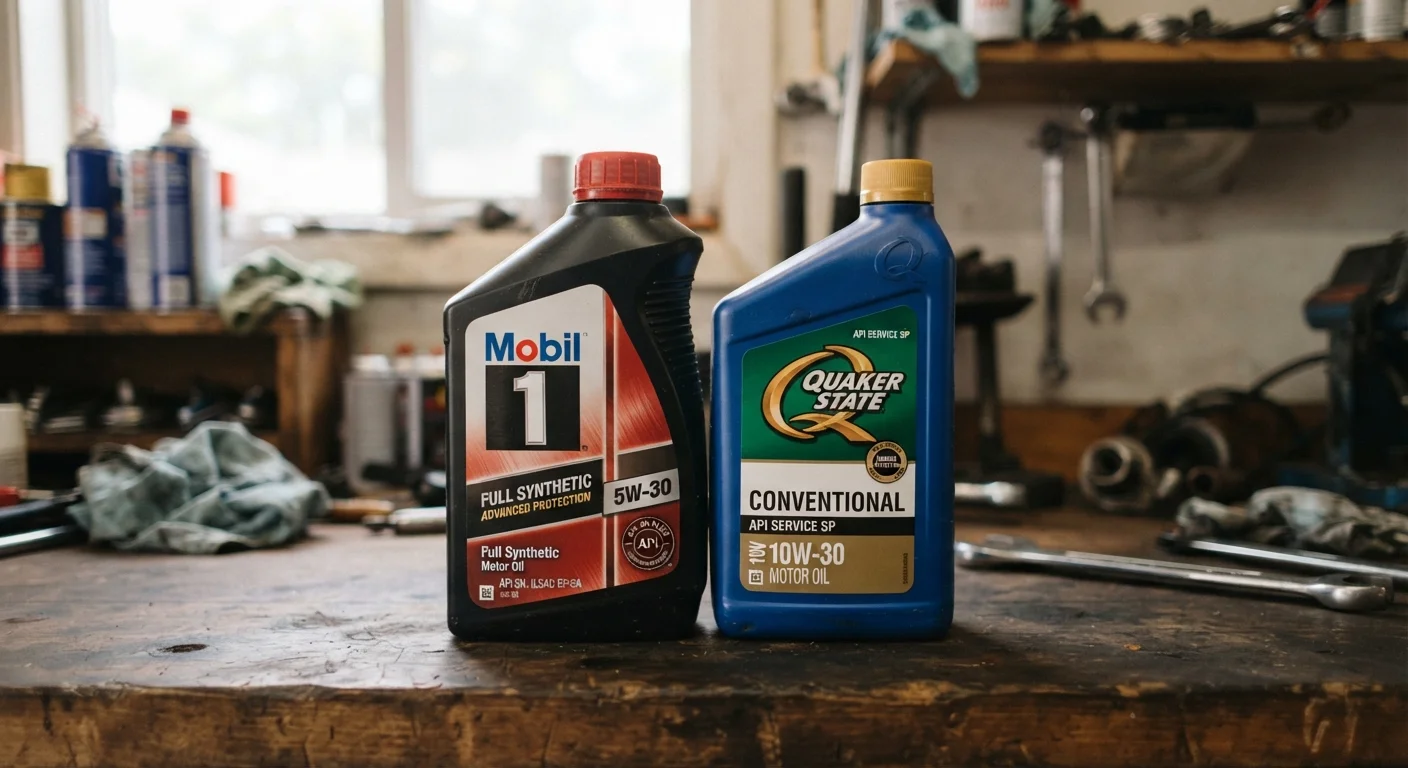
You must change your oil every 3,000 miles or you'll damage your engine.
Fact
Most modern vehicles, especially those using synthetic oil, can safely go 5,000 to 10,000 miles or more between oil changes - check your owner's manual for the correct interval.
The 3,000-mile rule was reasonable advice decades ago, when engines and motor oils were less refined. Today's engines are engineered to tighter tolerances, and synthetic motor oils are formulated to last considerably longer. Many manufacturers specify intervals of 7,500 to 10,000 miles, and some turbocharged or high-performance engines may require shorter intervals regardless of oil type.
Following an unnecessarily short interval wastes money on oil and labor without providing any measurable engine benefit. The most reliable source for the correct interval is your vehicle's owner's manual or the manufacturer's maintenance schedule - not a quick-lube shop's recommendation. For a deeper comparison of oil types, see how synthetic and conventional oils compare.
Myth
Using premium gasoline gives any car better performance and mileage.
Fact
Premium fuel only benefits engines with high compression ratios that are designed to require it. For most vehicles, using premium provides no performance gain and is simply wasted spending.
Fuel grades are defined by their octane rating, which measures resistance to engine knock. High-compression and turbocharged engines are calibrated to use higher-octane fuel to prevent premature ignition. If your vehicle's manual says premium is required, use it. If it says premium is recommended or makes no mention of it, regular unleaded is sufficient.
Paying a premium for fuel your engine isn't calibrated to use delivers no measurable improvement in horsepower or fuel economy. Over a year of fill-ups, that cost difference adds up noticeably. Your owner's manual states exactly which grade your manufacturer specifies.
Myth
You must take your vehicle to the dealership for all service to keep your warranty valid.
Fact
Under the Magnuson-Moss Warranty Act, manufacturers generally cannot void your factory warranty simply because you had routine maintenance performed at an independent shop.
Many drivers pay dealer-level labor rates out of a belief that going elsewhere will void their warranty. The Magnuson-Moss Warranty Act - a federal consumer protection law - generally prohibits manufacturers from conditioning a warranty on the use of a specific service provider for routine maintenance, unless that service is provided free of charge.
What does matter is keeping records. Retain receipts showing that the correct fluids, parts, and intervals were used. If a warranty claim arises, you may need to demonstrate that maintenance was performed according to manufacturer specifications. Independent shops that follow those specs are typically adequate for warranty-safe maintenance - though you should verify this with your specific warranty documentation before making changes to your service routine.
Myth
Extended warranties are a smart financial safety net for any vehicle.
Fact
Extended warranties (also called vehicle service contracts) frequently cost more than the repairs they cover, and many claims are denied due to exclusions buried in the contract.
The appeal of an extended warranty is understandable - major repairs can be expensive. But consumer research has consistently found that a majority of buyers who purchase extended warranties either never use them or receive payouts worth less than what they paid for the contract. Exclusions for pre-existing conditions, specific components, and required maintenance documentation can reduce actual coverage significantly.
A more reliable strategy for many owners is to set aside a monthly amount into a dedicated vehicle emergency fund. For a realistic view of what ownership truly costs, our guide on the true cost of owning a car in the US breaks down the full picture. If you do consider a service contract, read every exclusion carefully before signing.
Myth
Red cars cost more to insure because insurers charge higher rates for that color.
Fact
Vehicle color is not a factor in how US auto insurers calculate premiums. Rates are based on factors like your driving history, the vehicle's make and model, your location, and your credit history in most states.
This is one of the most persistent myths in car ownership, and it has no basis in how insurance underwriting works. Insurers collect information on the vehicle's year, make, model, trim level, and safety features - not its color. What does influence your rate includes your claims history, the vehicle's repair cost profile, local accident and theft rates, and in most states, your credit-based insurance score.
Understanding which factors genuinely affect your premium helps you make smarter decisions - things like choosing a vehicle with strong safety ratings or maintaining a clean driving record. See what actually affects your car insurance premium for a full breakdown.
What to Do With This Information
Correcting these myths isn't just about feeling informed - it translates directly into decisions that reduce what you spend on your vehicle. Start with your owner's manual: it contains the maintenance intervals, fuel grade, and fluid specifications your manufacturer actually recommends for your car, not what a service provider recommends for their business model.
Don't Rely Solely on Service Reminders
Dashboard oil life monitors and service reminder stickers placed by quick-lube shops may not reflect your manufacturer's actual recommended interval. Always cross-reference with your owner's manual or the manufacturer's published maintenance schedule. Relying on a third-party recommendation that's shorter than necessary means paying for more service than your vehicle requires.
Keep service records for every maintenance visit, regardless of where the work is done. This protects your warranty rights and helps you spot patterns - like a shop recommending services at shorter intervals than your manufacturer requires.
If you want to build a more complete picture of your annual vehicle spending, building a realistic annual car budget provides a structured approach to estimating fixed and variable costs. And if you're already working to reduce unnecessary expenses, keeping vehicle ownership costs manageable over the long haul covers maintenance habits and financing choices that make a measurable difference over time.