Why the Owner's Manual Is the Most Underused Document in Your Car
A survey conducted by car care industry groups has consistently found that a significant portion of drivers have never opened their owner's manual beyond checking a warning light. That's a costly habit. Unlike general automotive advice - which applies to an idealized average vehicle - your manual is written for your specific engine, transmission, and drivetrain configuration. It reflects the engineering decisions the manufacturer made for that exact combination of components.
Generic maintenance advice circulates widely, and some of it is outdated. Guidance on oil changes, for example, has changed substantially as synthetic lubricants and engine tolerances have improved. Our article on common maintenance myths covers several cases where following old rules of thumb can cost drivers unnecessarily. The manual cuts through that noise.
The document also contains information that exists nowhere else: the precise fluid grades approved for your vehicle, the load limits relevant to your specific configuration, and the warranty-related maintenance requirements that protect your coverage. Ignoring it doesn't just risk mechanical problems - it can affect your ability to make warranty claims.
Generic Intervals May Not Apply to Your Car
Service reminders from quick-lube shops, well-meaning friends, or online forums are often based on general rules of thumb - not your specific vehicle. Following intervals that are too short wastes money; following intervals that are too long can cause real mechanical damage. Your manufacturer's schedule, found in your owner's manual, is the authoritative source.
If your vehicle has accumulated significant mileage, the manual becomes even more important. Our guide to high-mileage vehicle care explains which services become more time-sensitive as the odometer climbs.
How to Read the Maintenance Schedule - and What You're Looking At
Follow the steps below to extract the most actionable information from your manual. Before you begin, gather the prerequisites listed above and find a calm moment - this is worth doing carefully once rather than skimming quickly.
What you will need
Locate or download your owner's manual
Check your glove compartment first. If the manual is missing, visit the vehicle manufacturer's official website - most publish free PDF versions searchable by model year and trim. You can also check the National Highway Traffic Safety Administration (NHTSA) database, which archives owner's manuals for many vehicles sold in the United States. Having the correct edition matters: even the same model year can have different manuals for different engine options.
Find the scheduled maintenance section
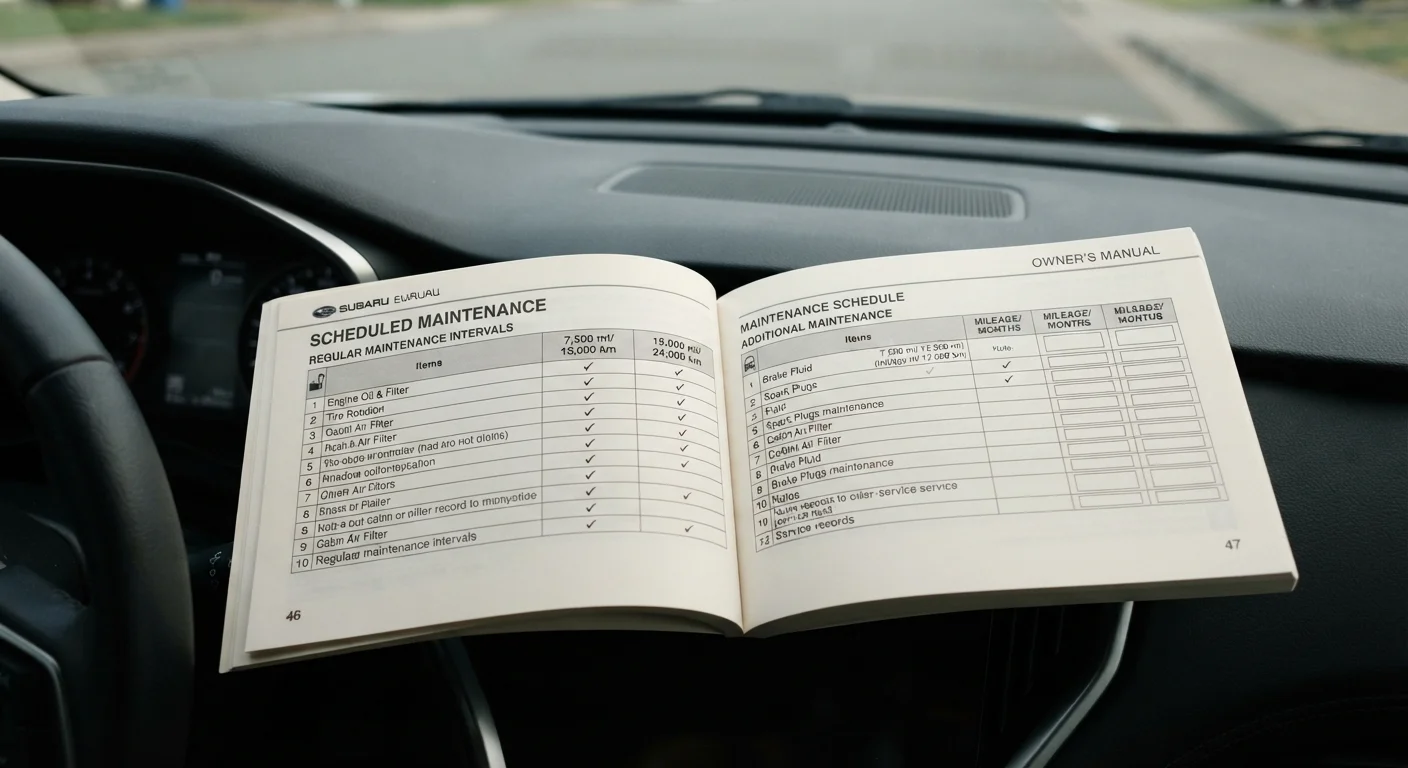
Most manuals label this section 'Scheduled Maintenance,' 'Maintenance Schedule,' or 'Service Intervals.' It is typically located in the final third of the manual. Look for a table organized by mileage or time intervals - whichever comes first. Note whether your manual offers two columns: one for normal driving conditions and one for severe or special operating conditions.
Identify the fluid specifications page
Separate from the maintenance schedule, most manuals include a specifications section listing the exact grade and type of oil, transmission fluid, coolant, power steering fluid, and brake fluid your vehicle requires. These specifications are not interchangeable. Using the wrong fluid type - for example, a transmission fluid not approved for your specific transmission - can void coverage under powertrain warranties and cause long-term wear. Write these down or photograph the page.
Check the tire pressure and loading information
Your manual will reference the Tire and Loading Information label, which is physically affixed to the driver's door jamb on virtually all vehicles sold in the US. This label lists the correct cold tire pressure for your front and rear tires - and it may differ front to rear. The number molded into the tire sidewall is the tire's maximum pressure rating, not your vehicle's target pressure. Always inflate to the door-jamb figure, not the sidewall number.
Note the intervals most drivers overlook
Beyond oil changes, scan the schedule for these commonly skipped services:
- Transmission fluid: Many automatics specify a drain-and-fill every 30,000-60,000 miles under normal use, more often under severe conditions.
- Coolant flush: Often listed at 60,000-100,000 miles, or every five years - whichever comes first.
- Brake fluid: Frequently ignored; many manufacturers call for replacement every two to three years regardless of mileage.
- Cabin and engine air filters: Intervals vary widely by environment; dusty conditions shorten replacement windows significantly.
- Spark plugs: Modern iridium or platinum plugs can last 60,000-100,000 miles, but the interval is engine-specific.
Build a simple reference sheet from what you've found
Compile the intervals and specifications you've identified into a single reference - a notes app, a photo album, or a printed sheet kept with your records. Record the date and mileage of your last service for each item so you can calculate when each is next due. This reference becomes especially useful before service appointments, helping you arrive informed about what your vehicle actually needs versus what is being upsold.
Severe Driving Conditions Are More Common Than You Think
Manufacturers define 'severe' service to include frequent short trips under five miles, stop-and-go urban commuting, towing, dusty environments, and extreme temperatures. If any of these describe your typical driving, use the severe-service column in your maintenance schedule - not the standard one. Ignoring this distinction is one of the most common and costly mistakes drivers make.
Photograph the Key Pages Right Now
Before you close the manual, use your phone to photograph the maintenance schedule, the fluid specifications page, and the tire and loading information label page. Store these images in a clearly labeled album. You will have the critical details available even when the manual is buried in your glove compartment.
Once you've built your reference sheet, consider pairing it with a reliable understanding of oil change intervals - one of the most misunderstood entries on any maintenance schedule. And if a dashboard warning light appears before your next scheduled service, our dashboard warning light reference can help you interpret what your vehicle is signaling.