Why Deferred Maintenance Is a False Economy
Putting off a $60 service appointment feels like a reasonable short-term choice, especially when a vehicle is running without any obvious symptoms. But the financial logic breaks down quickly once you understand how vehicle systems are interdependent. Neglect in one area rarely stays contained - degraded oil accelerates engine wear, acidic coolant corrodes the radiator, and worn brake fluid compromises the entire hydraulic system.
For a broader look at managing what you spend on a vehicle over time, see our guide to keeping vehicle ownership costs manageable. And if you want to understand exactly what each service interval means, your car's maintenance schedule, explained is a practical starting point.
Skipped Maintenance Can Void Your Warranty
Most new-vehicle limited warranties require owners to follow the manufacturer's recommended service intervals. If a mechanical failure is traced back to missed maintenance - such as an oil change or coolant flush - the manufacturer or dealer may deny the warranty claim entirely. Always retain service records and receipts as proof of compliance.
The Most Costly Maintenance Mistakes Drivers Make
The following mistakes are among the most common - and most expensive - that everyday drivers make when they delay routine service. Each one follows a predictable pattern: a small, manageable task gets skipped, a system quietly degrades, and eventually a much larger repair bill arrives.
Delaying oil and filter changes beyond the manufacturer's recommended interval.
Why it happens: Drivers often underestimate how quickly oil degrades, especially in stop-and-go traffic or extreme temperatures. The expense feels unnecessary when nothing seems wrong.
Ignoring coolant flushes, allowing the cooling system to degrade silently.
Why it happens: Coolant degradation is invisible until it causes trouble - there's no warning light that says 'your coolant is acidic.' Drivers assume the green or orange fluid in the reservoir is fine indefinitely.
Skipping brake fluid replacement, leading to moisture absorption and reduced stopping power.
Why it happens: Brake fluid is rarely discussed at service counters, and many drivers don't know it absorbs moisture over time, which lowers its boiling point and can cause brake fade under hard use.
Neglecting transmission service until shifting problems become obvious.
Why it happens: Transmission fluid changes are expensive relative to an oil change, so they're easy to postpone. Drivers typically wait until the transmission slips or hesitates before paying attention.
Letting air filter replacement slide, reducing engine efficiency and air quality inside the cabin.
Why it happens: Air filters are out of sight and slow to degrade, so there's no obvious trigger to replace them. Many drivers don't realize there are two separate filters - one for the engine and one for the cabin.
Don't Rely on the 3,000-Mile Oil Change Rule
Many drivers still follow the outdated 3,000-mile oil change interval, but most modern vehicles with synthetic oil require changes every 5,000 to 10,000 miles or more. Changing oil too frequently wastes money, while waiting too long causes real engine damage. Always follow the interval specified in your owner's manual, not general folklore.
Building a Habit That Protects Your Investment
The simplest way to avoid deferred-maintenance costs is to treat your owner's manual as the authoritative source for service intervals - not mileage stickers from oil-change shops or advice passed down informally. Most modern vehicles have service reminder systems built in; using them removes the guesswork.
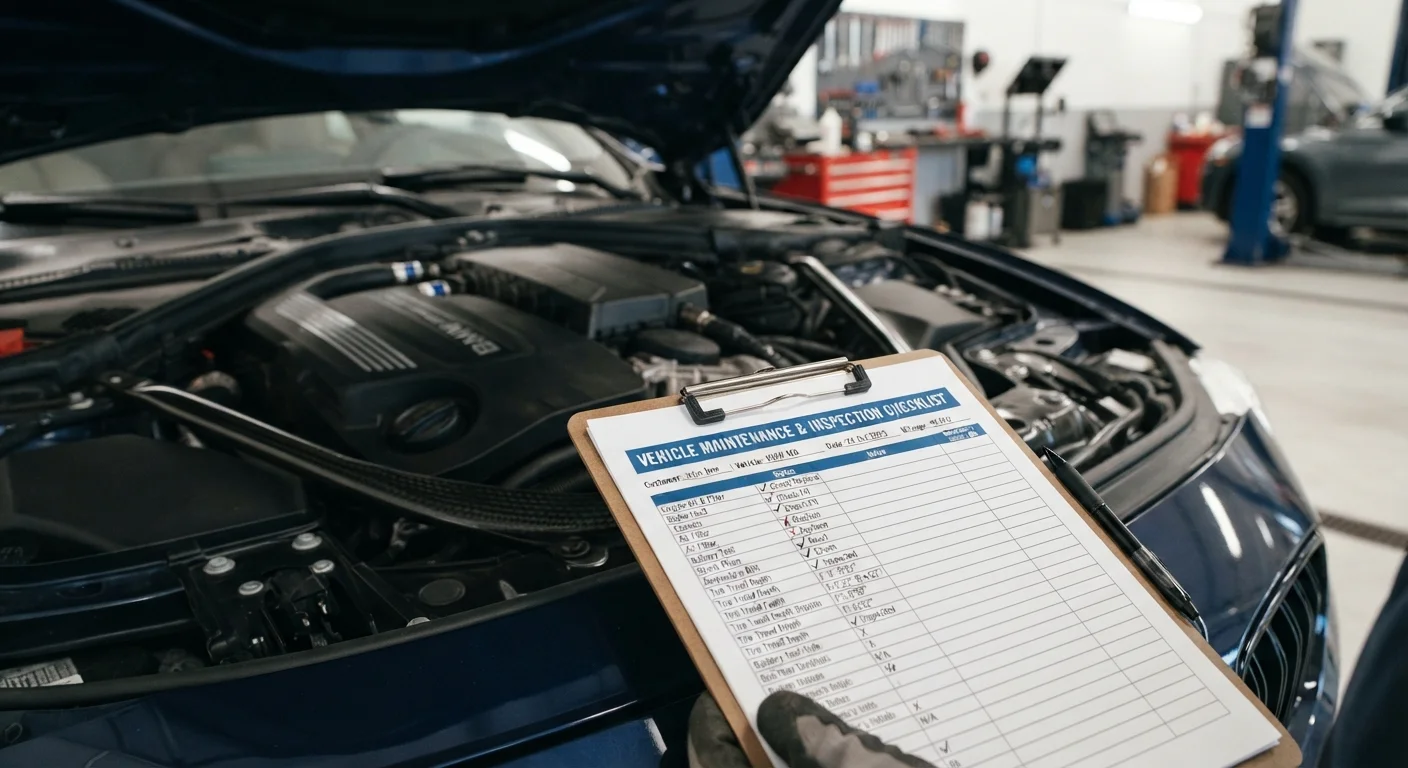
Keeping a folder - physical or digital - of all service receipts serves two purposes: it tells you what's been done and when, and it protects you if a warranty claim ever arises. Consistent documentation is evidence that you've upheld your end of the manufacturer's maintenance agreement.
$1,200+
Average engine repair cost from oil neglect
Industry estimates suggest that oil-related engine damage - including sludge buildup - commonly results in repair bills exceeding $1,200, compared to roughly $50-$100 per oil change.
2-3x
Cost multiplier for deferred vs. preventive service
Automotive service data consistently shows that addressing a mechanical problem after failure typically costs two to three times more than performing scheduled preventive maintenance.
30,000-50,000 miles
Typical coolant flush interval
Most manufacturers recommend a coolant flush within this mileage range to prevent internal corrosion in the radiator, heater core, and water pump.
The principle that applies to vehicles applies equally elsewhere. Just as skipped car maintenance compounds quietly, so does neglected upkeep around the home - a dynamic explored in our look at home maintenance tasks that quietly become expensive. Staying ahead of small service needs, whether in your driveway or your house, is almost always the more affordable path.