Why These Myths Keep Spreading
Distracted driving kills thousands of Americans every year, yet misconceptions about what counts as distraction - and how dangerous it truly is - remain stubbornly common. Many drivers hold beliefs that feel logical but are contradicted by decades of traffic safety research. The gap between perception and reality is exactly where crashes happen.
Part of the problem is overconfidence. Most drivers rate their own abilities above average, which makes it easy to assume that the risks apply to other, less-skilled people. The myths below exploit that bias. Correcting them isn't about lecturing - it's about giving every driver accurate information so they can make genuinely safer choices. For a broader look at how faulty assumptions cost drivers, see our car ownership myths article.
Myth
Hands-free phone calls are safe because my hands stay on the wheel.
Fact
Hands-free calls still cause significant cognitive distraction that slows reaction time and narrows a driver's field of attention.
The hands-free myth is one of the most dangerous in circulation because it feels logical. Holding the wheel matters, but driving performance depends far more on where your attention is than where your hands are. Research from the University of Utah found that hands-free callers showed reaction times and hazard-detection rates comparable to drivers with a blood-alcohol level at the legal limit. The conversation itself - not the phone - is the primary distraction. Unlike a passenger, a phone caller cannot see the road and does not naturally pause when traffic demands more attention.
Myth
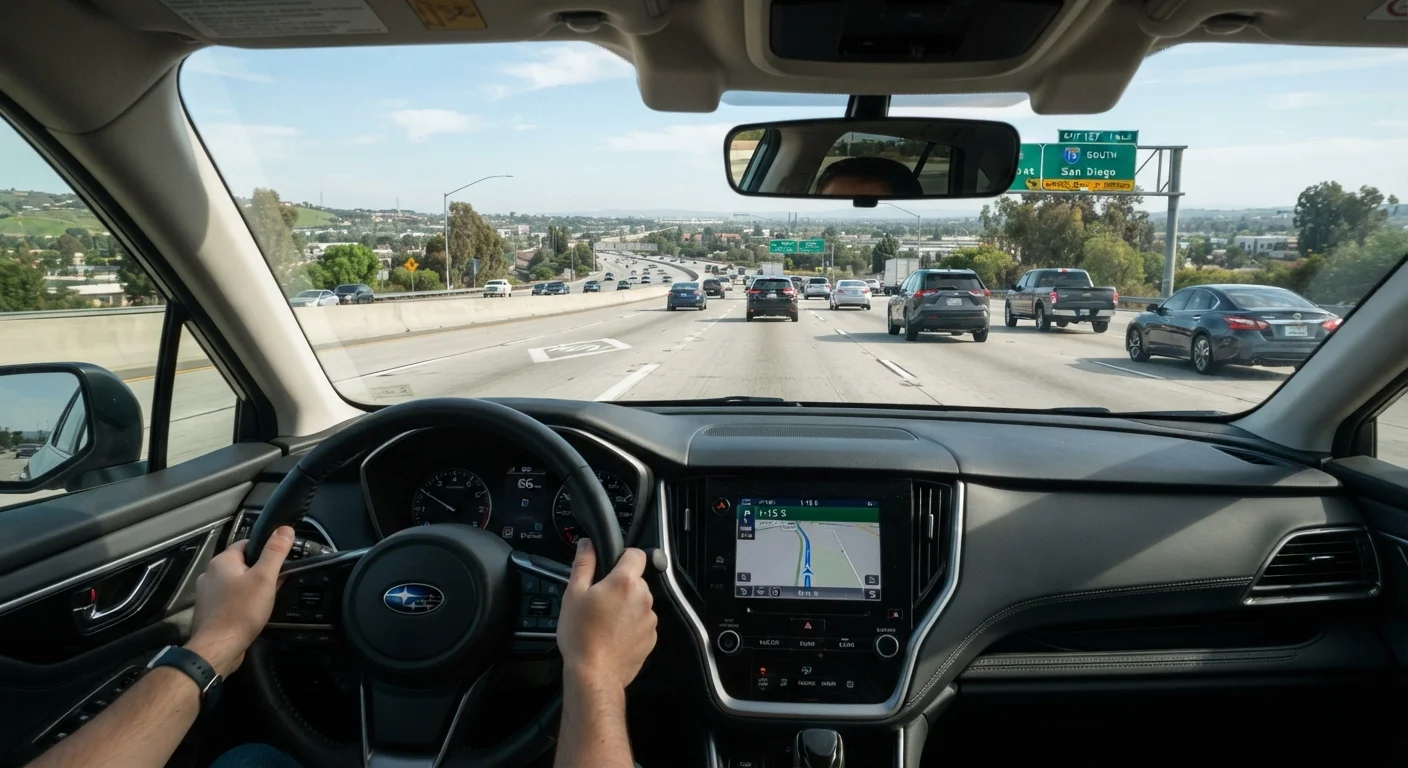
A quick two-second glance at my phone or GPS is basically harmless.
Fact
At 65 mph, two seconds of eyes-off-road means traveling approximately 191 feet - more than half a football field - without seeing what is ahead.
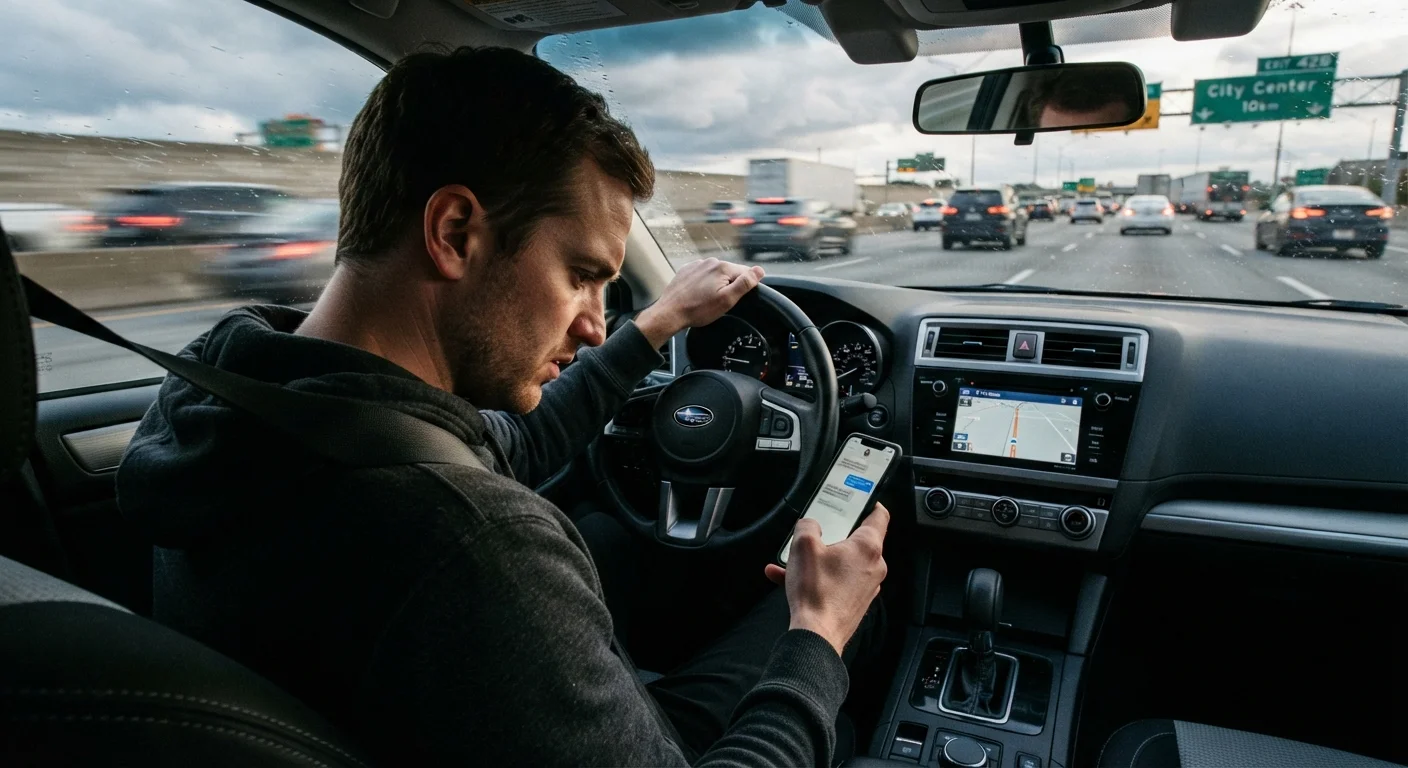
Short glances feel trivial in the moment, but the distance covered at highway speeds makes them genuinely dangerous. NHTSA research on naturalistic driving found that texting involves an average eyes-off-road time of around five seconds. At 55 mph, that is equivalent to driving the length of a football field blindfolded. Even shorter glances remove the driver's ability to react to sudden braking, a pedestrian stepping off a curb, or a vehicle merging unexpectedly. Distance traveled - not time elapsed - is the right frame for understanding this risk.
Myth
Experienced drivers can handle distractions better because of muscle memory and practice.
Fact
Experience improves vehicle control but does not protect against the cognitive limits that distraction imposes on every human brain.
Skilled drivers do automate many physical aspects of driving over time, such as steering corrections and gear changes. However, distraction impairs the higher-order processes - hazard scanning, decision-making, spatial awareness - that no amount of experience fully automates. Studies consistently show that experienced drivers overestimate their ability to manage divided attention. Confidence built from years of incident-free driving can actually increase risk-taking behavior, including tolerating more distraction. Skill and attention are not interchangeable.
Myth
Talking to a passenger is just as distracting as using a phone, so there is no real difference.
Fact
Passenger conversations are measurably less distracting than phone calls because passengers naturally moderate their conversation when traffic demands more focus.
This myth is sometimes used to justify phone use by suggesting all conversation is equally risky. Research does not support that equivalence. A passenger shares the driver's visual environment and instinctively reduces conversation complexity - or stops talking entirely - when they perceive a hazard. A caller on a phone has no such awareness and continues the cognitive demand regardless of road conditions. That said, heated arguments with passengers, managing children in the back seat, or turning to look at someone while speaking can all create dangerous distraction. Context and intensity matter.
Myth
If my state allows hands-free device use, then using one must be safe.
Fact
Laws define what is legal, not what is safe. Many state statutes lag behind the research on cognitive distraction.
Legislation typically targets the most visible behaviors - holding a phone, typing - because those are easiest to observe and enforce. Cognitive distraction from voice calls, in-vehicle infotainment systems, or even mentally rehearsing a conversation is far harder to regulate. Legal compliance is a floor, not a safety guarantee. Drivers should evaluate their actual distraction level rather than defaulting to "it's legal, so it's fine." Traffic safety law reflects political and enforcement realities, not always the full body of crash causation research.
Myth
Voice-to-text is safe because I never look away from the road.
Fact
Voice-to-text keeps eyes forward but still imposes significant cognitive load that degrades hazard perception.
AAA Foundation for Traffic Safety research rated voice-to-text systems as among the most cognitively demanding in-vehicle tasks tested - more demanding, in some cases, than holding a manual phone call. Composing a message by voice requires verbal formulation, listening to playback, and error correction, all of which pull mental resources away from driving. The fact that eyes remain on the road provides a false sense of full engagement. Drivers using voice-to-text showed reduced scanning behavior and slower responses to events in their peripheral vision during testing.
What the Evidence Tells Us About Distraction
The research on distracted driving is extensive and consistent. Studies from the National Highway Traffic Safety Administration (NHTSA) and the Virginia Tech Transportation Institute repeatedly show that any secondary task - visual, manual, or cognitive - degrades driving performance in measurable ways. The degree of impairment varies by task, but no form of distraction is harmless at speed.
~3,300
U.S. distraction-related traffic deaths annually
NHTSA data consistently shows distracted driving contributes to thousands of fatalities each year in the United States.
4x
Increased crash risk while using a handheld phone
Research published in the New England Journal of Medicine estimated cell phone use quadruples a driver's risk of being in a crash.
27x
Higher crash risk when texting while driving
The Virginia Tech Transportation Institute found that texting while driving increased crash risk by up to 23-27 times compared to undistracted driving.
Understanding distraction also means understanding how the brain works. Humans do not multitask; we task-switch. When you are composing a mental reply to a voice message, your brain is briefly not processing the road ahead. That brief gap is all it takes. Building on these fundamentals is the foundation of defensive driving principles, which teaches drivers to stay mentally engaged and anticipate hazards rather than simply react to them.
Fatigue Makes Every Distraction More Dangerous
Sleep deprivation reduces the brain's ability to suppress irrelevant stimuli and sustain attention - the same capacities distraction erodes. A tired driver who is also managing a phone call or in-vehicle navigation system is facing compounded impairment. If you feel drowsy, pulling over safely and resting is always the right call before resuming a trip.
Distraction also compounds other risks. Following another vehicle too closely while distracted leaves no margin for reaction - a dynamic explored in depth in our piece on why tailgating is more dangerous than most drivers realize. Treating each safety issue in isolation misses how they interact in real traffic.