How U.S. Traffic Law Is Structured
Traffic law in the United States is primarily state-level legislation. There is no single national traffic code that governs every rule on every road. Instead, each of the 50 states enacts its own statutes, and most draw heavily from the Uniform Vehicle Code - a model framework maintained by a nonprofit organization to encourage consistency across jurisdictions. The result is a system that is broadly similar from state to state but differs in meaningful ways on specific points.
Federal influence enters mainly through highway funding conditions and safety standards, such as the federally encouraged national minimum drinking age and commercial vehicle regulations. But for everyday driving rules - speed limits on local roads, cell phone restrictions, turn-on-red permissions - your state's DMV handbook is the governing document.
Uniform Vehicle Code
A model set of traffic laws created to encourage consistency across U.S. states. States are not required to adopt it, but many use it as a foundation for their own statutes.
Right-of-way
The legal priority one road user has to proceed before another at a given moment. The law specifies who must yield - not who is automatically entitled to go.
Yield
To slow down or stop to allow another driver, pedestrian, or cyclist to proceed first, as required by a sign, signal, or traffic rule.
Posted speed limit
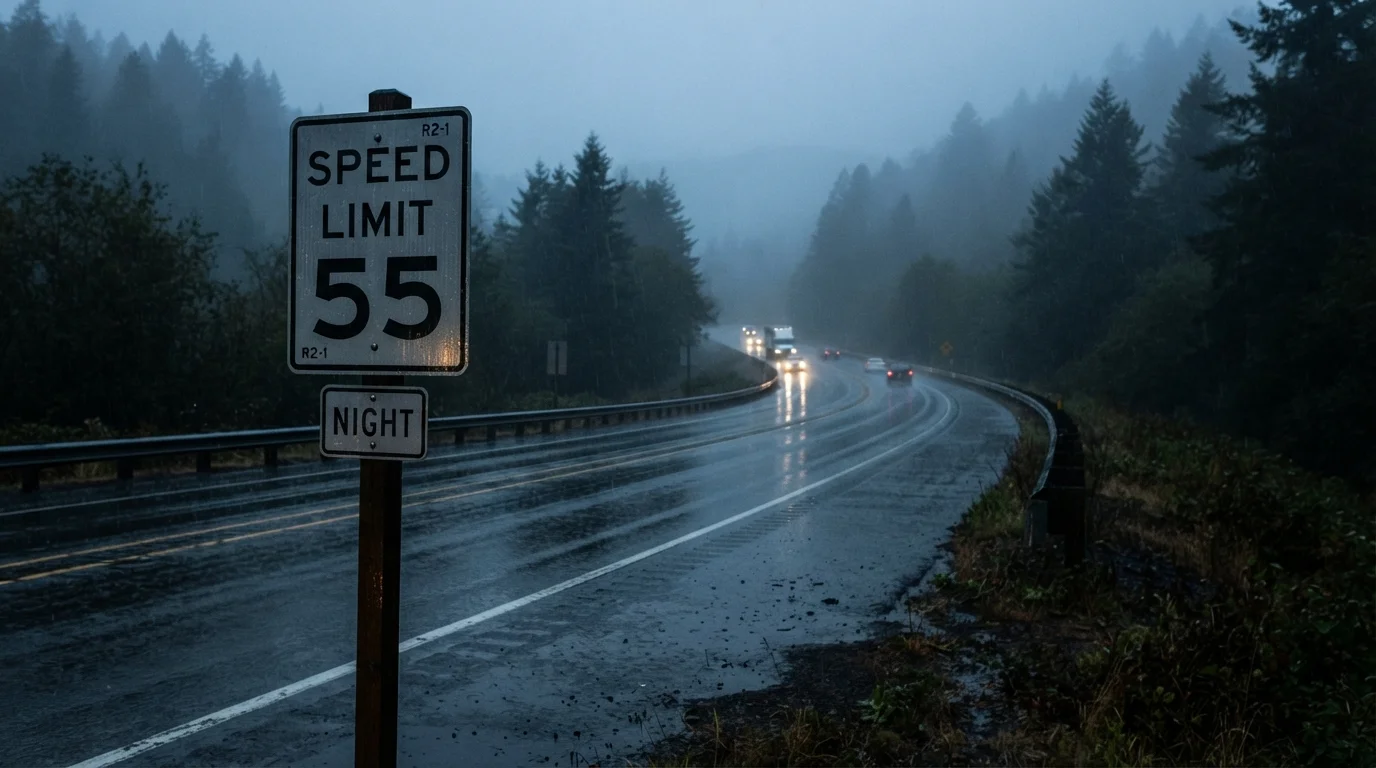
The maximum legal speed for a stretch of road under normal, ideal conditions. Driving at or below this limit may still be unsafe depending on weather, traffic, or road conditions.
Center turn lane
A lane in the middle of a road marked for left turns only, shared by vehicles traveling in both directions. It is not a travel or merging lane.
Move-over law
A state law requiring drivers to change lanes or slow down when passing stationary emergency, law enforcement, or maintenance vehicles on the roadside. Requirements vary by state.
This structure matters practically: a rule you learned in one state may not apply identically in another. Drivers relocating between states, or those who frequently cross state lines, should review each state's driver handbook. Most state DMVs publish these documents free online.
Right-of-Way Rules Every Driver Must Know
Right-of-way determines which driver, cyclist, or pedestrian proceeds first at a given point of conflict. A critical concept: the law never technically grants right-of-way - it only specifies who must yield it. Assuming you have priority without verifying the situation is one of the most common causes of intersection collisions.
Core right-of-way principles
- Four-way stops: The first vehicle to arrive proceeds first. If two vehicles arrive simultaneously, the driver on the left yields to the driver on the right.
- Uncontrolled intersections: Yield to traffic already in the intersection and, where arrival is simultaneous, to the vehicle on your right.
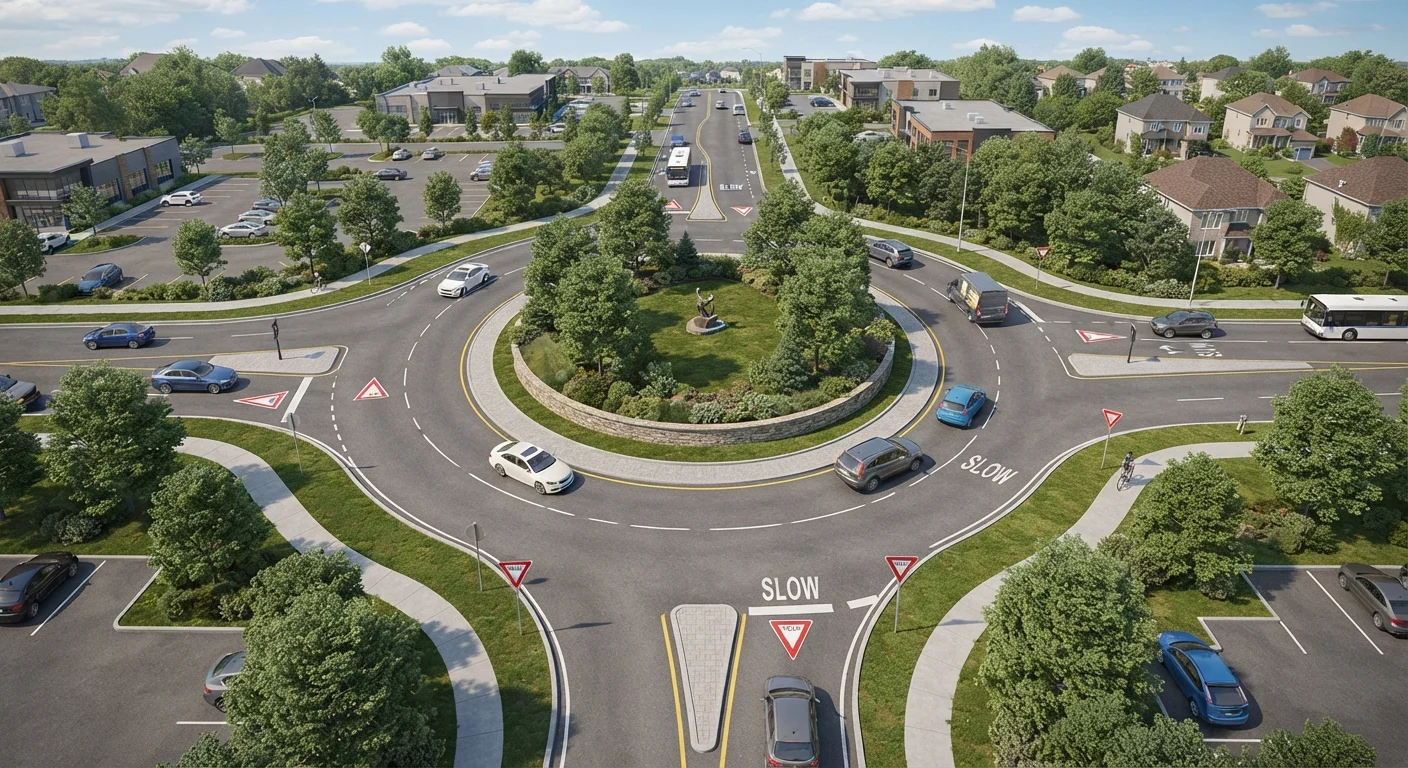
- Yield signs: Slow and give way to cross traffic and pedestrians. Stop only if necessary - a yield sign does not require a full stop unless traffic demands it.
- Merging: A driver entering a lane from a ramp or side road generally yields to traffic already in that lane.
- Pedestrians and cyclists: Pedestrians in marked crosswalks must be yielded to in all states. Cyclists on the road have the same rights and responsibilities as vehicles in most jurisdictions.
Roundabouts operate under their own distinct right-of-way logic. If you encounter one, our guide on how roundabouts work covers entry, lane use, and common errors in detail.
Pause Before Proceeding at Green Lights
Even when you have a green light, take a brief moment to scan cross traffic before entering the intersection. Drivers running red lights are a consistent factor in serious intersection crashes. A one-second check costs nothing and can prevent a collision.
Speed Limits, Signals, and Lane Markings
Three visual systems govern the flow of traffic on every American road: speed limit signs, traffic signals, and lane markings. Understanding all three is non-negotiable for legal and safe driving.
Speed limits
Posted speed limits are legal maximums under ideal conditions - not targets or recommended cruising speeds. States set default limits for different road types (residential streets, rural highways, interstates), and local governments often post lower limits in school zones, construction zones, or densely populated areas. Conditions such as rain, fog, or heavy traffic may require driving significantly below the posted limit. For a deeper look at this distinction, see our article on speed limits versus safe speeds.
Traffic signals
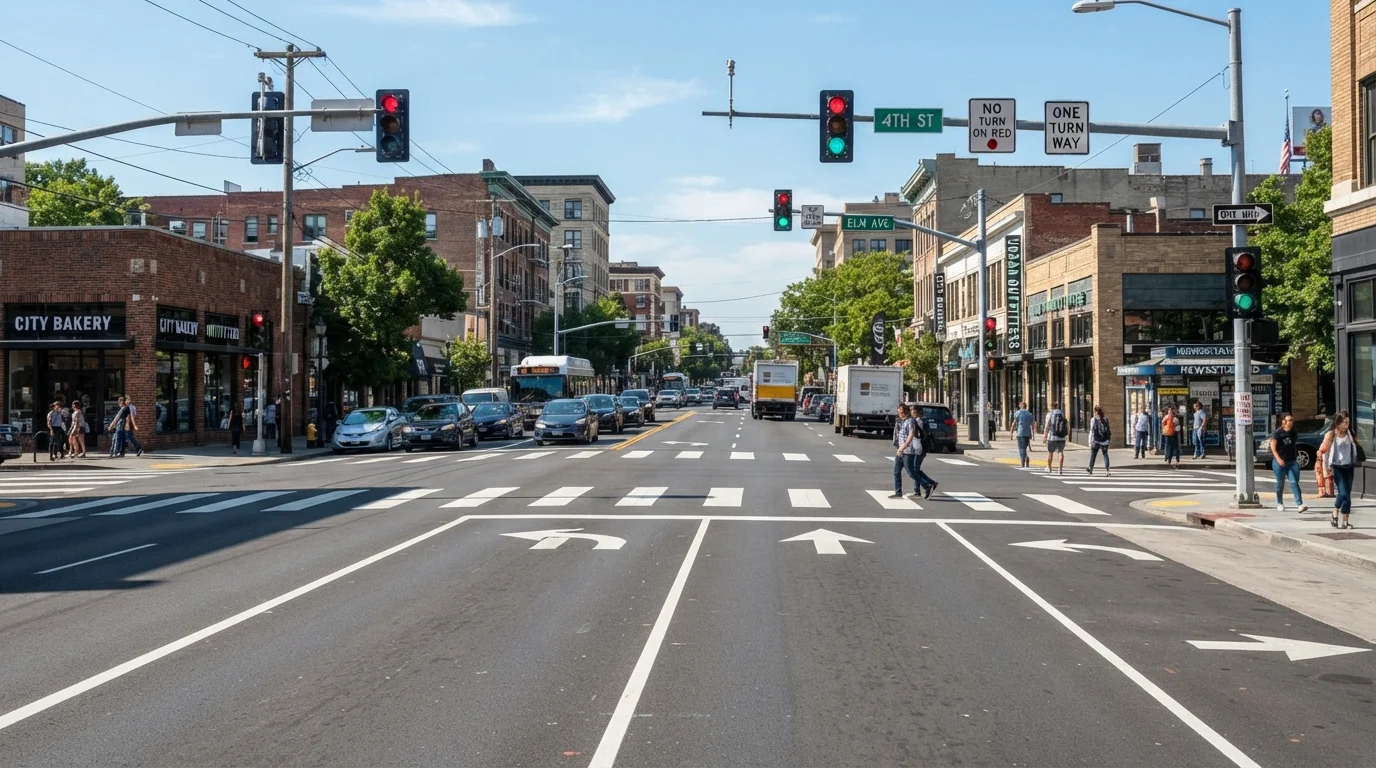
- Green: Proceed if the intersection is clear. A green light does not guarantee others will stop.
- Yellow: Prepare to stop if you can do so safely - not an invitation to accelerate.
- Red: Stop completely before the stop line. Right turns on red are generally permitted after a full stop unless a sign prohibits it.
- Flashing red: Treat as a stop sign. Flashing yellow means proceed with caution.
Lane markings
White lines separate traffic moving in the same direction; yellow lines divide opposing traffic. Dashed lines permit lane changes when safe; solid lines restrict them. A double solid yellow line means no passing in either direction. Center turn lanes - marked with both dashed and solid yellow lines - are shared by drivers turning left from both directions and should never be used for through travel or merging.
School and Construction Zone Rules
Speed limits in school zones and active construction zones are often significantly lower than the surrounding road limit and are strictly enforced. Fines for violations in these zones are commonly doubled under state law. Always watch for posted zone signs and flashing beacons that indicate when reduced speeds apply.
Common Mistakes New Drivers Make
Knowing the rules intellectually and applying them under real driving conditions are different skills. New drivers consistently struggle with a predictable set of errors - many of which compound over time if not corrected early.
- Insufficient following distance: A three-second gap from the vehicle ahead is a widely taught baseline under normal conditions; wet or icy roads require more. Tailgating reduces reaction time and is a factor in a significant share of rear-end crashes.
- Incomplete stops: A rolling stop at a stop sign or red light is illegal regardless of whether cross traffic is present. Officers regularly issue citations for this.
- Ignoring blind spots: Mirrors do not cover every angle around a vehicle. Always perform a physical shoulder check before changing lanes or merging.
- Misreading lane markings: New drivers sometimes drift into center turn lanes, mistake them for travel lanes, or cross solid lines during passing.
- Underestimating state variation: Rules around handheld device use, headlight-on requirements, and move-over laws for emergency vehicles differ meaningfully by state.
Understanding which habits to build - and which to unlearn - early makes a lasting difference. Our companion piece on what new drivers often get wrong goes deeper on the patterns that cause the most trouble in a driver's first year. For information on responsibilities beyond the road itself - such as insurance and registration - the car ownership hub is a practical next stop.
This article provides general educational information about U.S. traffic laws and is not a substitute for your state's official driver's manual or guidance from a licensed driving instructor. Rules vary by jurisdiction - always verify requirements with your state DMV.