Why Roundabouts Exist and Why They Work
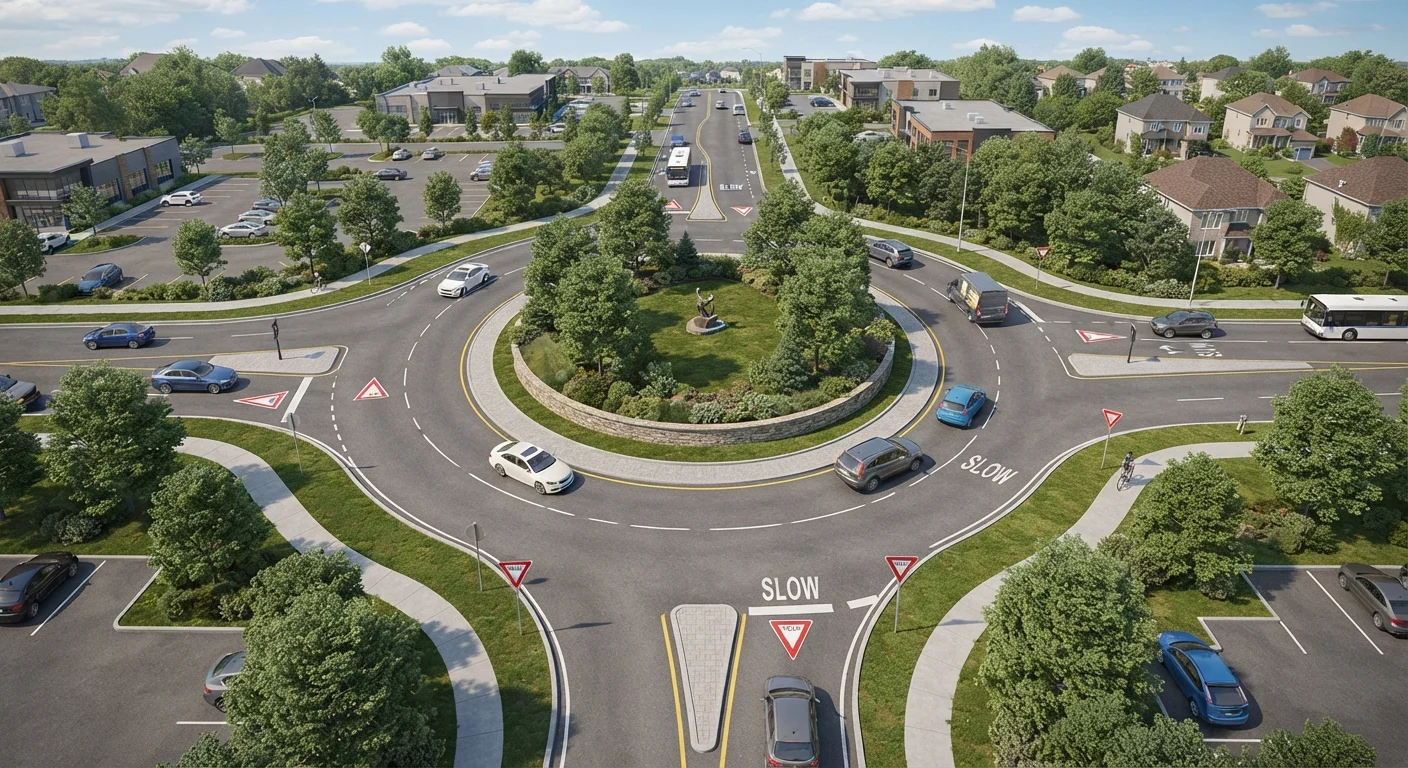
Roundabouts replace traditional signalized or stop-controlled intersections with a continuous circular flow. The Federal Highway Administration notes that roundabouts generally reduce fatal and injury crashes compared with conventional intersections, primarily because all traffic moves in the same direction and at lower speeds, eliminating the high-speed right-angle collisions that cause the most serious injuries.
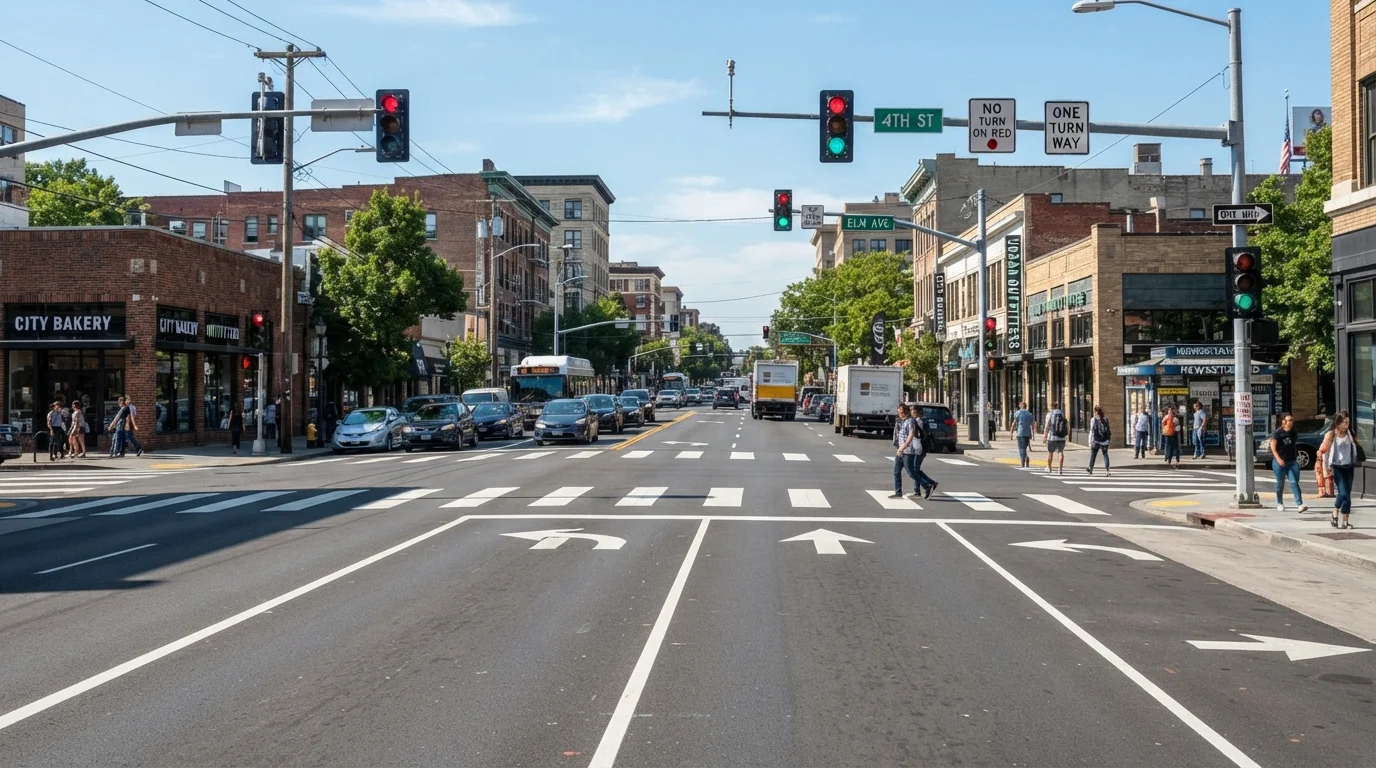
Despite these advantages, many American drivers grew up with four-way stops and traffic lights, making the roundabout feel foreign. The confusion is understandable - the U.S. adopted roundabouts relatively late compared with the United Kingdom or France - but the rules are straightforward once internalized. For a broader grounding in U.S. right-of-way principles, see our overview of U.S. traffic laws.
What you will need
How to Navigate a Roundabout Correctly
The steps below apply to the vast majority of roundabouts you will encounter on American roads. Multi-lane roundabouts follow the same core rules but require earlier lane selection.
Yield Sign Recognition
Identifies the mandatory slow-and-give-way point at every roundabout entry.
Turn Signals
Communicate your intended exit to other drivers and pedestrians as you navigate the circle.
Satellite or Navigation App
Lets you preview an unfamiliar multi-lane roundabout layout before arriving.
Slow Down and Read the Signs on Approach
As you approach a roundabout, reduce your speed and look for the yellow warning sign (a circular arrow) that typically appears several hundred feet ahead. Additional signs will show which lane leads to which exit - read these before you reach the yield line, not after.
Choose Your Lane Before Entering
Position your vehicle in the correct lane while you still have room to do so safely. Changing lanes inside a roundabout is illegal in most states and extremely dangerous. If you realize you are in the wrong lane as you enter, complete the circle and exit, then re-approach correctly rather than cutting across lanes.
Yield to Circulating Traffic, Then Enter
At the dashed yield line, look left and scan for vehicles already traveling inside the roundabout. When there is a clear, safe gap, merge into the flow. You do not need to wait for the entire roundabout to be empty - simply wait for a workable gap, just as you would when merging onto a road.
Navigate to Your Exit
Once inside, travel counterclockwise (in the U.S.) and stay in your lane. Keep your speed consistent and moderate - most roundabouts are designed for 15-25 mph. Watch for pedestrian crosswalks on each exit leg; pedestrians crossing there have the right of way.
Signal and Exit Smoothly
Activate your right turn signal as you pass the exit just before yours - this tells pedestrians and waiting drivers that you intend to leave at the next opportunity. Steer smoothly onto the exit road, cancel your signal, and resume normal road speed as lane markings allow.
Yield Does Not Mean Stop
One of the most dangerous roundabout mistakes is treating the yield line like a stop sign. You should slow and scan for circulating traffic, then enter smoothly when there is a safe gap. Unnecessary stopping in a roundabout can cause rear-end collisions from drivers behind who are already adjusting their speed.
Practice the Approach Before You Need It
If you know you'll be driving through an unfamiliar roundabout, look it up using a satellite map view beforehand. Counting the exits and noting which lane serves your intended direction takes less than a minute and can eliminate hesitation in the moment.
Common Mistakes and How to Avoid Them
Even experienced drivers make predictable errors in roundabouts. Understanding these patterns helps you both avoid them yourself and anticipate what other drivers might do.
- Stopping unnecessarily at the entry: Treating the yield sign like a stop sign disrupts flow. Slow and scan, but proceed when clear.
- Entering the wrong lane: In multi-lane roundabouts, this is the leading cause of side-swipe collisions. Always read the approach signs. This overlaps with the spatial misjudgments described in common first-year driving errors.
- Ignoring pedestrian crosswalks: Every exit leg typically has a marked crosswalk. Yield to pedestrians there, even after you have exited the circle.
- Tailgating inside the roundabout: Vehicles ahead may slow for a pedestrian or a gap in traffic. Maintain a safe following distance throughout.
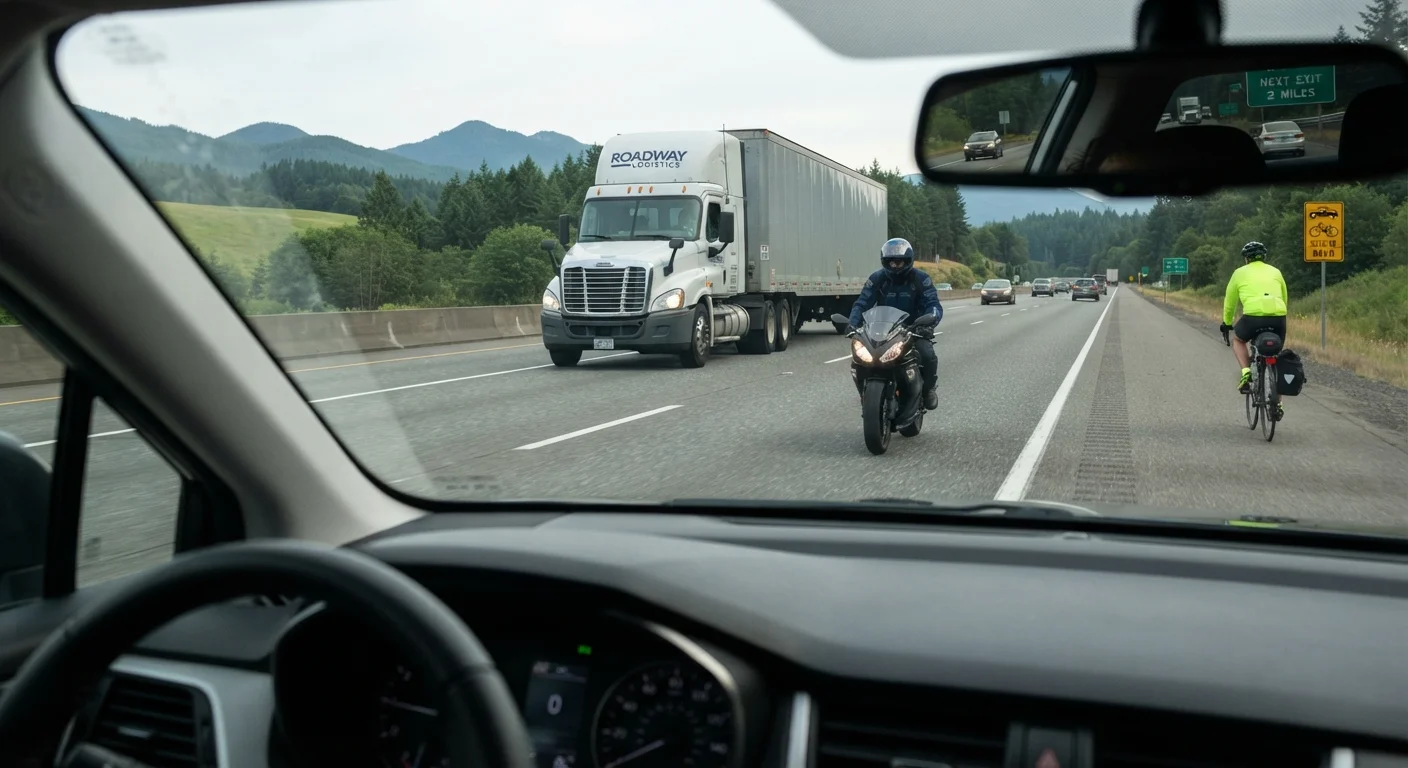
- Failing to yield to large vehicles: Trucks and buses may need to use both lanes to complete their turn. If you see a large vehicle approaching or inside the roundabout, give it extra clearance. See how to share the road with large vehicles for more context.
Never Stop Inside the Roundabout
Stopping mid-circle to let in a waiting vehicle - however polite it may feel - is not only incorrect, it disrupts traffic flow and increases crash risk. Once you are circulating, maintain your speed and position. Drivers at the entry yield to you, not the other way around.
Roundabout navigation is also a useful reference point when studying what road signs legally require of you, since approach signage is critical to correct lane selection.