What Digital Wellness Apps Actually Offer
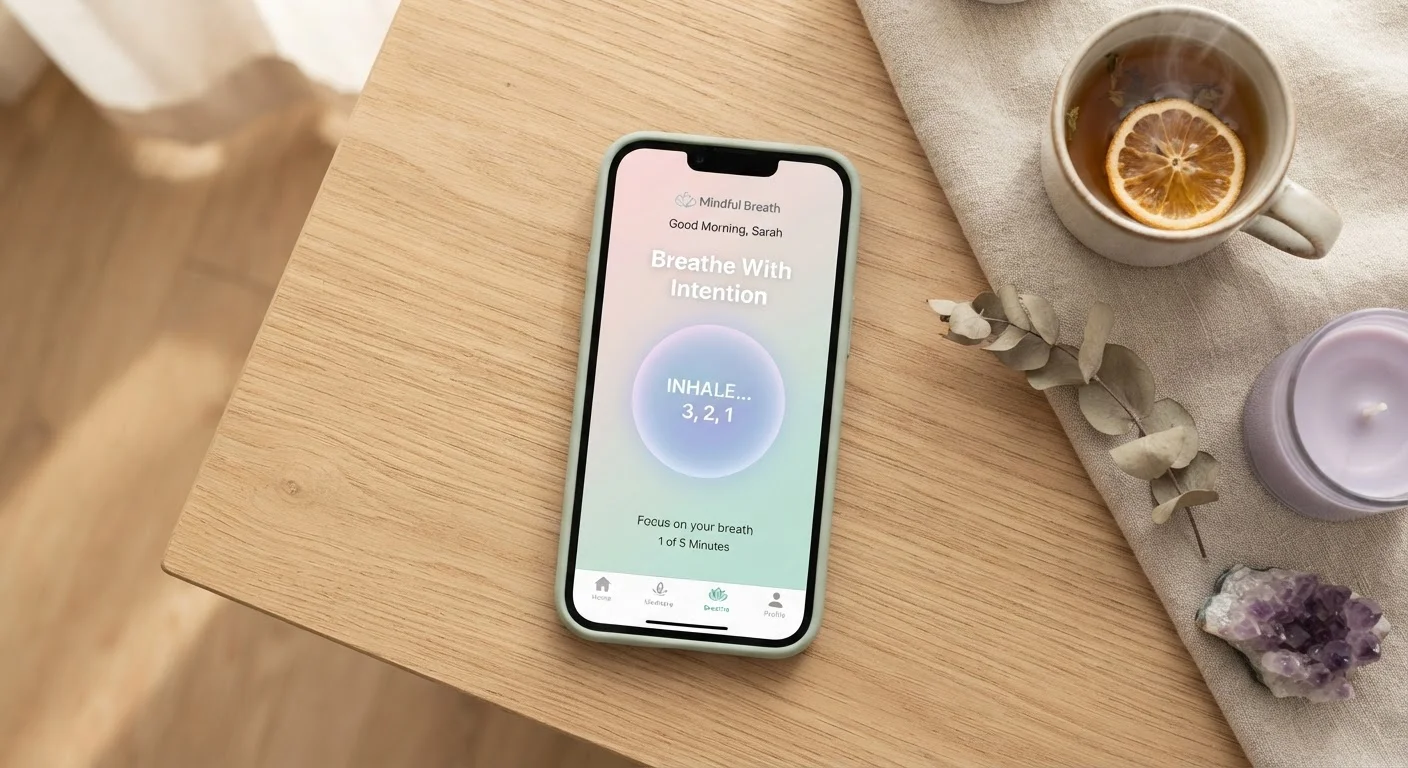
Mental wellness apps cover a broad range of functions - from guided meditation and sleep coaching to mood journaling, CBT-based exercises (cognitive behavioral therapy), and stress tracking. Some are built around a single practice; others bundle multiple tools into one platform.
Their appeal is straightforward: they're available any time, require no appointment, and often cost far less than traditional therapy. For many people, they serve as a first point of contact with mental health practices - a low-stakes way to build habits around breathing, reflection, or sleep hygiene.
To understand where these tools fit into a bigger picture of mental health, see our comprehensive mental wellbeing resource for a grounded overview of stress, sleep, and emotional regulation.
Available 24/7 with no appointment needed
Wellness apps are accessible at any hour, making it easier to use a calming tool during a late-night anxious spiral or a stressful commute - situations where a therapist isn't reachable.
Lower cost barrier than traditional therapy
Many apps offer free tiers or modest subscription fees, making mental health tools more accessible to people who face financial or geographic barriers to professional care.
Structured entry point for evidence-informed practices
Apps built around CBT techniques, mindfulness, or sleep hygiene can introduce these practices in a guided format that helps beginners build consistent habits.
Useful for tracking patterns over time
Mood and sleep tracking features can surface patterns the user might not notice otherwise, giving them useful data to discuss with a therapist or doctor.
Reduces stigma through private, low-stakes engagement
For people hesitant to seek professional help, an app offers a private, judgment-free way to begin engaging with their mental wellbeing without the social exposure of an appointment.
Where These Apps Fall Short
Despite their convenience, wellness apps carry real limitations that are worth understanding before relying on them heavily.
Not a substitute for professional mental health care
Apps cannot diagnose conditions, provide therapy, or adapt to clinical needs the way a licensed professional can. Relying on them for serious mental health concerns can delay needed care.
Effectiveness evidence is still limited
While some app-delivered CBT and mindfulness tools show promise in research, the overall evidence base is uneven. Many apps make efficacy claims that outpace the science supporting them.
High dropout and low engagement rates
Studies consistently find that most users disengage from wellness apps within a few weeks. Without external accountability, sustained use is difficult for many people.
Data privacy protections vary widely
Unlike healthcare providers bound by HIPAA, wellness apps operate under varying privacy standards. Sensitive mood and health data may be shared with advertisers or third parties.
Risk of replacing real-world connection
Relying heavily on an app for emotional support can inadvertently reduce motivation to seek in-person connection or professional help - both of which are more effective for many people.
A Note on "Clinically Validated" Claims
Some apps advertise that their content is "clinically validated" or "therapist-designed." These phrases don't carry a standardized regulatory meaning in the US. They may indicate genuine research backing, or they may simply reflect input from a credentialed advisor. When an app makes clinical claims, look for specific published studies rather than general endorsements. A good app will link to its research.
Apps can also create a false sense of progress. Logging a mood daily or completing a breathing exercise can feel productive without actually addressing underlying issues - a pattern sometimes called performative self-care. Genuine mental wellness usually involves more than a streak counter.
Privacy and Data: A Consideration Worth Taking Seriously
Many wellness apps collect sensitive personal data - including mood logs, sleep patterns, and journal entries. How that data is stored, shared, or sold varies significantly from one platform to another, and the wellness app space is not uniformly regulated the way medical records are under HIPAA.
Before signing up, review the app's privacy policy to understand what data is collected, whether it's shared with third parties, and whether you can delete your account and data. If an app requires login through a social media account, consider that an additional data-sharing step.
~10,000+
Mental health apps available in major app stores
Estimates from health technology researchers suggest tens of thousands of mental health and wellness apps exist, with highly variable quality and evidence bases.
~4%
Users still active after 30 days
Research on digital health app engagement has found that the large majority of users stop using wellness apps within the first month of download.
This due diligence is similar to how you'd evaluate any digital tool that stores personal information. The same thoughtfulness applies here as it does when evaluating digital payment security.
How to Use Wellness Apps Wisely
The most practical framing for wellness apps is as a supplement, not a substitute. They work well alongside therapy, not in place of it. They can reinforce habits introduced by a clinician, make daily practice more consistent, and offer a structured entry point for practices like mindfulness and meditation that have meaningful research support.
Consider using a self-reflection check-in - like a personal mental wellness audit - periodically to assess whether an app is actually moving the needle for you in areas like sleep, mood, and stress.
If you notice persistent symptoms of anxiety, depression, or other mental health concerns, an app is not the appropriate primary response. Reach out to a licensed mental health professional who can provide individualized support.
This article is for general informational and educational purposes only. It is not a substitute for professional mental health advice, diagnosis, or treatment. If you have concerns about your mental health, please consult a qualified healthcare provider.