You Don't Need a Full Renovation to Fix a Bathroom
A bathroom doesn't have to be gutted to work better. Many of the most common complaints - poor lighting, cluttered counters, inadequate storage, outdated fixtures - can be addressed without removing a single tile or moving any plumbing. These eight upgrades focus on function first, and they're organized to be manageable for homeowners at different comfort levels with DIY work.
If you're weighing whether a larger project makes more sense, our bathroom remodeling planning walkthrough covers what a full renovation actually involves. But for most everyday frustrations, the projects below are a better starting point.
Start With the Problem That Bothers You Most
Rather than tackling all eight upgrades at once, identify the single daily frustration that costs you the most time or annoyance - cluttered counters, poor lighting, a weak showerhead - and start there. One well-executed improvement often makes the next one easier to plan and budget.
Upgrade to layered lighting
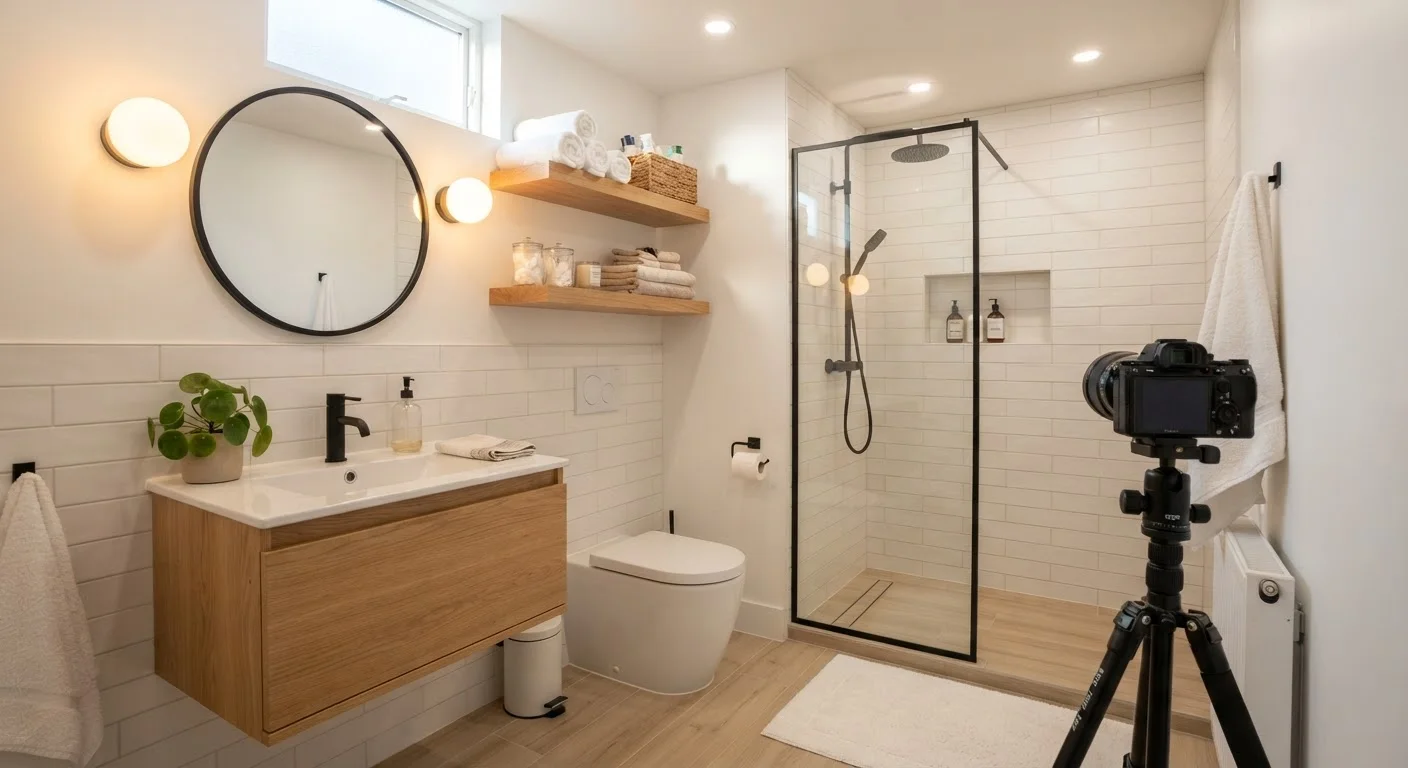
Most bathrooms rely on a single overhead fixture - which creates flat, unflattering light and leaves the vanity mirror area shadowed. Adding a pair of sconce-style lights on either side of the mirror (rather than above it) distributes light evenly across your face and eliminates shadows that make tasks like shaving or applying makeup harder.
If adding wall sconces feels like a bigger project, a plug-in vanity mirror with built-in lighting is an easy no-wiring alternative. Either way, layered light - ambient overhead plus task lighting at the mirror - meaningfully improves everyday usability.
Side-mounted vanity lights eliminate shadows that make everyday grooming tasks unnecessarily difficult.
Replace the showerhead
A showerhead swap is one of the most accessible DIY plumbing tasks a homeowner can do - typically requiring only an adjustable wrench and plumber's tape. Upgrading from a low-flow or aging fixture to one with adjustable spray settings can improve water pressure, comfort, and even water distribution.
Look for models with a pause function, which can reduce water waste without requiring you to adjust temperature each time. If you're unfamiliar with basic plumbing terminology, our DIY renovation vocabulary guide is a helpful starting reference before you begin.
Swapping a showerhead typically takes under 30 minutes and requires no special tools or permits.
Mount a medicine cabinet or recessed shelf
Counter clutter is a constant frustration in small bathrooms. A surface-mount medicine cabinet - one that attaches directly to the wall rather than cutting into it - adds concealed storage without demolition. Many surface-mount options are surprisingly attractive and come in sizes that fit narrow walls.
If you prefer open storage, a small floating shelf positioned near the sink keeps everyday items within reach while clearing counter space. For ideas on making walls do more work throughout your home, see how to use vertical space effectively.
Surface-mount cabinets add concealed storage without cutting into walls or requiring a contractor.
Add over-door and back-of-door organizers
The back of your bathroom door is often completely unused real estate. Over-door hooks and pocket organizers can hold towels, robes, hair tools, or cleaning supplies - keeping them accessible without taking up floor or counter space.
This approach works especially well in bathrooms shared by multiple people, where each person can have their own designated hook or pocket. It also applies directly to the strategies discussed in our article on organizing small spaces under real constraints.
The back of a bathroom door can hold a surprising amount - towels, tools, and supplies - without a single nail.
Swap out the faucet
An outdated or dripping faucet affects both how the bathroom looks and how it functions. Replacing a bathroom faucet is a common DIY task that most homeowners with basic tool familiarity can handle in a few hours. The most important step is confirming the number of holes in your sink deck (one-hole, three-hole center-set, or widespread) before purchasing a replacement.
Turning off the water supply valves under the sink before starting is essential. If at any point the shutoff valves don't fully close or the supply lines look corroded, it's worth calling a licensed plumber rather than proceeding.
Confirm your sink's hole configuration before buying a new faucet - mismatches are the most common installation mistake.
Install a towel bar or ring in a smarter location
Many bathrooms have towels hung awkwardly - too far from the shower, crammed onto one bar, or draping over a toilet tank. Repositioning or adding a towel ring or bar to a location that's actually convenient - right outside the shower reach, for example - sounds small but reduces daily friction significantly.
Command-style adhesive hooks and bars have improved considerably and can hold full-size towels without wall damage when installed according to weight guidelines. For permanent bars, drilling into studs or using proper drywall anchors is important for long-term stability.
Moving a towel bar a few feet closer to the shower can eliminate a small but daily frustration.
Refresh caulk and grout lines
Discolored or cracked caulk around the tub, shower, and sink looks dated and can allow moisture to seep into walls over time. Removing old caulk with a plastic scraper or caulk remover tool and applying a fresh bead of mildew-resistant silicone caulk is an inexpensive project that makes a noticeable visual difference.
Grout lines can be cleaned with a stiff-bristle brush and a grout cleaner, or re-colored with grout paint if staining is too deep to scrub out. Neither task requires demolition and both meaningfully extend the life of existing tilework.
Fresh caulk is one of the cheapest and most visually impactful things you can do in a bathroom.
Improve ventilation with a fan upgrade
Poor ventilation leads to mold, peeling paint, and persistent odors - all of which make a bathroom harder to maintain. If your existing exhaust fan is loud, slow, or undersized for the room, replacing it with a quieter, higher-capacity model is a worthwhile upgrade.
Fan replacement typically involves working with low-voltage wiring, which many confident DIYers handle themselves. However, if your existing fan is wired directly into a circuit without a dedicated switch, or if you need to add new ductwork, a licensed electrician should be involved. Always turn off the circuit breaker before touching any wiring.
A quiet, properly sized exhaust fan is one of the most effective tools for preventing long-term bathroom moisture damage.
Making the Most of What You Already Have
The most effective small bathroom upgrades tend to work with the existing layout rather than against it. Swapping fixtures, adding smart storage, and improving light quality all build on your current infrastructure - saving time, money, and the disruption that comes with demolition.
Storage, in particular, is where most small bathrooms have untapped potential. Walls, doors, and the space above the toilet are almost always underused. For a broader look at storage that doesn't require building anything new, see our guide on using vertical space throughout the home. And if you're maintaining a bathroom in a smaller apartment or condo, the strategies in organizing for small spaces apply directly.
When to Call a Professional
These upgrades are designed to avoid major structural or plumbing work. However, any task involving electrical wiring beyond a simple swap, moving supply or drain lines, or work requiring a building permit should involve a licensed contractor. When in doubt, a paid consultation with a plumber or electrician is far less expensive than fixing a DIY error.