Why a Seasonal Schedule Works Better Than Reacting to Problems
Most home repairs that catch owners off guard didn't appear overnight. A slow roof leak, a furnace filter clogged for two winters, a cracked caulk line that let moisture into a wall - these problems develop gradually and quietly. A seasonal maintenance calendar interrupts that cycle by giving you a structured reason to look before things fail.
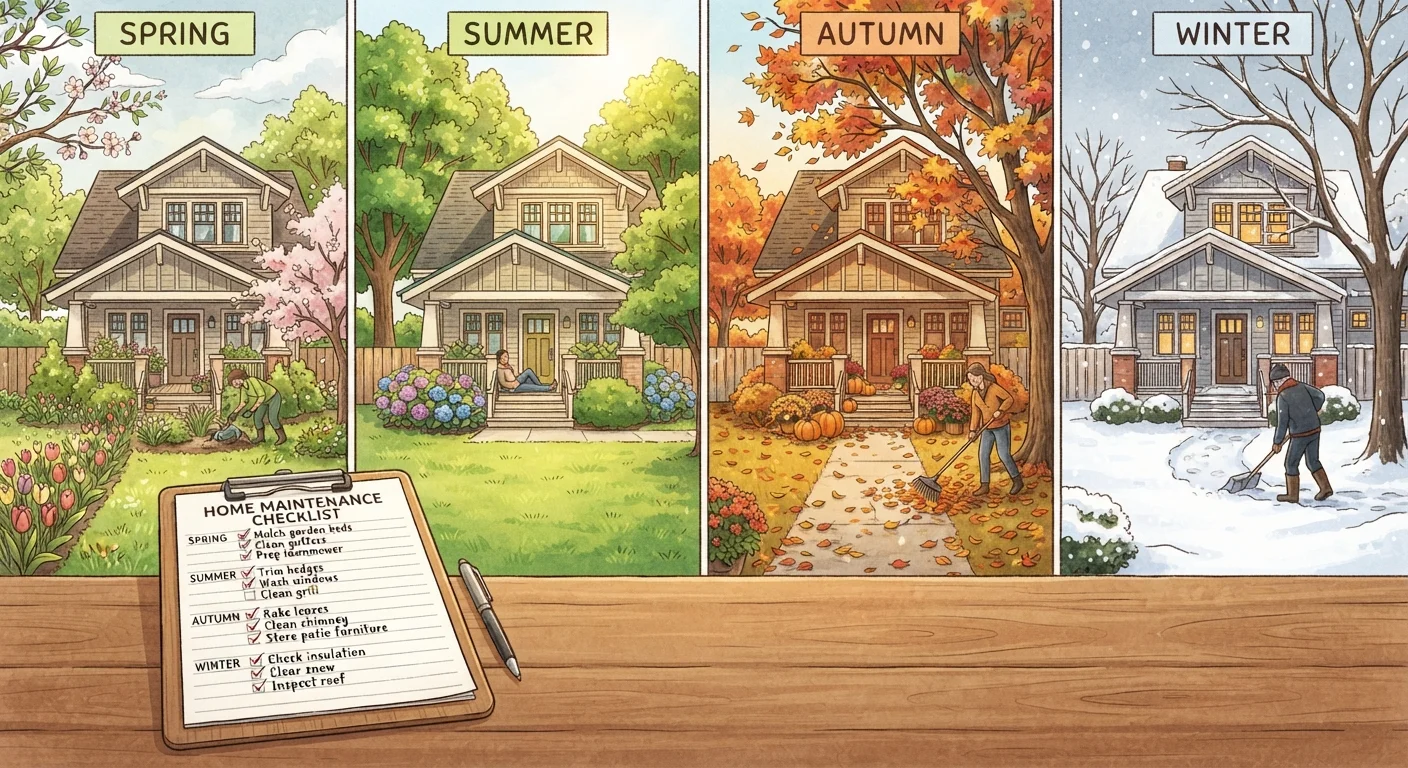
The logic is simple: each season stresses different parts of your home. Spring thaw tests drainage and roofing. Summer heat challenges HVAC and exterior surfaces. Fall is the preparation window before cold weather arrives. Winter demands vigilance around heating, plumbing, and ice. Matching your tasks to those stress points is more effective than a random weekend checklist.
If you're weighing whether a formal schedule is right for you, our comparison of scheduled versus as-needed maintenance walks through both approaches honestly.
The Four-Season Maintenance Breakdown
Spring (March-May)
- Roof and gutters: Inspect shingles for winter damage; clear gutters of debris and check that downspouts direct water at least 6 feet from the foundation.
- Exterior caulking: Check seals around windows, doors, and where siding meets trim. Reapply where cracked or pulling away.
- HVAC transition: Replace the furnace filter, schedule an AC tune-up before peak cooling season, and clean registers.
- Crawl space and basement: Look for moisture intrusion or standing water after snowmelt and spring rain.
Summer (June-August)
- Deck and fence: Check for rot, loose fasteners, and wood that needs sealing or staining before UV exposure intensifies.
- Window screens: Repair or replace torn screens to keep insects out when windows are open.
- Dryer vent and exhaust fans: Clean lint from the dryer duct and check bathroom and kitchen exhaust fans - blockages are a fire and moisture risk. See our guide to commonly forgotten maintenance tasks for more.
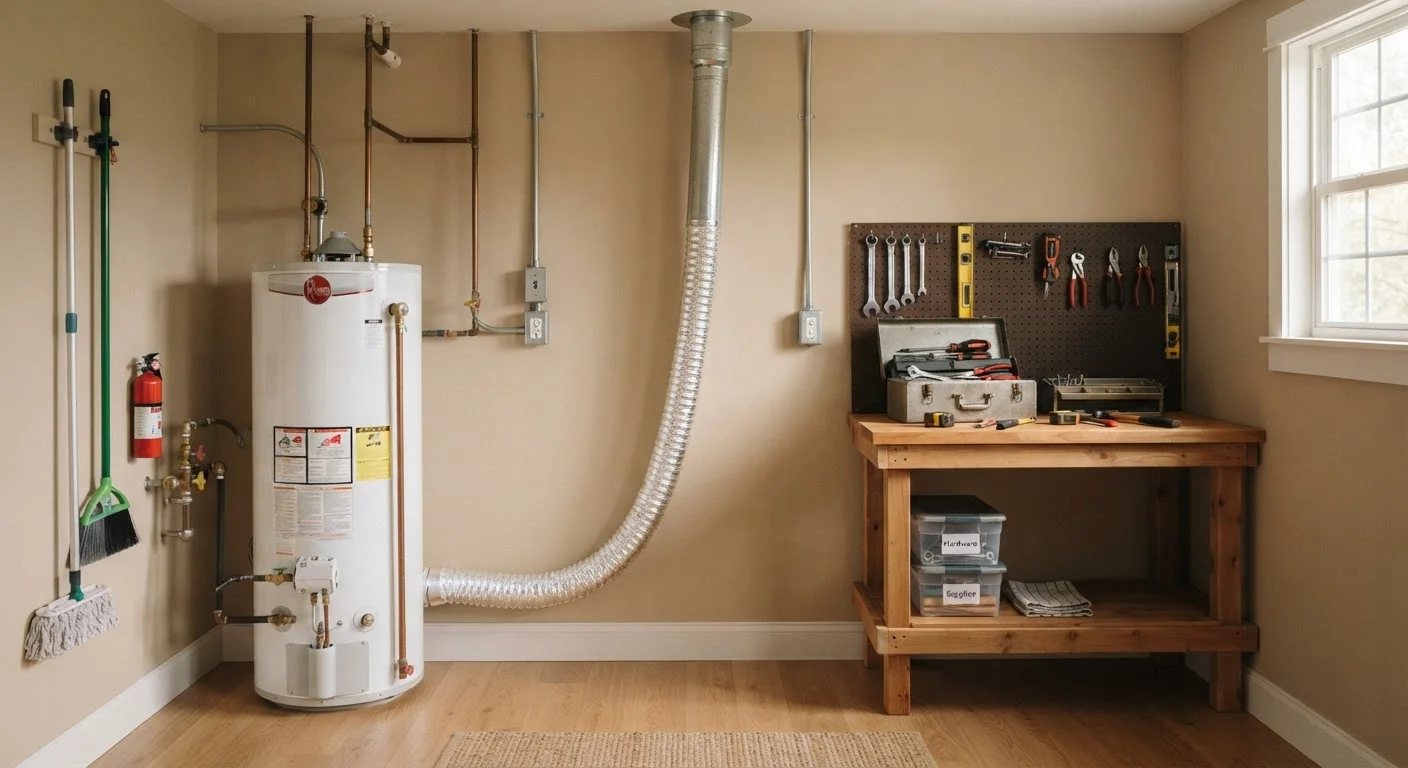
- Water heater: Flush sediment from the tank (or follow the manufacturer's guidance for tankless units) to maintain efficiency.
Fall (September-November)
- Heating system: Have your furnace or heat pump serviced by a licensed HVAC technician before temperatures drop.
- Weatherproofing: Seal drafts around doors and windows, insulate exposed pipes in unheated spaces, and test your thermostat. Our full pre-winter weatherproofing walkthrough covers this in detail.
- Gutters (again): Clean after leaves have fallen - this is the most important gutter cleaning of the year.
- Smoke and CO detectors: Test all units and replace batteries. Replace any detector that is more than 10 years old.
Winter (December-February)
- Pipe monitoring: Know where your main shutoff is and keep cabinet doors under sinks open during hard freezes. Our plumbing basics overview explains what to look for.
- Attic insulation and ventilation: Check for ice dams forming at roof edges - they signal heat loss through the attic.
- Interior air quality: Run bathroom fans when bathing and monitor humidity levels to prevent mold during tight, sealed-up months.
Ice dam
A ridge of ice that forms at the edge of a roof when heat escaping from the attic melts snow, which then refreezes at the colder eaves. Ice dams can force water under shingles and into the home.
Caulking
A flexible sealant applied to gaps and joints around windows, doors, and exterior surfaces to prevent air and moisture from entering the home. It degrades over time and needs periodic inspection.
Carbon monoxide (CO) detector
A device that monitors indoor air for carbon monoxide, a colorless, odorless gas produced by fuel-burning appliances. CO detectors are required by code in most U.S. states.
Crawl space
A shallow, unfinished area beneath the main floor of a home that provides access to plumbing, wiring, and structural components. It is particularly vulnerable to moisture problems.
HVAC
Stands for Heating, Ventilation, and Air Conditioning. It refers to the systems that control temperature and air quality in a home and typically requires annual professional servicing.
Know When to Call a Professional
Some seasonal tasks are straightforward enough for most homeowners - cleaning gutters, replacing filters, caulking a window frame. Others touch systems where errors carry real safety or code implications: gas furnaces, electrical panels, structural concerns, and anything involving permits.
A useful rule of thumb: if a task involves gas lines, the main electrical panel, the roof structure, or load-bearing elements, contact a licensed professional rather than treating it as a weekend project. Our breakdown of DIY tasks versus jobs that require a licensed pro gives you a clear framework for making that call. Understanding basic terminology also helps when talking to contractors - our home renovation vocabulary reference is a good starting point.
Permits and Local Codes Apply
Many home improvement and maintenance tasks - especially those involving electrical, gas, plumbing, or structural systems - require permits or must be performed by a licensed contractor under local building codes. Requirements vary by municipality. Always verify what your jurisdiction requires before starting work, and don't skip the inspection step if one is required.