What Gutters Actually Do
Most homeowners think of gutters as a minor cosmetic feature - something to repaint when the house gets a facelift. In reality, gutters are doing continuous structural work. Every time it rains, your roof collects an enormous volume of water and funnels it toward the edges. Without gutters, that water cascades straight down along your foundation walls, saturating the soil, eroding the grade, and eventually finding its way into your basement or crawl space.
A properly functioning gutter system moves water from your roof into downspouts and directs it several feet away from your home. That single function protects your foundation, siding, fascia boards, landscaping, and interior walls from moisture intrusion. As noted in our guide to commonly skipped maintenance tasks, gutters often go unnoticed until the damage they were preventing becomes impossible to ignore.
$10,000+
Average foundation repair cost from water damage
Foundation repair estimates commonly range from several thousand to well over ten thousand dollars depending on severity and region, according to home repair industry sources.
2x/year
Recommended minimum gutter cleaning frequency
Home maintenance guidance from building and roofing associations generally recommends cleaning gutters at least twice annually as a baseline.
4-6 ft
Minimum downspout extension distance from foundation
Building science guidelines recommend downspouts discharge water at least four to six feet from the home's foundation to prevent soil saturation.
What Goes Wrong When Gutters Fail
Gutter problems fall into two broad categories: blockages and physical damage. Both lead to the same result - water ending up somewhere it shouldn't be.
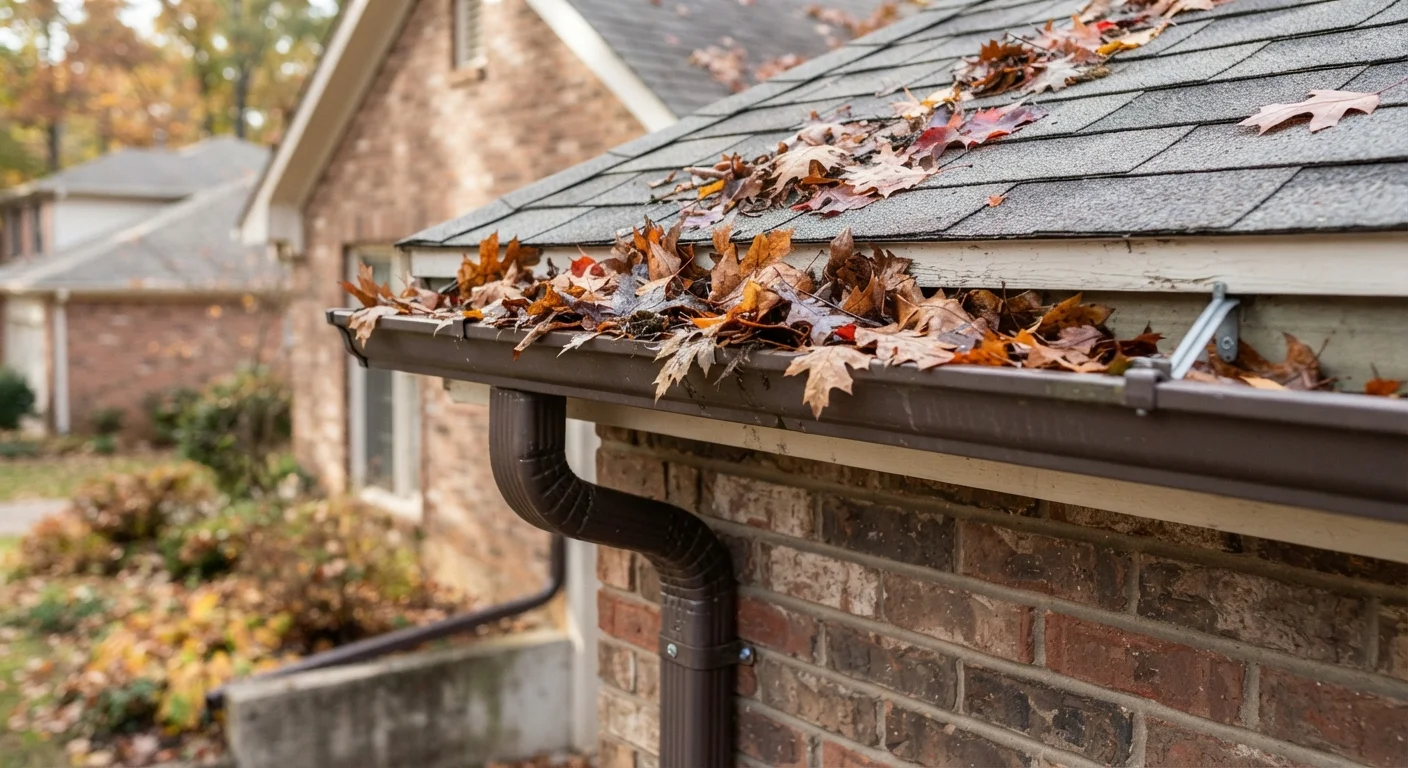
Clogs are the most common issue. Leaves, twigs, shingle granules, and even bird nests accumulate in the channel. When water can't flow freely, it pools in the gutter itself, adding weight that causes sagging and pulling away from the fascia. Overflow spills down the side of the house, wetting siding and working behind trim. In winter, standing water in a clogged gutter freezes and expands, creating ice dams that can lift shingles and force meltwater under your roof deck.
Physical damage includes sagging sections from pulled fasteners, leaking seams or joints, rust spots on steel gutters, and downspouts that are cracked, disconnected, or discharging too close to the foundation. Even a small gap at a joint can direct a steady stream of water onto your siding all season long.
Ignoring these issues follows a predictable pattern. As our article on the real costs of skipping routine maintenance explains in a broader context, small deferred problems rarely stay small.
A Quick Visual Check Takes Two Minutes
During the next rainstorm, stand back and watch your gutters from a safe distance. Water should exit cleanly through the downspout - not spill over the front edge or drip from joints. That two-minute observation can tell you more than a dry-weather inspection ever will.
Keeping Your Gutters in Working Order
Gutter maintenance doesn't require special skills or expensive tools. Here's what a practical routine looks like:
- Clean twice a year. Late spring and late fall are the standard schedule. If you have many overhanging trees, add a midsummer check.
- Flush with a hose. After removing debris by hand or with a gutter scoop, run water through the channel toward the downspout. This confirms flow and reveals any low spots where water pools.
- Check downspout discharge. Make sure water exits well away from your foundation - at least four to six feet. Add extenders if needed.
- Inspect for physical damage. Look for sagging, separated joints, rust, and loose hangers. Resealing joints with gutter sealant and tightening or replacing hangers are straightforward repairs.
- Check the slope. Water should flow visibly toward the downspout. If you see standing water in a clean gutter, the slope may need adjustment.
For a broader look at preparing your home as seasons change, see our walkthrough on weatherproofing your home before winter arrives.
Gutter Guards: Helpful, Not a Permanent Fix
Gutter guards and leaf screens can meaningfully reduce how often you need to clean, but they don't eliminate the need entirely. Fine debris and shingle grit still accumulate over time. Factor in the cost of occasional guard removal and reinstallation when evaluating whether a guard system makes sense for your home.
When to Call a Professional
Working on a ladder at roofline height carries real fall risk. For single-story homes with good ladder access, many homeowners handle gutter cleaning comfortably. For two-story or taller homes, steep rooflines, or any gutter that requires significant repair or replacement, hiring a licensed professional is the more appropriate path.
Signs that warrant a professional assessment include gutters that have pulled significantly away from the fascia, sections that are visibly warped or crushed, widespread rust on steel gutters, or any situation where the fascia board behind the gutter feels soft or spongy - that softness signals wood rot that likely extends beyond what new gutters alone will fix.
Gutter replacement itself is not a complex renovation, but it is one of those tasks where improper installation - wrong pitch, inadequate hangers, poorly sealed joints - creates exactly the water problems you were trying to solve. If you're unsure about the scope, getting a professional inspection is a reasonable first step before committing to DIY repairs. See our DIY home improvement myths guide for guidance on knowing where DIY ends and professional help begins.