What Disorganization Actually Costs You
Most people think of a messy home as an aesthetic problem - something embarrassing but harmless. In practice, disorganization functions more like a slow leak: small losses accumulate continuously across categories you may not be watching.
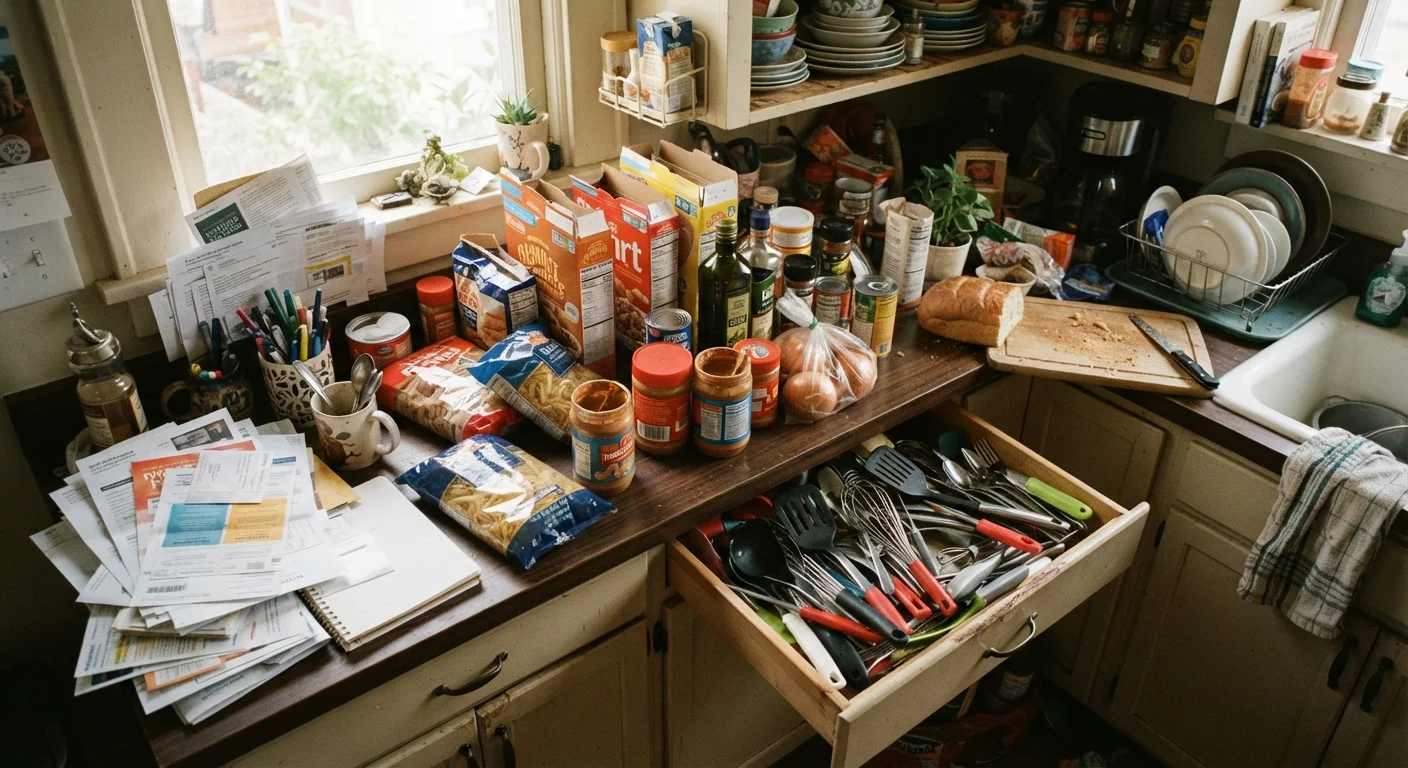
The three primary cost categories are financial, time, and stress. They overlap and reinforce each other. A cluttered pantry leads to buying a third bottle of olive oil you didn't know you had, which is a financial cost. Finding it buried requires time. And the low-grade awareness that your home feels chaotic contributes to stress that doesn't fully switch off - even when you're not actively dealing with the mess.
30-40%
Food wasted at the consumer level in the U.S.
According to USDA estimates, household food waste is a major driver of this figure - much of it tied to poor storage visibility and untracked expiration dates.
~$1,500
Estimated annual household food waste cost
The Natural Resources Defense Council has estimated that the average American family of four discards this amount in food value each year, with pantry and fridge disorganization among the contributing factors.
2.5 days
Time lost annually searching for misplaced items
Frequently cited by professional organizers and productivity researchers as a rough aggregate of the daily minutes spent locating lost household items across a full year.
Understanding these costs as a system - not isolated incidents - is what makes them actionable. And like commonly skipped home maintenance tasks, they tend to grow the longer they go unaddressed.
The Financial Drain You're Probably Not Tracking
Duplicate purchases are among the most consistent financial costs of a disorganized household. When you can't see what you own - because it's buried, spread across rooms, or simply forgotten - you buy again. This happens most visibly in pantries, medicine cabinets, and tool storage areas.
Food waste is the other major financial category. The USDA estimates that American consumers waste between 30 and 40 percent of the food supply, and household-level waste is a significant contributor. Poor fridge visibility, untracked expiration dates, and impulse buying without checking existing stock all play a role. When items are organized and visible, waste tends to drop because you actually use what you have.
Late fees from misplaced bills, voided warranties from lost paperwork, and rushed last-minute purchases when something can't be found also contribute - quietly and repeatedly. If you're interested in how overlooked costs show up in other areas of life, the same pattern appears when shopping online without a clear system.
Start With What You Buy Most Often
Pick the five to ten items your household purchases most frequently - pasta, coffee, cleaning spray - and designate a fixed spot for each. When those spots are always visible and consistently stocked, you stop buying things you already own. This single habit can reduce duplicate grocery and household purchases noticeably within a month.
Time and Mental Load: The Costs You Can't Invoice
Time is the cost most households feel most acutely but measure least precisely. Research cited by productivity researchers suggests Americans spend an average of several minutes each day searching for misplaced items. Across a week, that's a meaningful block of time - and it's not restful time. Searching for something you're already late to find is one of the more reliably frustrating daily experiences.
Beyond lost minutes, disorganization imposes a mental load - the background cognitive work of keeping track of what's missing, what needs replacing, and where things might be. This load doesn't pause when you leave the house. It's part of what makes a disorganized home feel draining even on days when you haven't touched a single drawer. Chronic clutter has been associated with elevated stress in home environments, a pattern well-documented in mental wellbeing research.
The good news is that reducing this load doesn't require a wholesale transformation. Consistent small habits tend to outperform occasional deep organizing sessions, as explored in our look at why organizing habits unravel fast. A designated home for frequently lost items - keys, chargers, scissors - can eliminate entire categories of daily friction.
“Clutter is not just physical stuff. It's old ideas, toxic relationships, and bad habits. Clutter is anything that does not support your better self.”
— Peter Walsh, Professional organizer and author on decluttering and home systems
Simple Starting Points That Actually Stick
The goal isn't a perfectly minimalist home. It's a home where you can find what you need, use what you have, and spend less time managing chaos. A few practical entry points:
- Audit one high-friction area first. The kitchen, entryway, or home office tend to yield the fastest results. Don't start everywhere at once.
- Apply a one-in, one-out rule to categories that keep overflowing - tools, cleaning supplies, clothing. This prevents accumulation without requiring ongoing effort.
- Keep a running household inventory for items you buy repeatedly - pantry staples, batteries, light bulbs. A simple list on your phone is enough.
- Create a paper processing spot. Bills, receipts, and warranties left on counters tend to disappear. A single folder or tray with a weekly review habit prevents most financial-document losses.
If your household is also working on broader budgeting basics, connecting your organizing habits to spending visibility can reinforce both. Knowing what you own is a form of knowing where your money went.
Disorganization isn't a personal failing - it's a systems problem. And systems can be changed, one friction point at a time.