Why Prices Move on a Calendar
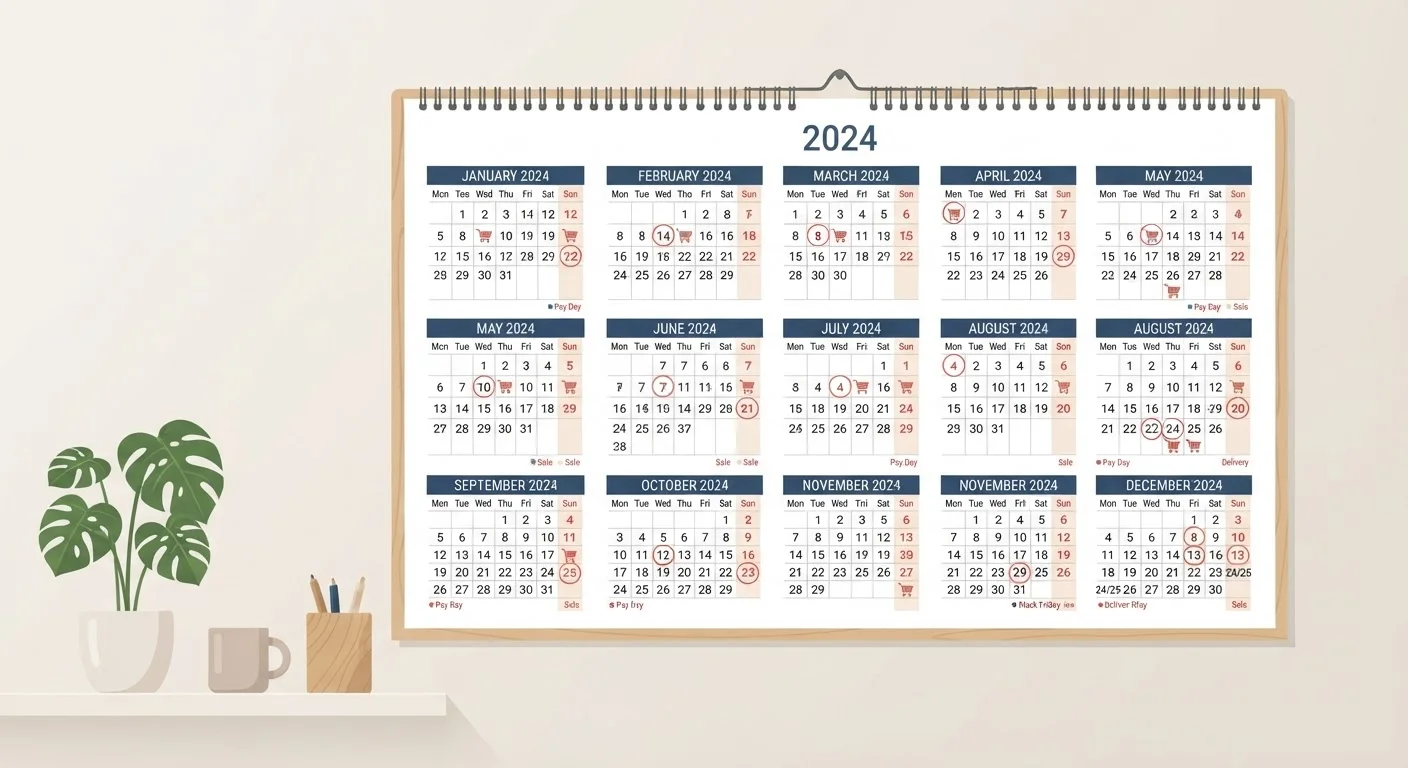
Retail pricing is not random. Merchants routinely discount inventory at predictable points in the year - driven by model-year transitions, post-holiday clearance, slow demand periods, and competitive pressure around cultural shopping events. Understanding this rhythm lets you plan purchases rather than respond to urgency cues designed by retailers.
That said, predictability is not a guarantee. Sale calendars identify when prices are historically more likely to drop, not when they will certainly be lowest. Combine timing knowledge with price history tools to verify whether a promotional price is genuinely lower than recent norms.
| Appliance Clearance Window | September-October and January (Based on typical new-model release and post-holiday clearance cycles) |
| Best Months for Apparel Clearance | Late January (winter) and late July (summer) (Corresponds to end-of-season retailer inventory rotation) |
| Outdoor Equipment Discount Period | August-September and late February (Driven by seasonal merchandise changeovers) |
| Fitness Equipment Demand Peak | Early January (Post-resolution demand spike typically keeps prices firm) |
| Bedding Promotional Windows | Memorial Day, Labor Day, Presidents Day weekends (Historically consistent promotional concentration in this category) |
| Electronics Clearance Timing | Post-new-model release (fall) and January-February (Tied to annual product release cycles and CES announcements) |
Category-by-Category Price Cycle Guide
Different product categories follow distinct seasonal rhythms. Here is a reference breakdown of the most reliable patterns:
- Major Appliances
- New models typically ship in September and October, pushing prior-year inventory to clearance. A second window opens in January, when post-holiday retailer inventories need to move quickly.
- Consumer Electronics
- New-generation releases - often in fall - precede the predictable late-November promotional window. January and February can offer quieter clearance as CES announcements make recent products feel dated to some buyers.
- Mattresses and Bedding
- Memorial Day, Labor Day, and Presidents Day weekends have historically been strong windows for this category. Retailers in this space heavily concentrate promotions around these dates.
- Outdoor and Lawn Equipment
- Prices tend to fall in late summer (August-September) as retailers make room for fall merchandise, and again in late winter when the prior season's stock is moved out.
- Clothing and Apparel
- End-of-season clearance is the most reliable pattern: late January for winter items and late July for summer items. Off-season sizing selection is often reduced, so timing involves trade-offs.
- Fitness Equipment
- January demand spikes often mean full prices in early January. Late February and March can see better pricing as post-resolution demand softens and retailers calibrate stock.
- Travel and Lodging
- Airfare and accommodation pricing is more complex and volatile - see our related piece on seasonal timing for US destinations for a destination-by-destination breakdown.
Anchor Pricing
A retail practice where a higher reference price is displayed alongside a sale price to make the discount appear larger. The reference price may not reflect what customers actually paid previously.
End-of-Season Clearance
Discounting of seasonal merchandise to clear shelf space for the next season's inventory. This is one of the most predictable price-drop events across retail categories.
Model-Year Transition
The period when a manufacturer releases an updated product version, prompting retailers to discount the prior model to reduce stock. Common in appliances, electronics, and vehicles.
Price History
A record of an item's price changes over time, typically tracked by third-party tools. Used to verify whether a promotional price is genuinely below the product's recent norm.
Evergreen Discount
A standing price reduction available on an ongoing basis, not tied to a promotional event or countdown timer. May offer more reliable value than time-limited flash sales.
Separating Genuine Cycles from Manufactured Urgency
Not every promotion tied to a calendar date represents a real price reduction. Retailers sometimes raise a reference price before a sale event, then display a discount against that inflated baseline. This practice - sometimes called "anchor pricing" - can make a routine price look like a discount.
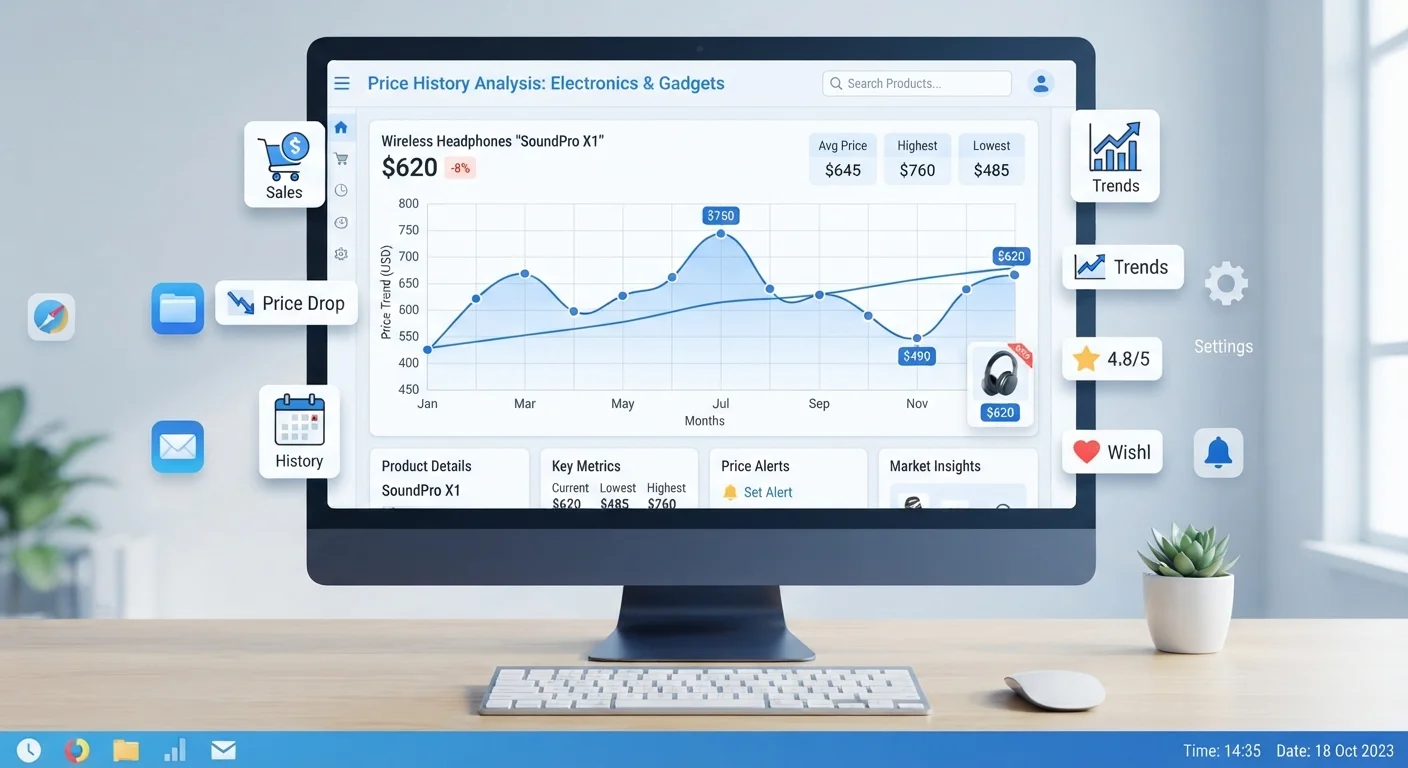
To protect yourself, check price history before a major sale period, not during it. Review the item's 90-day price trend to see whether the "sale price" is actually below the product's typical selling price. Our overview of what makes an online deal genuine explains the specific signals to look for.
Similarly, countdown timers and low-stock alerts are often independent of real scarcity. Understanding how urgency traps work can help you evaluate promotions on your own terms rather than under artificial pressure.
Timing Is One Input, Not the Only One
Seasonal cycles identify windows of historically higher likelihood for price drops - they are not a guarantee. Product availability, regional retailer variation, and supply chain conditions can all shift outcomes. Always verify a current price against historical data before assuming a sale-event price is the lowest available. Patience is a tool; it works best when paired with information.
Building a Personal Purchase Calendar
A practical approach: list major purchases you anticipate in the next 12 months and cross-reference them against the category cycles above. If a refrigerator can wait until September, that delay is worth considering. If a winter coat is needed in November, buying at end-of-season pricing in January means waiting through the cold months - a real trade-off, not always worth it.
Flash sale events may feel time-sensitive, but standing discount programs often deliver comparable or better value without the pressure. And before assuming a sale calendar event always delivers the lowest prices, it is worth reviewing common shopping myths that often lead consumers astray.
30-40%
Typical end-of-season apparel markdown depth
Retail analysts generally observe clearance markdowns in this range when retailers rotate seasonal inventory, though actual discounts vary by brand and channel.
~90 days
Useful price history window before major sales
Consumer advocacy groups commonly recommend reviewing at least 90 days of price data to assess whether a promotional price is genuinely low.