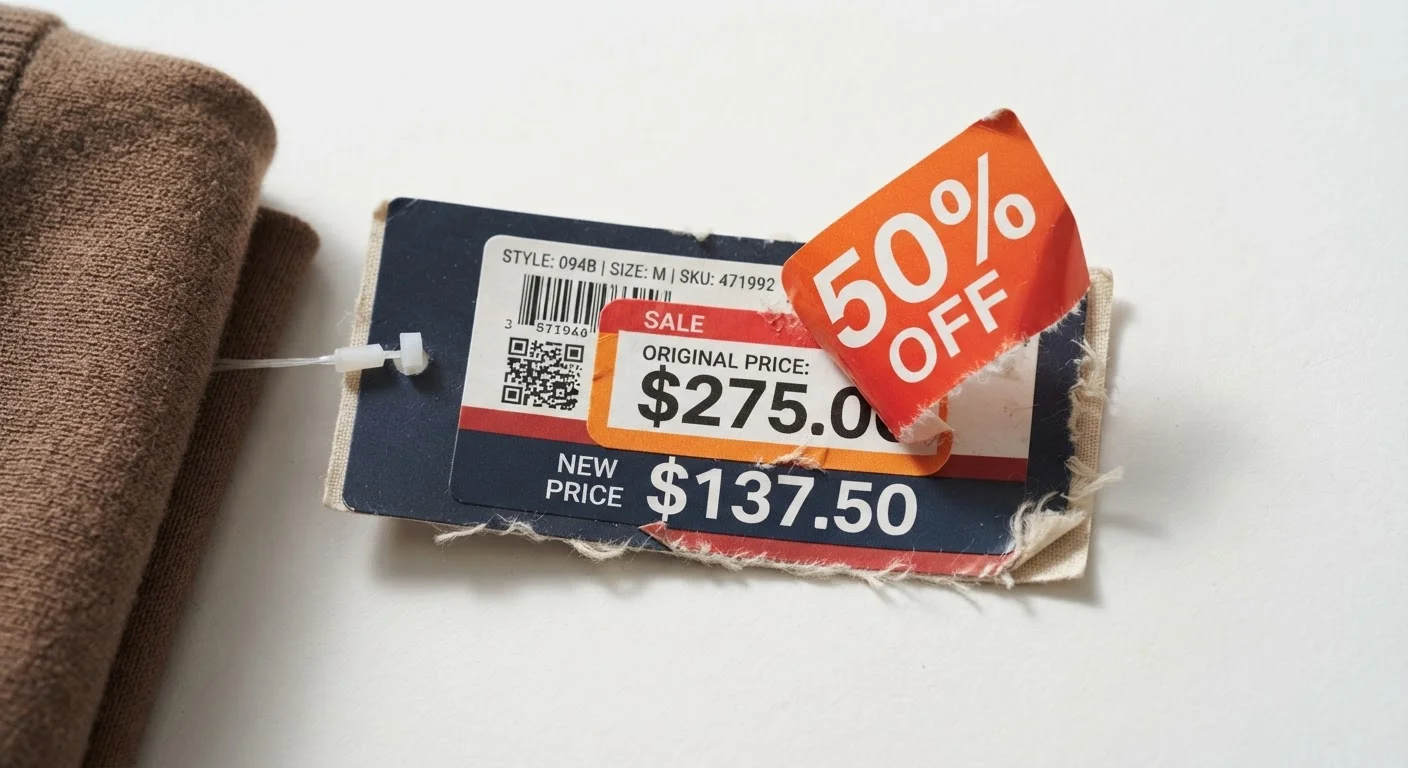

What Makes a Price Drop Real
The word "deal" gets attached to nearly every discounted price online, but the label itself means nothing without evidence. A genuine price drop has one defining characteristic: the current price is lower than what the item has sold for over a meaningful period of time, across multiple credible sources.
That definition rules out a lot of what gets marketed as savings. An item priced at $80 "marked down from $120" is only a deal if it was actually, consistently sold at $120 before. If that $120 figure was set artificially high to make $80 look attractive, the item simply costs $80 - with no discount at all. This practice, sometimes called a reference pricing trick, is one of the most common ways shoppers are misled.
Inflated original prices and manufactured markdowns are worth understanding in detail before you trust any percentage-off claim.
~33%
Shoppers who check price history before buying
Consumer behavior surveys consistently show that only a minority of online shoppers verify whether a sale price reflects a genuine historical low before completing a purchase.
2-3x
Price spikes seen before major sale events
Analysis of e-commerce pricing data has found that some product listings show price increases in the weeks preceding major promotional events, inflating the apparent discount.
The Signals That Indicate a Real Discount
Several concrete signals help distinguish real reductions from marketing theater:
- Price history alignment: Free browser extensions and dedicated websites track historical prices for products on major retail platforms. When the current price sits at or near a documented multi-month low, that's a meaningful indicator of genuine savings.
- Cross-retailer consistency: If multiple independent retailers are offering the same item at a lower price simultaneously, it's more likely a real market-level drop than a retailer-specific illusion.
- No artificial inflation preceding the sale: A pattern worth watching for is a price spike in the days or weeks before a sale event. Checking price history charts reveals this pattern clearly.
- Absence of manufactured urgency: Real discounts don't require countdown timers or "only 2 left" messaging to be worth buying. Pressure tactics are often applied to deals that wouldn't survive calm scrutiny.
For a fuller look at what identifying and capturing real online discounts involves, including tools and stacking strategies, that resource covers the full picture.
Use a Price History Tool Before You Buy
Several free browser extensions display price history charts directly on retail product pages. Before trusting any sale badge, glance at the chart to see whether the current price is genuinely lower than the item's recent norm. This single step takes about 30 seconds and quickly reveals manufactured markdowns.
The Total Cost Problem
A lower item price only tells part of the story. Shipping fees, required accessories, subscription components, and compatibility add-ons can erase a discount entirely before checkout. The true test of any deal is whether the total delivered cost - including every required purchase - is lower than what you'd pay elsewhere for the same complete solution.
Hidden costs that product listings rarely advertise - from replacement parts to compatibility requirements - frequently change the real price of a product in ways the headline figure doesn't reflect.
This total-cost framing also helps when comparing across retailers. A platform charging $5 more for an item but offering free shipping and a flexible return window may represent better overall value than the technically cheaper listing.
How Shopping Habits Shape What You Pay
Even well-intentioned shoppers routinely overpay because of behavioral patterns - not lack of information. Trusting sale badges at face value, skipping cross-retailer comparisons, or buying quickly under pressure are habits that quietly add up. Overpaying online without realizing it often comes down to these small, repeated decisions rather than any single large mistake.
One practical habit shift: before any purchase above a certain personal threshold, take two minutes to run the item through a price history tool and check one or two competing retailers. That small friction is usually enough to surface whether the promoted price is actually the lowest available - or just framed that way.
Not All Urgency Is Manufactured
Some time-sensitive deals - clearance items, overstock liquidations, or genuine seasonal demand shifts - do represent real, expiring savings. The distinction is whether price history and cross-retailer data support the claim. Urgency combined with verified price history is worth acting on; urgency without that evidence is a signal to pause.
Understanding the difference between flash sales and evergreen discount programs can also help you decide when urgency is warranted and when it isn't.