
The Three Core Layers Every Scam Shares
Regardless of how polished or crude a scam appears, virtually every online shopping fraud is built from three functional layers: a trust facade, a payment capture mechanism, and an exit strategy. Understanding these layers removes much of the scam's power, because what looks like a chaotic threat becomes a recognizable pattern.
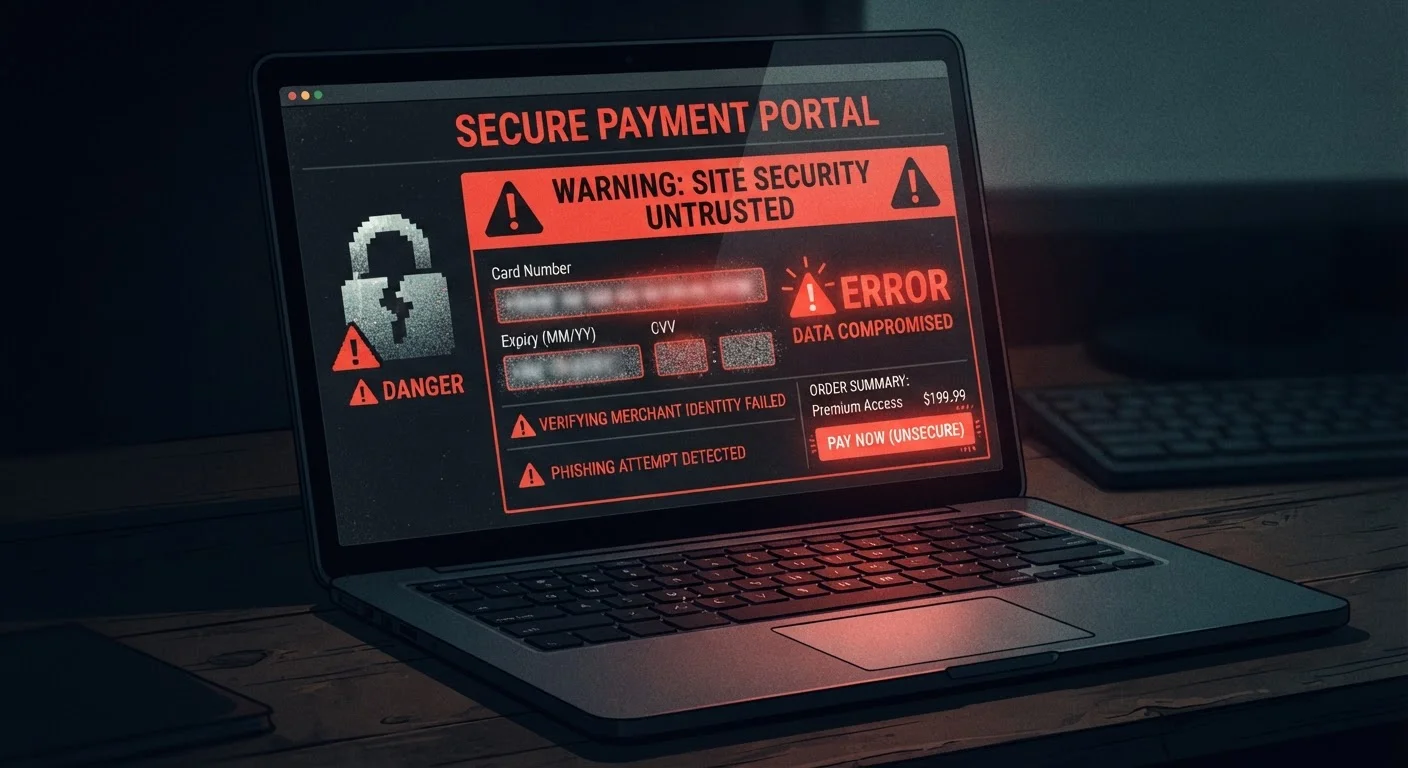
The trust facade is whatever makes the operation appear legitimate - a cloned brand logo, stolen product photography, fabricated reviews, or a marketplace seller profile with borrowed credibility. The payment capture mechanism is the checkout experience itself: a form designed to collect card numbers, billing addresses, and CVV codes, or a payment request routed through an untraceable channel. The exit strategy is how operators disappear - domain abandonment, account deletion, or simply ignoring contact attempts while the dispute window ticks down.
Recognizing this structure helps explain why familiar-looking websites can still be fraudulent - the trust facade is purpose-built to match a shopper's expectations, not to withstand scrutiny.
$8.8B
Consumer losses to fraud reported to the FTC
According to the Federal Trade Commission's 2022 Consumer Sentinel report, Americans reported losing over $8.8 billion to fraud that year, with online shopping fraud among the most frequently cited categories.
~45%
Online fraud reports involving social media as the contact point
FTC data has indicated that a substantial share of online fraud - particularly purchase scams - originates through social media ads and posts, underscoring why ad-driven traffic deserves extra scrutiny.
How Fake Storefronts Are Built and Deployed
Modern scam storefronts are rarely hand-coded from scratch. Fraudsters use readily available e-commerce templates, cloned site packages, and automated tools to replicate legitimate retailers in hours. A domain is registered - often with a slight misspelling or an added word - and populated with product images scraped from real sites, along with fictional company details.
These sites are engineered around friction removal. Checkout flows are streamlined, return policies look generous, and contact pages include plausible-sounding phone numbers that connect to voicemail or go unanswered. The entire experience is calibrated to get a credit card number entered before doubt creeps in.
Because domains are inexpensive and disposable, a single scam operation may cycle through dozens of storefronts. When one accumulates complaints and gets flagged, the operators simply migrate to a new domain. This is why evaluating an unfamiliar store before you buy is a structured skill worth developing, not just an instinct.
Check Domain Age Before You Check Out
Free WHOIS lookup tools let you see when any domain was registered. A storefront that's only weeks or months old is a significant red flag, regardless of how polished the site looks. Legitimate retailers build their online presence over time; scam sites appear quickly and disappear the same way. This one check takes under a minute and can prevent a costly mistake.
Pressure Tactics and Manufactured Urgency
Urgency is a scam's most reliable tool. Countdown timers, "only 2 left" inventory warnings, and flash-sale language are deployed to override the deliberate evaluation that would otherwise expose the fraud. When a shopper feels time pressure, they skip the steps - checking domain age, searching for reviews, confirming return policies - that would reveal problems.
Implausibly low prices serve the same function. A product listed at a fraction of its normal market price triggers desire that competes with skepticism. Scammers know that the psychological pull of a perceived deal is strong enough to suppress rational caution in many shoppers. For context on what a genuinely discounted price looks like versus a manufactured illusion, see the anatomy of a genuine online deal.
The practical defense is simple to state but requires discipline: treat urgency itself as a warning signal. Real retailers do not require split-second payment decisions.
What Happens After You Pay - and What to Do
Post-payment outcomes vary by scam type. Some operations deliver nothing at all. Others ship cheap, counterfeit, or completely unrelated items - a tactic that delays disputes and creates ambiguity. A smaller category harvests card details for resale on fraud marketplaces without placing any order at all.
If you suspect fraud, speed matters. Contact your card issuer or bank immediately to dispute the charge and request a new card number. U.S. credit cardholders have strong chargeback rights under federal law; debit card holders have narrower but real protections. Document everything: screenshots of the site, order confirmations, and any communication.
File a report with the FTC at ReportFraud.ftc.gov. If the purchase was through a marketplace, report the seller through that platform's fraud reporting tools as well. For a full breakdown of the dispute rights and protections available to you, understand your consumer rights when an online order goes wrong. You may also want to review how to protect your shopping accounts from takeover to limit downstream risk if credentials were exposed.
“Fraud doesn't look like fraud. It looks like a great deal, a trusted brand, or a helpful email. The moment something feels urgent or too good to be true, that's the signal to slow down, not speed up.”
— Consumer Financial Protection Bureau, U.S. federal agency focused on consumer financial protection and fraud education