
Why the Decision Matters More Than You Might Expect
Few travel logistics decisions carry as much day-to-day impact as how you stay connected abroad. A reliable data connection means navigating confidently, translating menus, booking last-minute accommodations, and sharing photos in real time. Get the choice wrong, and you're either racking up a surprisingly large phone bill or scrambling to find Wi-Fi at every turn.
The good news: Americans traveling internationally have genuine options, and thinking through them before departure is far easier than sorting it out at baggage claim. Part of staying connected is also part of a broader challenge - keeping a trip on budget once you've left home, where small recurring costs like data overages can quietly compound.
| Criterion | International Roaming | Local SIM Card |
|---|---|---|
| Setup effort | Minimal - activate before departure | Moderate - buy and insert on arrival |
| Typical cost (1-2 weeks) | Higher ($10-$15/day add-on) | Lower ($5-$30 total, varies by country) |
| Data allowance | Usually limited or throttled | Often generous for the price |
| US number stays active | Yes | No (number goes dark) |
| Works in multiple countries | Usually yes (carrier-dependent) | Typically one country per SIM |
| Phone unlock required | No | Yes |
| Best trip length | Short trips (1-4 days) | Longer stays (5+ days) |
How International Roaming Actually Works
When you activate an international roaming plan through your US carrier, your phone connects to partner networks in the destination country. Your calls, texts, and data flow through those local towers but are billed back to your domestic account. Most major US carriers offer daily or monthly international add-ons rather than charging unpredictable per-megabyte rates - a significant improvement over the roaming horror stories of a decade ago.
The appeal is genuine: you land, turn on your phone, and it works. Your number stays the same. People back home can reach you normally. If you're someone who relies on SMS-based two-factor authentication for banking or work accounts, this continuity matters.
The catch is cost. Daily roaming add-ons often run $10-$15 per day per line. On a two-week trip, that's a meaningful expense - one worth weighing deliberately, just as you'd weigh other currency-related decisions like those covered in how currency exchange works abroad.
$10-$15
Typical US carrier daily roaming add-on cost
Most major US carriers charge a per-day international add-on fee, which can add up to $100-$200+ on a two-week trip.
~$5-$30
Typical local prepaid SIM cost for 1-2 weeks
Prepaid SIM prices vary widely by country, but travelers in Europe and Southeast Asia frequently report paying under $20 for a week or more of generous data.
3+
GB of data common on local prepaid SIM plans
Many local carriers in popular travel destinations offer starter prepaid SIMs with several gigabytes of data included at entry-level prices.
The Case for Buying a Local SIM Card
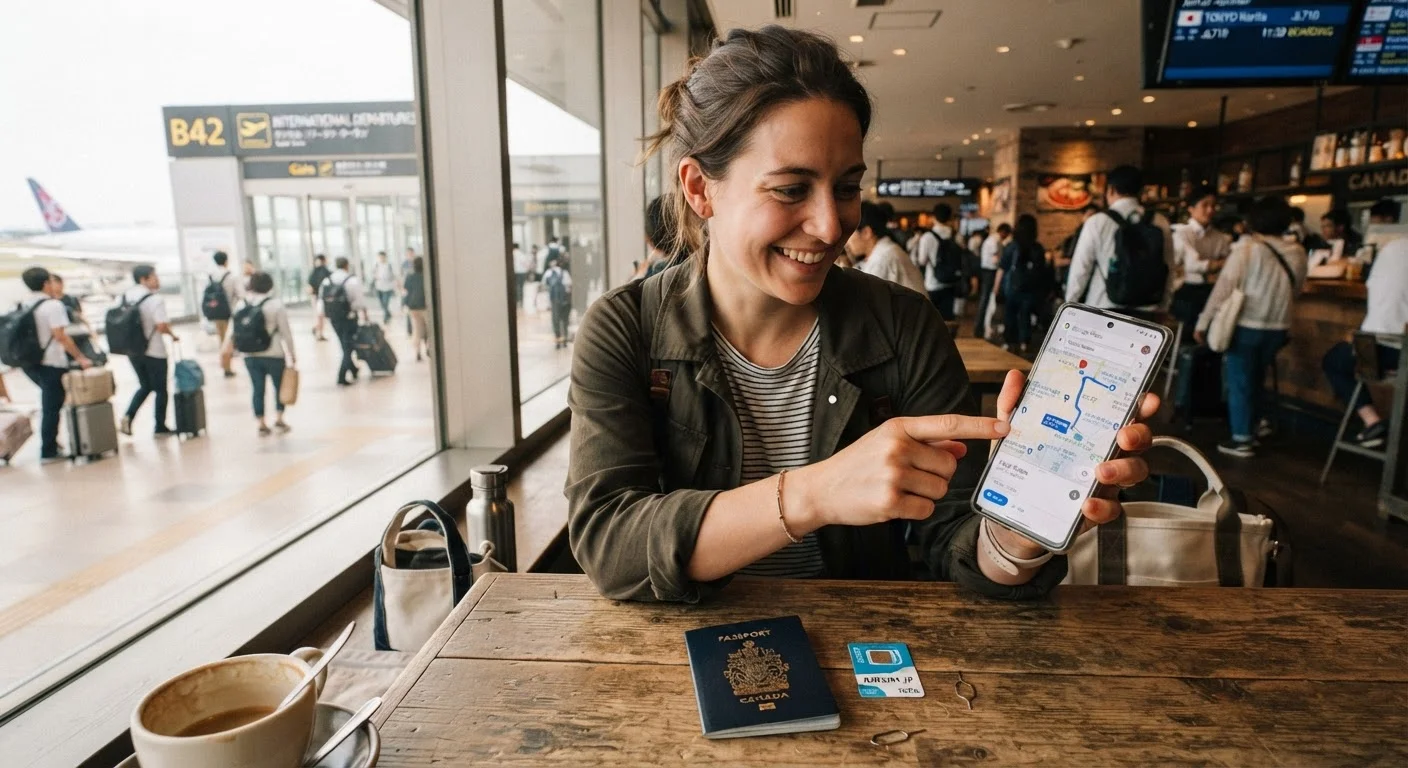
A local SIM card purchased at your destination connects your (unlocked) phone directly to a local carrier's network. You get a temporary local number and a prepaid data, call, and text plan - often at a fraction of roaming costs. In many European countries and across Southeast Asia, a SIM with several gigabytes of data costs the equivalent of just a few US dollars.
The tradeoffs are real but manageable. Your US number goes dark while the local SIM is inserted, which means calls and texts to your American number won't reach you. Friends and family need to know your temporary number, or you can coordinate through apps like WhatsApp or FaceTime that work over data rather than the cellular voice network.
Your phone also needs to be unlocked - meaning it's not carrier-restricted to one network. Many US carriers unlock phones automatically after a set period; confirm this before you leave, as it isn't something you can resolve easily once abroad. Solo travelers in particular, who tend to be more self-reliant on navigation and communication tools, often find the local SIM's data value well worth the minor setup friction. See how other logistics shake out differently for solo versus group itineraries in our look at solo vs. group international travel.
A Third Path: eSIMs
Increasingly, travelers are turning to eSIMs - embedded digital SIMs that can be programmed remotely without physically swapping a card. If your phone supports eSIM (most flagship models released after 2018 do), you can purchase an international or regional data plan from a third-party provider before departure and activate it digitally.
eSIMs often sit between roaming and local SIMs on both price and convenience. You don't need to visit a store or kiosk. You can keep your US physical SIM active for calls while the eSIM handles data. Coverage and pricing vary widely by provider and region, so comparing plans based on your specific destination is worthwhile. This is part of the broader trip-planning research that pays off - the kind covered in our Trip Planning hub.
Verify eSIM Compatibility Before You Book a Plan
Not all phones support eSIM, and some models sold in the US are set up differently than international variants. Check your phone's settings or manufacturer spec sheet to confirm eSIM support before purchasing any digital plan. Additionally, some eSIM providers restrict use to data only, with no voice or SMS capability - verify what's included if those features matter for your trip.