Passports, Visas, and Entry Requirements
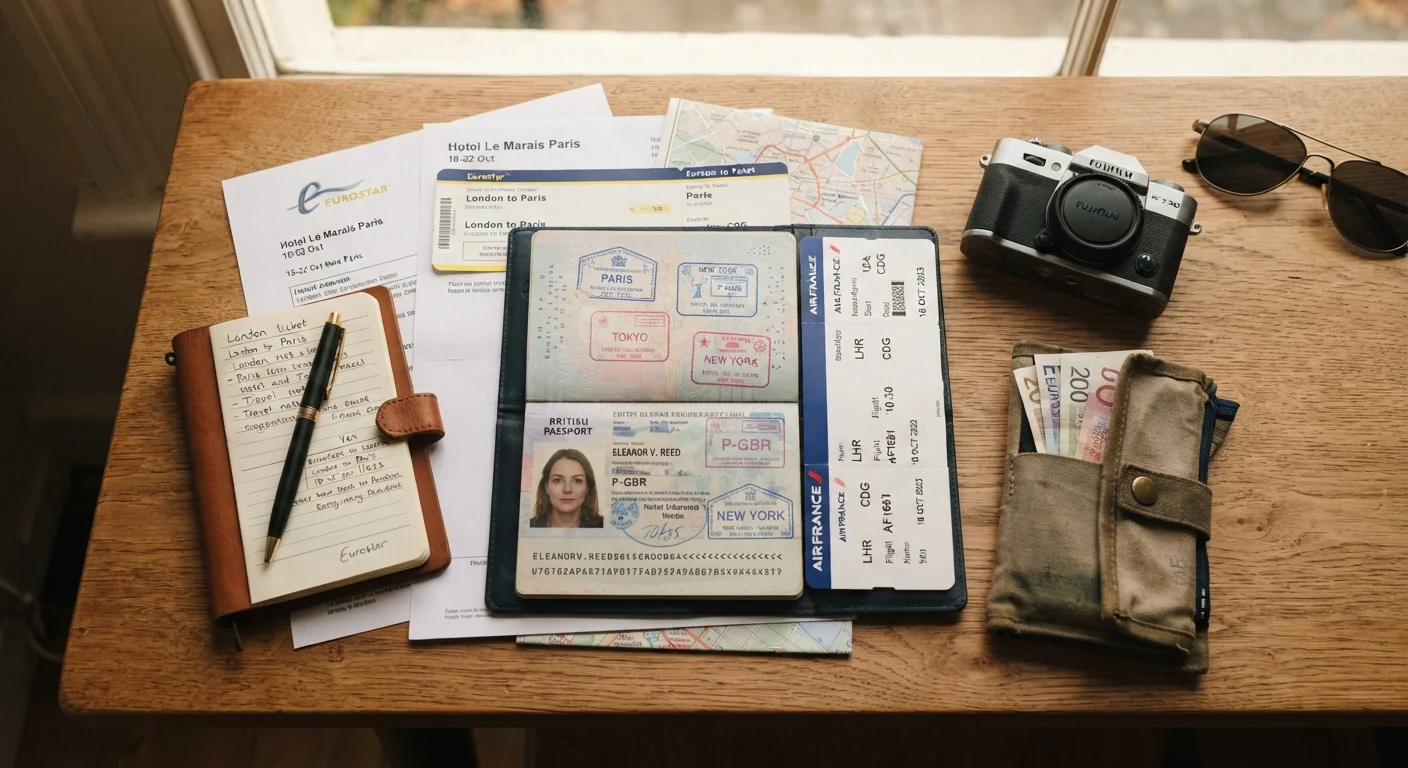
Your passport is the single most important document you'll carry abroad - and the rules around it are stricter than many first-timers expect. Before anything else, check your passport's expiration date: numerous countries require at least six months of validity beyond your return date.
Don't Wait on Passport Validity
Many countries require your passport to be valid for at least six months beyond your planned return date - not just your departure date. If your passport expires sooner, you may be denied boarding or entry even if it technically hasn't expired. Check your expiration date early and renew promptly if needed.
Once you've confirmed your passport is in order, research whether your destination requires a visa. Some countries offer visa-free access to Americans for short stays; others require you to apply weeks or months in advance through an embassy or official government portal. Never rely solely on travel blogs for this - verify directly at travel.state.gov or the destination country's official consulate website.
For a deeper dive into what paperwork to assemble, see what documents to carry when traveling abroad - it walks through everything from visas to emergency contacts.
Visa
An official government authorization - stamped or affixed in your passport, or issued electronically - permitting entry into a foreign country for a specified purpose and duration.
Customs declaration
A form travelers complete at border entry points listing goods they are bringing into a country, including purchases, gifts, and restricted items, so authorities can assess duties or restrictions.
Foreign transaction fee
A surcharge, typically 1-3%, that some banks or credit card issuers add to purchases made in a foreign currency or processed through a foreign bank.
STEP (Smart Traveler Enrollment Program)
A free U.S. State Department service that lets American travelers register their trip so they can receive safety alerts and be contacted by the nearest U.S. embassy or consulate in an emergency.
Dynamic currency conversion
A service offered at some foreign merchants or ATMs that converts your payment into U.S. dollars at the point of sale - usually at a less favorable rate than your bank would apply. Declining it is generally the better option.
Money Matters: Currency and Payments Abroad
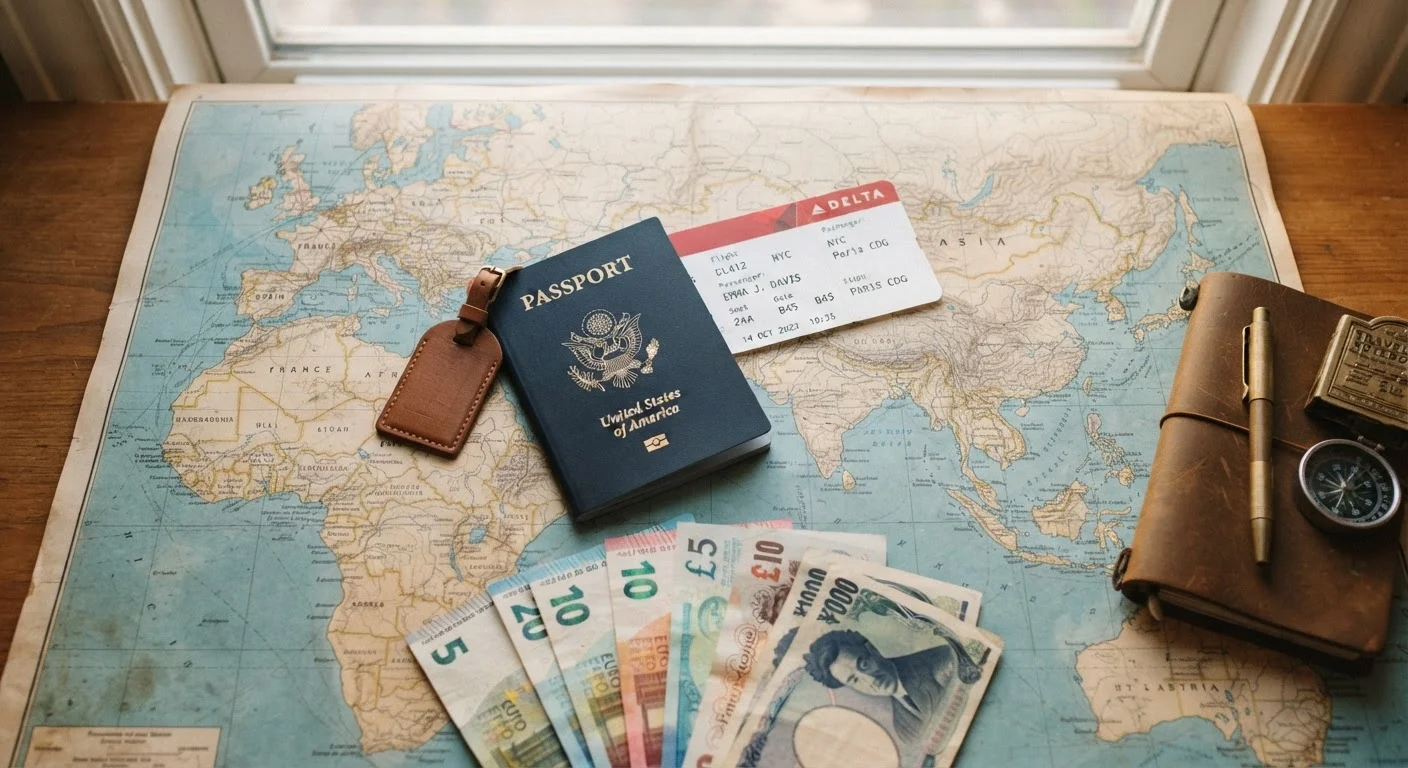
Managing money overseas trips up a surprising number of first-time travelers. The basics: most destinations have their own currency, and exchanging money at airports typically offers the worst rates. A better approach is withdrawing local currency from ATMs affiliated with established banks once you arrive - just make sure you've called your bank ahead of time to let them know you'll be traveling.
Credit cards with no foreign transaction fees are handy for larger purchases, but cash is still king in markets, rural areas, and smaller establishments worldwide. When a merchant or ATM offers to convert your charge into U.S. dollars on the spot - a practice called dynamic currency conversion - it's almost always worth declining. Your bank's exchange rate is typically more favorable.
Make Digital Copies of Key Documents
Scan your passport photo page, visa, travel insurance card, and any hotel confirmations before you leave. Store copies in a secure cloud folder and email them to yourself. If your physical documents are lost or stolen, having digital backups dramatically speeds up replacement at an embassy or consulate.
For a broader pre-departure financial and logistics checklist, review our full pre-trip checklist before you finalize any plans.
Navigating Customs and Border Crossings
Crossing an international border for the first time can feel intimidating, but the process follows a consistent structure. After landing, you'll typically proceed through passport control (where an officer verifies your documents and entry eligibility), then collect checked luggage, and finally pass through customs.
Customs is where you declare goods you're bringing into the country - purchases, gifts, food, and sometimes cash above a certain threshold. Many countries use a color-coded lane system: green for "nothing to declare" and red for items requiring inspection. The golden rule: when in doubt, declare it. Penalties for non-declaration are far more disruptive than a brief conversation with an officer.
Entry Rules Change - Always Verify Officially
Visa policies, vaccination requirements, and entry restrictions can shift with little notice. The information in this article is educational; always confirm current requirements directly with the destination country's embassy or consulate and through the U.S. State Department's official travel portal (travel.state.gov) before booking or departing.
Returning to the U.S. follows a similar structure. Check current duty-free limits and prohibited items at cbp.gov before you shop abroad - restrictions on fresh produce, meats, and certain plant materials are strictly enforced at U.S. ports of entry.
Cultural Basics Every First-Timer Should Know
One of the quiet joys of international travel is discovering how differently daily life is organized in other places - and one of the quiet pitfalls is assuming American norms translate everywhere. A few fundamentals go a long way.
- Tipping customs vary dramatically. What's expected in the U.S. may be unnecessary, unwelcome, or even considered rude elsewhere. Research the norm for your specific destination.
- Learn a handful of phrases. Even basic greetings and "thank you" in the local language signal respect and often warm interactions considerably.
- Dress codes matter. Many religious sites, temples, and even restaurants have specific attire requirements. Pack accordingly and check in advance.
- Punctuality and personal space norms differ. Some cultures have fluid approaches to time; others take it very seriously. Observe before assuming.
Understanding transit systems is another practical cultural skill. If your destination relies heavily on rail travel, our guide to reading foreign train systems can help you navigate confidently before you even step on a platform.
Health, Safety, and Staying Connected
Before leaving, check whether your destination has any recommended or required vaccinations. The U.S. Centers for Disease Control and Prevention (CDC) maintains destination-specific health guidance - consult it, and speak with a qualified healthcare provider well in advance of your departure date, as some vaccines require multiple doses over several weeks.
Travel insurance is worth understanding before you dismiss it. International medical care can be expensive, and many domestic health insurance plans provide limited or no coverage abroad. Review any policy carefully to understand what's actually covered. This article is for general informational purposes and is not a substitute for professional medical or insurance advice.
For staying connected: contact your mobile carrier before leaving to explore international plans. Alternatively, purchasing a local SIM card upon arrival is a cost-effective option in many countries. Having offline maps downloaded and key contacts saved in your phone can prove invaluable in areas with spotty connectivity.
Finally, register your trip with the Smart Traveler Enrollment Program (STEP) at travel.state.gov - it's free, takes minutes, and ensures the nearest U.S. embassy can reach you in an emergency. For a comprehensive pre-departure framework, our international trip planning reference covers the full scope of logistics in one place.
This article is intended for general informational purposes only. For health-related travel decisions, consult a qualified healthcare provider. Entry requirements, visa rules, and travel advisories can change - always verify with official government sources before departing.