The Core Trade-Off: Speed and Simplicity vs. Space and Flexibility
At its heart, the carry-on vs. checked luggage decision comes down to one question: what do you value more on this particular trip - moving fast or packing freely? Neither approach is universally superior, and the right answer shifts depending on your destination, itinerary, and how you personally travel.
Carry-on travelers skip baggage claim entirely, sidestep checked-bag fees, and keep their belongings within reach throughout the journey. The trade-off is a hard ceiling on what you can bring - most domestic airline carry-on allowances cap bags around 22 x 14 x 9 inches, though limits vary by carrier, so always verify directly with your airline before you fly.
Checked luggage removes most of those volume constraints and lifts the 3.4-ounce liquid rule that governs carry-on toiletries. But it introduces fees (often $30-$40 per bag each way on domestic routes, though these figures vary by airline and route), adds baggage claim time on arrival, and creates the small but real risk of delayed or misdirected bags.
For a fuller look at how your travel mode affects these logistics, see our road trip vs. flying comparison.
| Criterion | Carry-On Only | Checked Luggage |
|---|---|---|
| Baggage fees | Typically none (varies by airline) | Usually $30-$40+ per bag each way |
| Liquid allowance | 3.4 oz per container, 1-quart bag | No TSA liquid restrictions |
| Arrival speed | Walk straight off the plane | Wait at baggage claim (15-45 min) |
| Packing capacity | Limited; requires planning | High; flexible for most trip types |
| Risk of lost/delayed bag | Very low - bag stays with you | Small but real risk |
| Best trip length | 1-7 days | 7+ days or gear-heavy trips |
| Overhead bin availability | Not guaranteed on full flights | Not applicable |
When Carry-On Only Makes Strong Sense
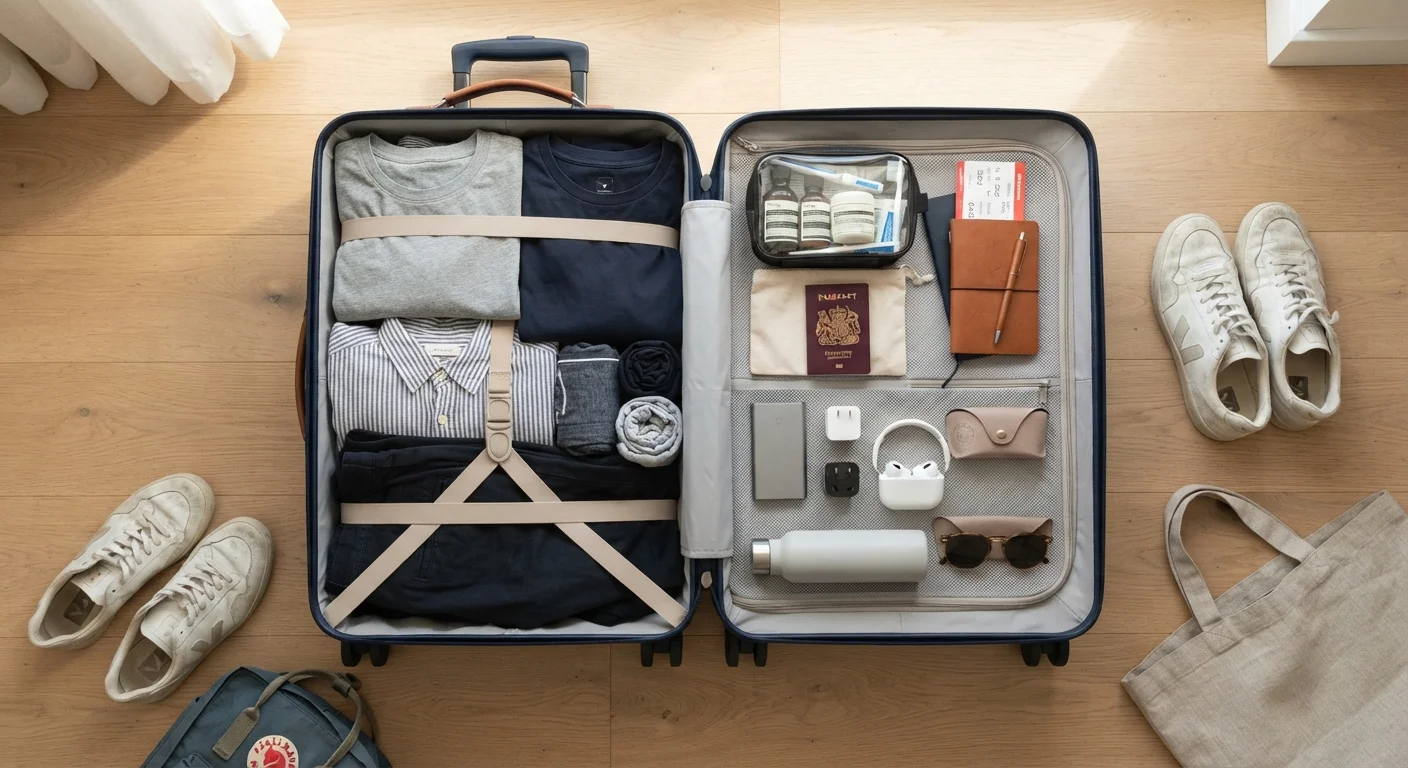
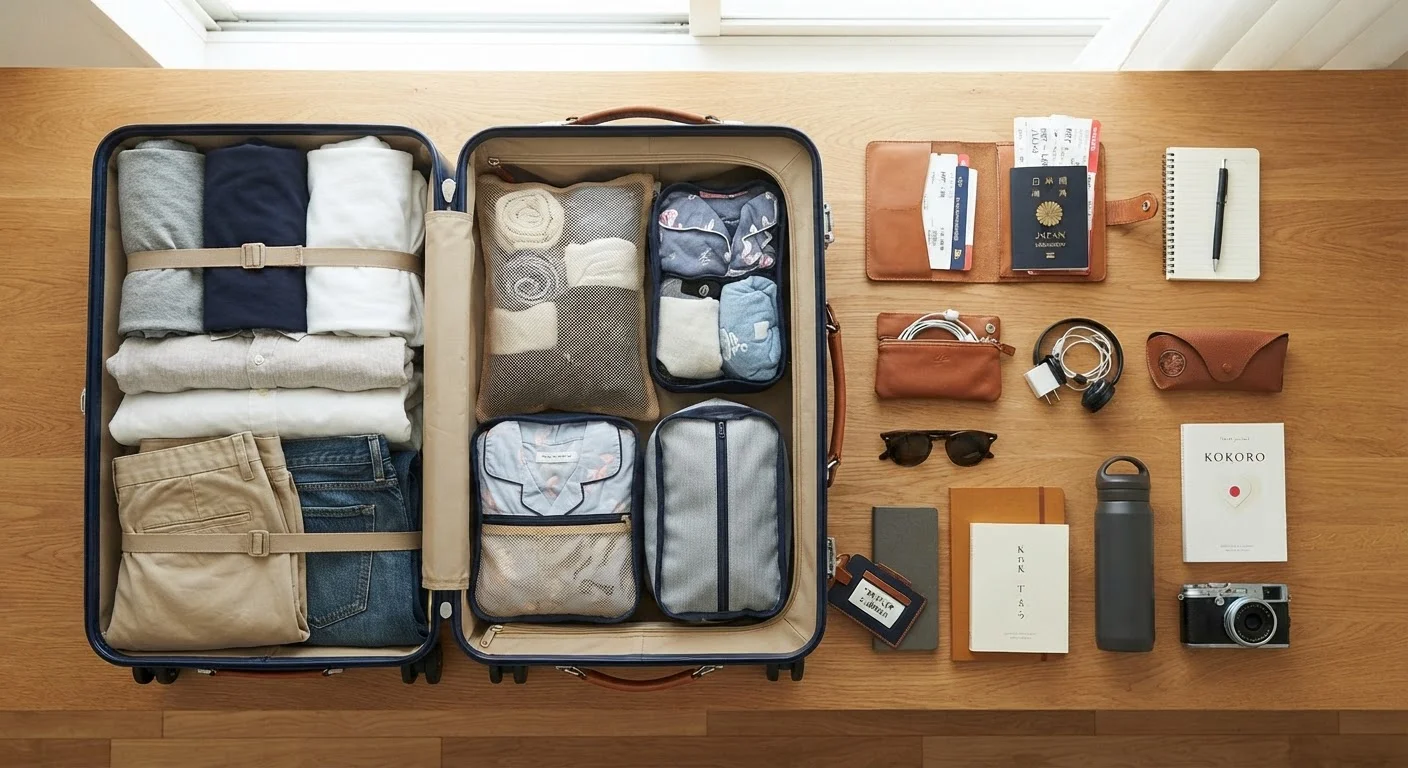
Carry-on travel rewards those willing to pack with intention. If your trip spans seven days or fewer, most travelers can realistically fit what they need into a single carry-on plus a personal item - particularly when planning outfits around a versatile color palette and choosing fabrics that resist wrinkles.
The strategy shines brightest on trips with multiple flights or tight connections. When your bag is overhead, there's no waiting, no claim ticket, and no moment of dread watching the carousel spin without your suitcase appearing. That peace of mind has genuine value.
Carry-on travel also pairs naturally with trips to destinations where you can source toiletries locally - reducing the need to pack full-size products at all. Our packing light guide offers a category-by-category breakdown for trimming your list without sacrificing what matters.
20-30 min
Average baggage claim wait time
Industry estimates suggest domestic baggage claim commonly takes 20-30 minutes after landing, time carry-on travelers reclaim entirely.
1 in 170
Checked bags mishandled per passenger
According to SITA's annual Baggage IT Insights report, global baggage mishandling rates have declined significantly but remain a measurable factor for frequent travelers.
When Checked Luggage Earns Its Place
Some trips genuinely require more. A two-week itinerary spanning multiple climates, a ski vacation, a beach holiday with snorkeling gear, or a business trip needing formal attire - these scenarios push well beyond carry-on capacity without creating real packing stress.
Checked bags also make sense when you're traveling with items that can't go in a cabin, such as certain sporting equipment, tools, or larger quantities of liquids. For international journeys with specific gear requirements, the international packing principles guide covers what to plan around based on destination and customs norms.
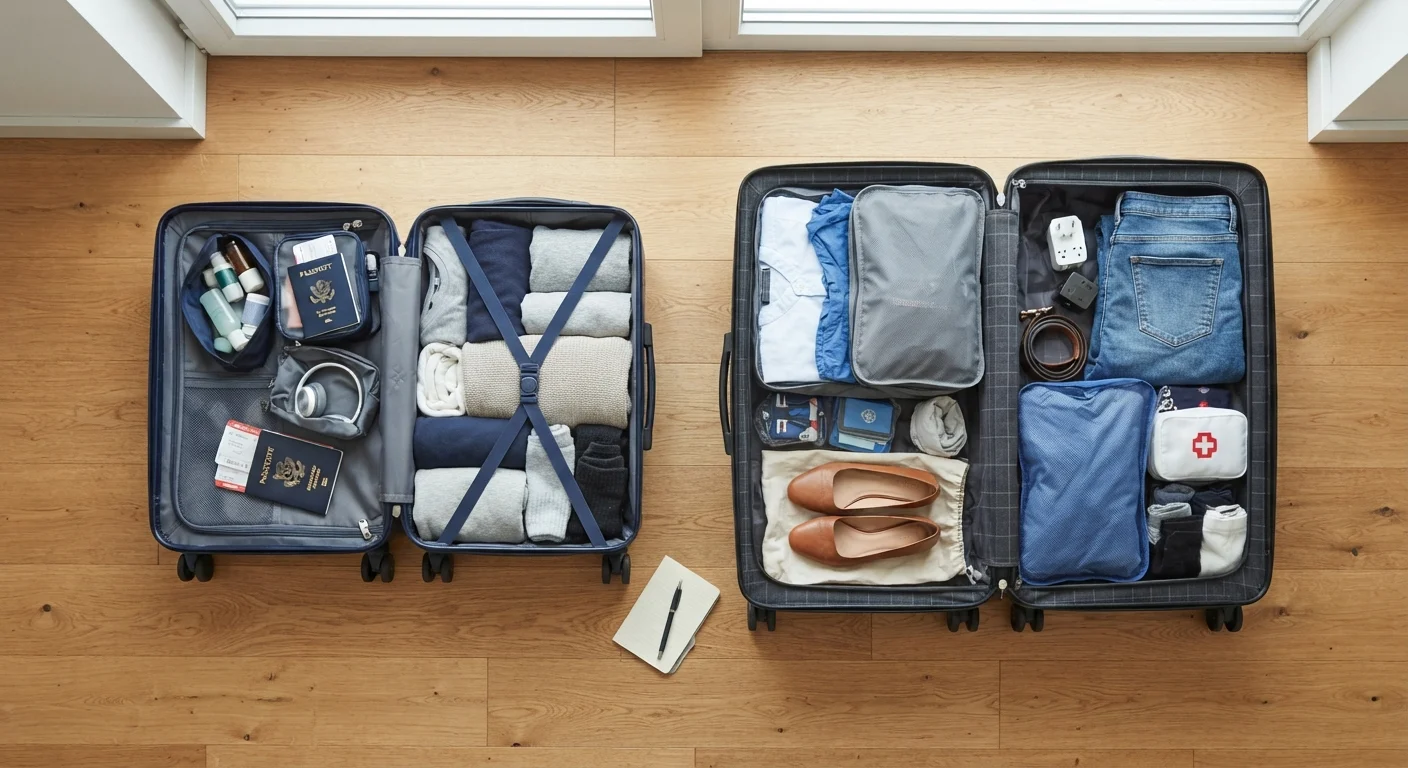
Families traveling together often find the per-bag fee calculation tips in favor of checked luggage when weighed against the collective stress of managing multiple carry-ons through busy airports with children in tow. One large checked bag shared between two travelers can be more practical and cost-effective than two full carry-ons.
Keep in mind that baggage fees can add up meaningfully over a trip. Factor those costs into your overall travel budget - our budget management guide has practical strategies for tracking spending once you're on the road.
Always Verify Airline-Specific Rules
Carry-on size limits, personal item policies, and checked bag fees differ by airline, fare class, and even route. Budget and international carriers in particular may apply stricter or different rules than major US domestic carriers. Before any trip, check the specific airline's baggage policy page directly to avoid surprises at the gate. This is especially important for international travel, where rules can vary significantly between carriers.