Why International Packing Demands a Different Mindset
Packing for a domestic weekend trip and packing for an international journey are fundamentally different exercises. Internationally, you're navigating variable airline rules, foreign customs regulations, climate swings, cultural dress expectations, and the very real possibility that your checked bag arrives two days after you do. That's a lot riding on what you put in a bag.
The good news is that solid international packing isn't about memorizing an exhaustive list - it's about applying a handful of durable principles that adapt to any destination. Whether you're planning a two-week European rail adventure or a long weekend in Costa Rica, the same logic applies. For a broader look at pre-departure logistics, see our full-scope international trip planning reference.
“The experienced traveler's rule is simple: pack half the clothes and twice the money. Almost everything else can be sorted out when you arrive.”
— Rick Steves, Travel author and host of public television travel programs
Core Packing Principles That Travel Anywhere
These practices cut across destinations, climates, and trip lengths. Apply them before you zip anything up.
Research your destination's climate and cultural dress norms before choosing a single item.
Temperature and humidity vary enormously - and so do local expectations around clothing. Packing shorts for a conservative religious site or a heavy coat for a tropical city wastes space and creates real-world friction. Understanding these factors upfront lets every item earn its place.
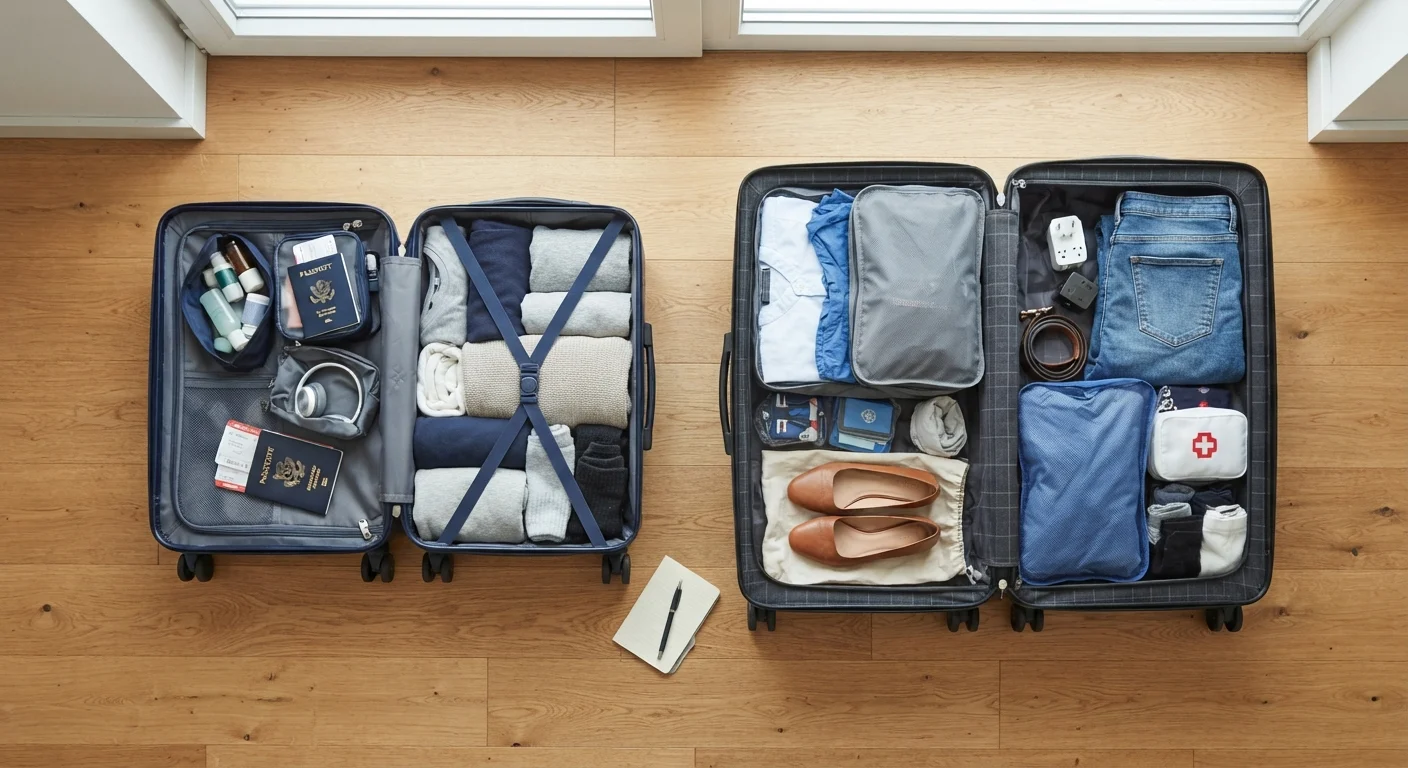
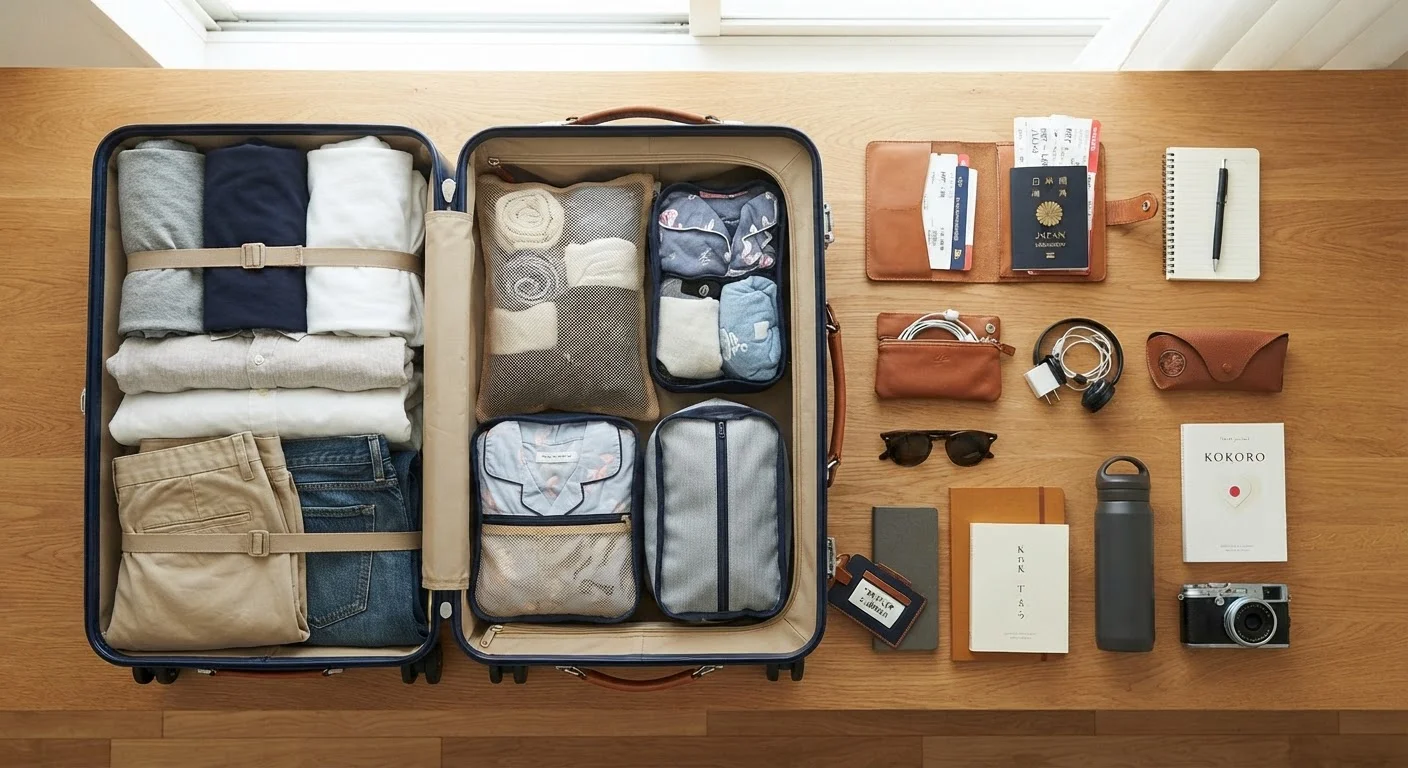
Build around a core color palette so clothing pieces mix and layer interchangeably.
A coordinated wardrobe dramatically cuts the number of items you need. When shirts, pants, and layers all work together, you can create multiple outfit combinations from far fewer pieces, leaving room for souvenirs or a lighter bag overall.
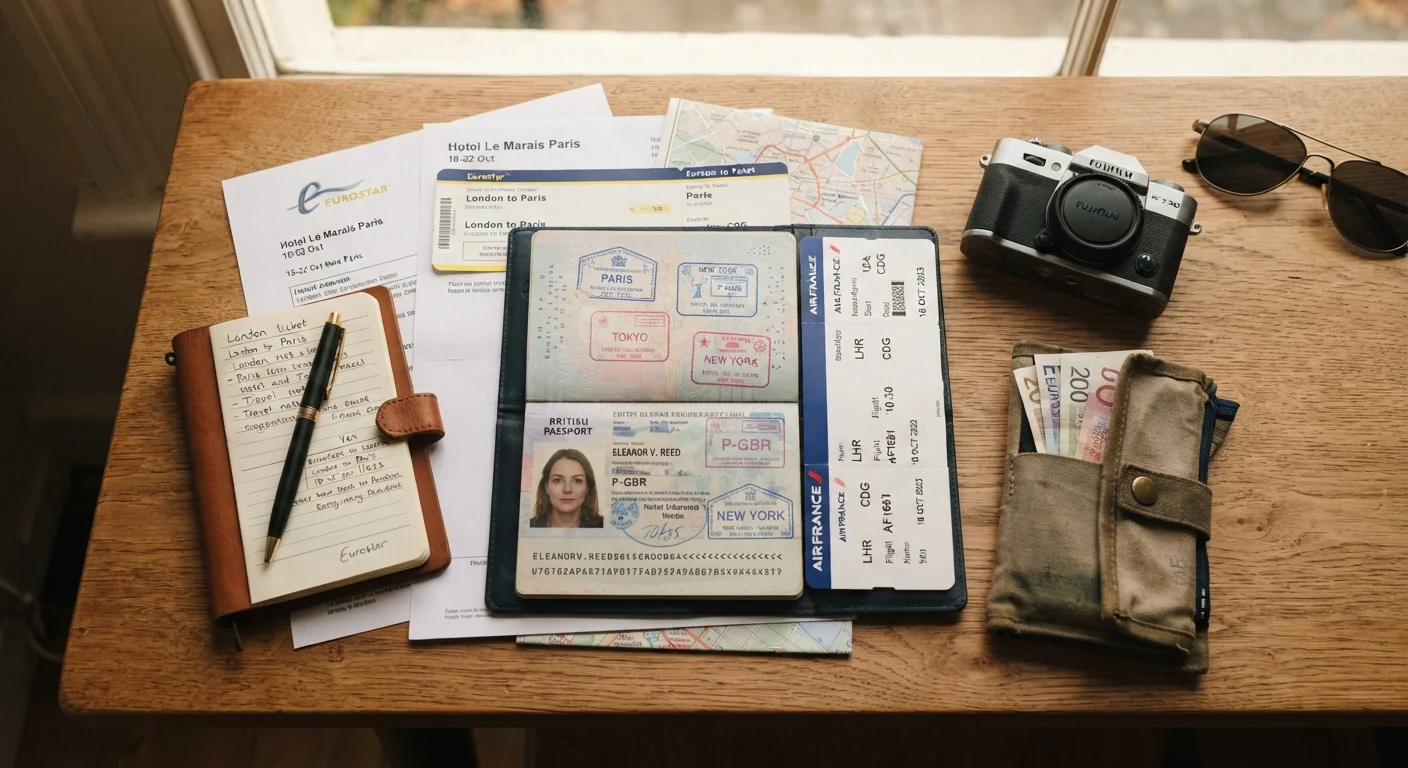
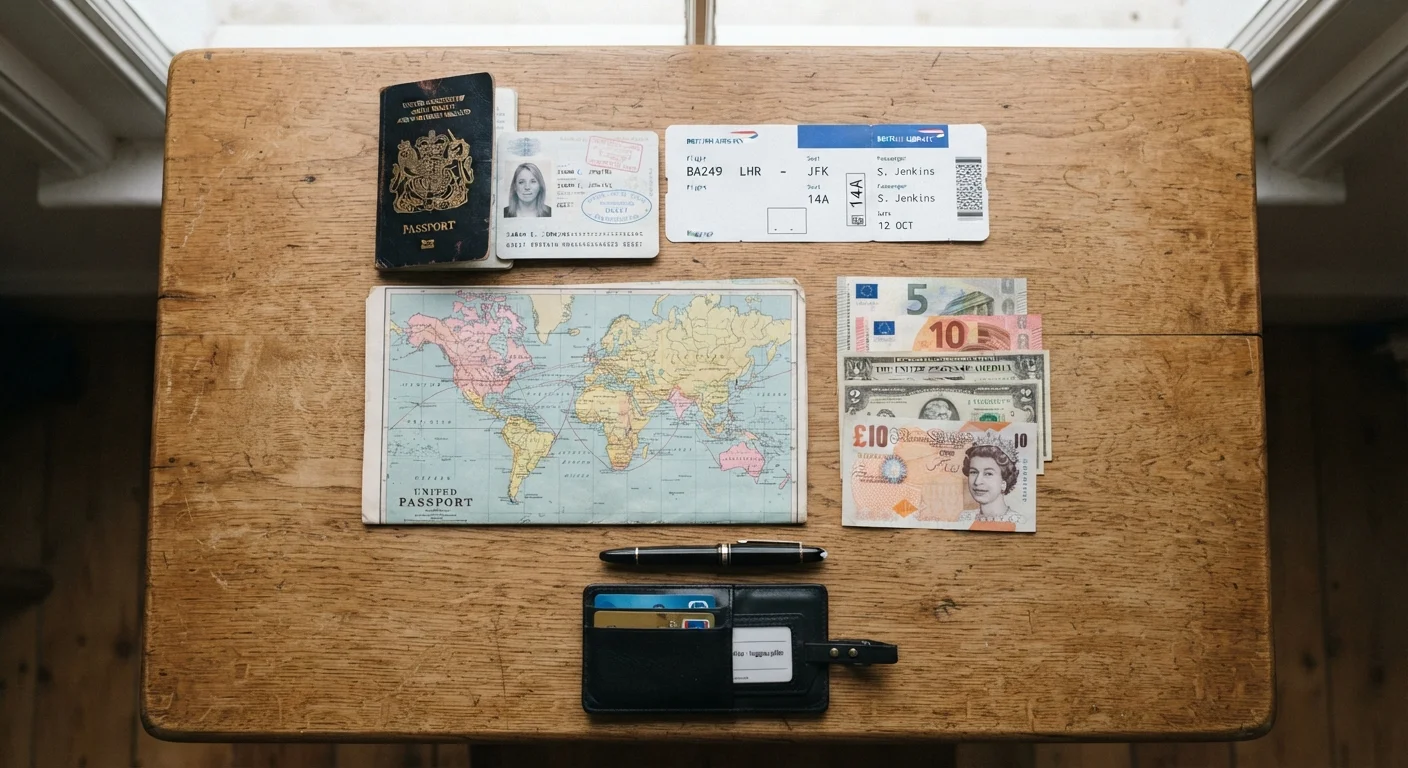
Pack documents in a dedicated, carry-on-accessible layer that never gets checked.
Checked luggage can be delayed, lost, or temporarily held at customs. Your passport, visa confirmation, travel insurance card, and emergency contacts must stay on your person at all times. Keeping these in a consistent location also speeds up border crossings.
Know the carry-on liquid, size, and prohibited-item rules for every airline on your itinerary.
Rules are not universal. Budget international carriers may have stricter size or weight limits than U.S. mainline airlines, and some countries prohibit items in carry-ons that the TSA permits. Surprises at security cause delays, forced bag checks, or confiscations.
Identify what you can purchase or replace locally rather than packing it.
Shampoo, sunscreen, laundry detergent, and many over-the-counter medications are widely available worldwide. Packing week-long supplies of items easily found at a local pharmacy or market wastes both weight allowance and mental energy.
Include a universal power adapter and verify voltage compatibility for electronics.
Outlet shapes and electrical voltages differ by region, and plugging an incompatible device into the wrong voltage can permanently damage it. A single multi-country adapter covers most destinations, while a quick check of your device's power brick confirms whether a voltage converter is also needed.
For a deeper look at how to decide between carry-on and checked luggage, our guide on carry-on vs. checked luggage strategies walks through the practical trade-offs in detail.
What to Do Right Now: Quick Packing Wins
These actions take minutes but meaningfully reduce hassle before and during your trip.
Documents deserve their own system entirely. Our guide on documents every American should carry abroad covers exactly what paperwork to have on hand and why each item matters.
Customs Rules Vary Significantly by Country
What's legal to carry into one country may be prohibited in another - this includes certain foods, medications, and even some personal care products. Always check the destination country's official customs authority and the U.S. State Department's country-specific pages before finalizing your packing. Undeclared restricted items can result in confiscation, fines, or delays at the border.
If this is your first time traveling internationally, you'll also find our overview of what Americans need to know before their first international trip useful for the bigger picture beyond packing.