Why Depreciation Is the Hidden Cost Most Buyers Miss
When drivers calculate the cost of owning a vehicle, they often focus on fuel, insurance, and loan payments. Depreciation - the steady erosion of the car's market value - rarely gets the same attention, yet for many owners it exceeds all other costs combined over the life of the vehicle.
Unlike a repair bill, depreciation doesn't arrive as an invoice. It accumulates silently, and its full weight only becomes visible when a driver tries to trade in or sell. Understanding it upfront changes how ownership decisions are made, from which vehicle to buy to how long to keep it.
15-25%
Value lost in a new car's first year
Industry valuation data consistently shows new vehicles experience their steepest depreciation within 12 months of purchase.
~50%
Typical value remaining after five years
General market data suggests many vehicles retain roughly half their original value after five years, though this varies significantly by make and model.
#1
Depreciation's rank among car ownership costs
Consumer financial analyses regularly identify depreciation as the single largest component of total vehicle ownership cost over a five-year period.
How Depreciation Works: The First-Year Cliff
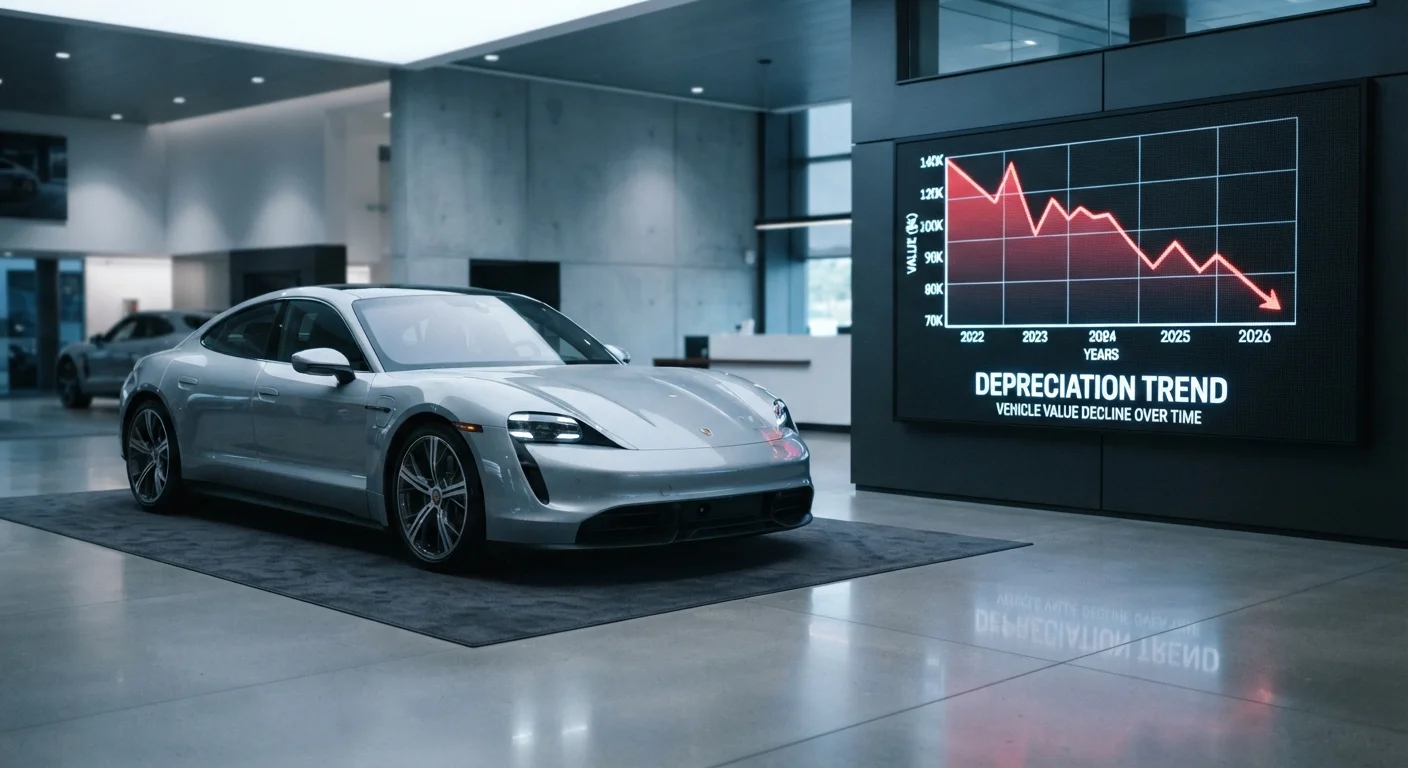
Depreciation is steepest at the very beginning of a vehicle's life. A new car driven off a dealership lot immediately enters the used-car market, where buyers expect a discount relative to new. That adjustment happens fast - typically within the first 12 months, a new vehicle loses a significant portion of its purchase price.
The pace slows as the car ages. By years three through six, annual depreciation tends to stabilize at a lower percentage. After roughly a decade, many vehicles have reached a floor where further decline is gradual. This curve is why timing - both when to buy and when to sell - is central to managing depreciation's financial impact.
For a deeper look at how this affects the buy-versus-lease calculation, see our guide to leasing vs. buying.
Factors That Accelerate or Slow Depreciation
Not all vehicles depreciate at the same rate. Several variables determine how quickly a car loses value:
- Mileage: Higher annual mileage directly reduces resale value. Vehicles driven well above the national average lose value faster.
- Condition and maintenance history: A documented service record signals reliability to future buyers and supports a higher resale price.
- Brand and model reputation: Vehicles with strong reliability records and broad consumer demand tend to hold value better than those with thinner resale markets.
- Color: Neutral colors - white, silver, black, grey - typically appeal to a wider pool of buyers and depreciate more slowly than unusual or polarizing finishes.
- Fuel type and efficiency: As fuel prices and consumer preferences shift, these factors influence which vehicles remain in demand on the used market.
- Economic conditions: Broader market forces, including inventory levels and consumer confidence, can compress or accelerate depreciation across entire vehicle categories.
Protect Resale Value With Consistent Maintenance
Keeping a complete service record and addressing minor cosmetic damage before selling can measurably support a vehicle's resale price. Buyers in the used market treat documentation as evidence of reliability, which translates directly into willingness to pay more. Visit our car maintenance hub for guidance on upkeep that supports long-term vehicle value.
Depreciation's Role in Broader Ownership Economics
Depreciation doesn't just affect resale value - it ripples through several other financial decisions. Auto insurance settlements following a total-loss accident are based on the vehicle's actual cash value at the time of the incident, not the original purchase price. If a driver owes more on a loan than the car is currently worth - a condition known as being "underwater" or having negative equity - depreciation becomes an immediate financial problem, not a future one.
Gap insurance is one tool that addresses this specific risk, covering the difference between a vehicle's depreciated value and the outstanding loan balance. Our article on costs first-time buyers routinely underestimate covers gap insurance and other ownership expenses that often catch drivers off guard.
For a complete picture of what cars truly cost to own, see The True Cost of Owning a Car in the US.
Depreciation and Insurance Payouts Are Linked
Standard auto insurance policies that include comprehensive and collision coverage pay out based on the vehicle's actual cash value - its depreciated market worth - not what you originally paid. This is a distinction that surprises many owners following an accident or theft. Reviewing your policy terms with your insurer helps clarify exactly what you'd receive in a total-loss scenario.
Using Depreciation Knowledge to Make Smarter Decisions
Awareness of depreciation patterns is a practical tool. Buyers who purchase a vehicle that is two to three years old can sidestep the sharpest portion of the depreciation curve without necessarily sacrificing reliability or modern features. This trade-off is explored in detail in our new vs. used car financial comparison.
Owners who plan to sell or trade in should factor depreciation timelines into their decisions - selling before high-mileage thresholds or before a major model refresh can preserve more value. Maintaining the vehicle well, keeping records, and addressing cosmetic issues before sale are all steps that support a stronger resale position.
For strategies to reduce total ownership costs over time, including maintenance habits that protect resale value, see Keeping Vehicle Ownership Costs Manageable Over the Long Haul.