Why Traffic Stress Hits Harder Than It Should
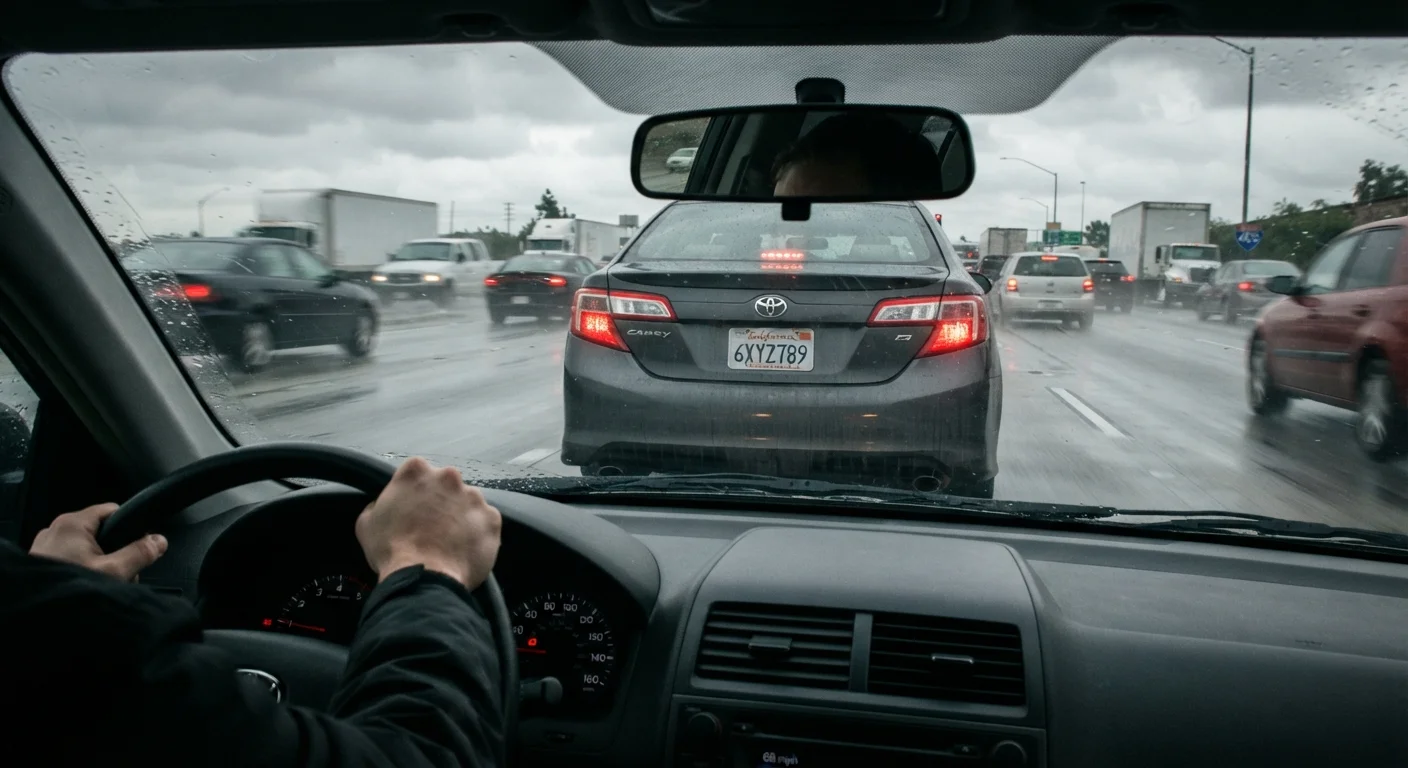
Traffic stress is not a character flaw - it is a predictable physiological response. When a driver cuts you off or brake lights flash without warning, your body reads the situation as a threat. Heart rate climbs, muscles tighten, and cognitive focus narrows. That narrowing is the dangerous part: tunnel vision makes it harder to scan mirrors, anticipate hazards, or make measured decisions.
Understanding what is happening in your body is the first step toward managing it. For a deeper look at the science, see what stress actually does to your body and mind. The short version for drivers: even a brief spike in stress hormones slows your ability to process new information - exactly when you need to be at your sharpest.
66%
Drivers who report aggressive driving as a serious threat
According to AAA Foundation for Traffic Safety research, roughly two-thirds of US drivers consider aggressive driving a significant safety concern on American roads.
~80%
Drivers who expressed anger or aggression in the past year
AAA Foundation for Traffic Safety survey data found that approximately 8 in 10 US drivers reported engaging in at least one aggressive driving behavior over a one-year period.
Proven Practices for Staying Composed
The following practices draw on driver safety research, defensive driving principles, and behavioral science. None require special equipment or training - only consistent application.
Maintain a following distance of at least three seconds in normal conditions - more in heavy traffic
Space is reaction time made physical. A larger gap gives you more opportunity to respond to sudden stops and reduces the pressure to mirror erratic behavior by the vehicle ahead. It also signals to drivers behind you that the pace of traffic has slowed.
Lower your sensory load before driving in known congestion
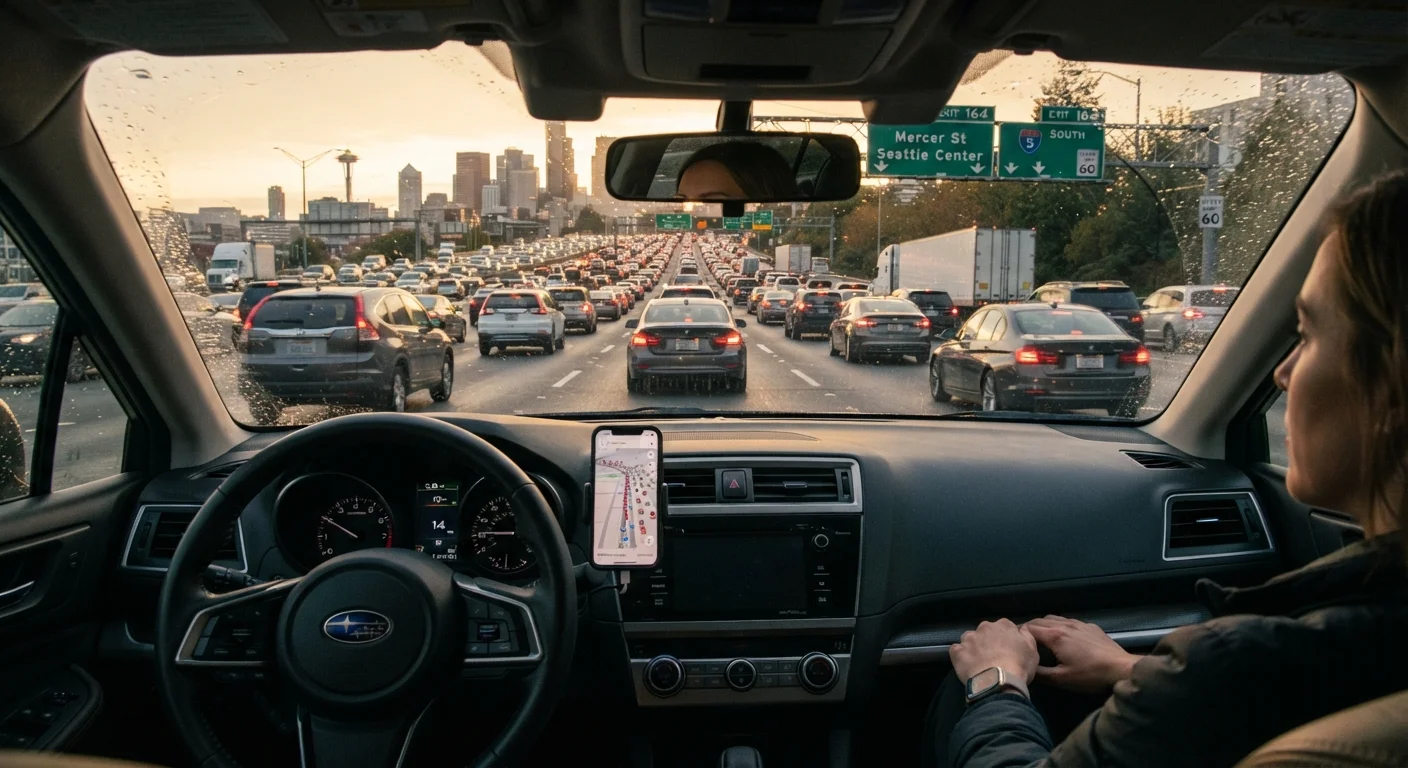
Loud music, navigation apps with frequent alerts, and in-car conversations each consume cognitive bandwidth. In high-density traffic, those resources are needed for hazard detection. Reducing distractions before entering a stressful stretch is a proactive strategy, not a passive one.
Use a single controlled breath to interrupt the stress response before reacting
When another driver acts aggressively, the gap between stimulus and your response is where accidents are prevented or created. A deliberate four-to-six-count breath slows your heart rate and buys the fraction of a second needed to choose a measured response over a reactive one.
Adopt an exit-first mindset when tension escalates
Having a mental plan to remove yourself from a stressful situation - take the next exit, pull into a parking lot, shift lanes - prevents the feeling of being trapped, which itself amplifies stress and impairs decision-making.
Recognize and name your emotional state aloud
Labeling an emotion - 'I'm frustrated right now' - engages the prefrontal cortex and reduces the intensity of the amygdala-driven stress response. It is a technique used in cognitive behavioral frameworks and takes less than three seconds.
Handling Aggressive Drivers Without Escalating
Aggressive driving - tailgating, erratic lane changes, horn use as intimidation - creates real danger. The instinct to respond is understandable, but engagement almost always makes the situation worse. Tailgating is more dangerous than most drivers realize; the safest answer to a tailgater is to move right and let them pass, not to brake-check or speed up.
If another driver becomes threatening or follows you, do not drive home. Drive to a populated, well-lit location such as a police station, fire station, or busy retail parking area and call 911. Never exit your vehicle to confront another driver.
Never Make Eye Contact With an Aggressive Driver
Direct eye contact can be read as a challenge and escalate a tense situation. If another driver is behaving erratically or aggressively near your vehicle, keep your gaze forward, maintain or increase your following distance, and focus on your own lane position. Your goal is to create physical and psychological separation, not to communicate.
Stress-management techniques work just as well on the road as anywhere else. Slow, controlled breathing - inhale for four counts, exhale for six - activates the parasympathetic nervous system and can blunt the acute stress response within seconds. For a full toolkit, explore grounding techniques for moments of acute stress.
Before You Leave: Reducing Pressure Before It Starts
Many high-stress driving moments are downstream of time pressure. Running late transforms a routine merge into a perceived emergency. Building small buffers into your schedule - even ten minutes - removes much of the urgency that fuels reactive driving.
Different environments demand different mindsets. Dense city driving and open highway driving carry distinct stress triggers; see how your approach should shift between highway and city streets for environment-specific strategies. Similarly, adverse weather compounds stress significantly - driving in rain, snow, and fog changes what you should do is worth reviewing before difficult conditions arrive.
If an incident does escalate to a collision, composed decision-making continues to matter. Knowing what to do immediately after a car accident before you ever need it means one less thing to figure out under pressure.