Why Weather Changes the Rules of the Road
Most driving education focuses on ideal conditions - dry pavement, clear skies, good visibility. But a significant share of U.S. traffic fatalities occur in adverse weather. According to data from the Federal Highway Administration, roughly 21% of vehicle crashes annually are weather-related, with wet pavement and rain accounting for the largest portion.
The core problem is that weather degrades the three pillars of safe driving: traction, visibility, and reaction time. What changes across rain, snow, and fog is which pillar is most compromised and by how much. Understanding those differences helps drivers apply the right countermeasures - not just slow down generically, but adjust in the specific ways each condition demands.
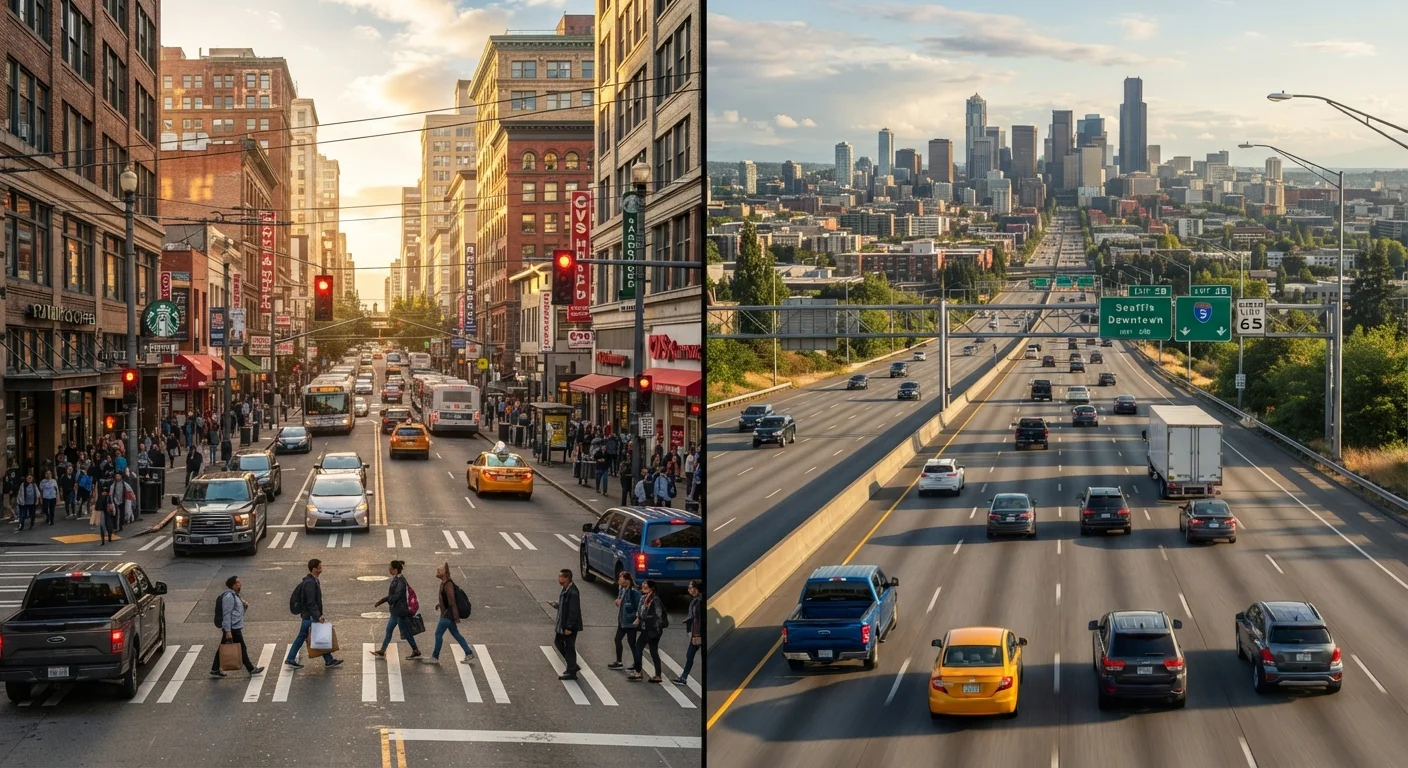
For a broader look at how road environment shapes driving demands, see how highway and city driving require different instincts.
| Rain | Snow/Ice | Fog | |
|---|---|---|---|
| Primary hazard | Hydroplaning, reduced traction | Severe traction loss, skids | Near-zero visibility |
| Recommended following distance | 4+ seconds | 8-10 seconds | 4+ seconds (speed-adjusted) |
| Headlight setting | Low beams on | Low beams on | Low beams only - never high beam |
| Speed adjustment | Reduce moderately | Reduce significantly | Match to visible stopping distance |
| Braking technique | Gradual, early braking | Slow, smooth inputs; ABS steady pressure | Normal but with more lead time |
| Key vehicle prep | Tread depth, tire pressure | Winter tires, antifreeze, battery | Fog lights, clear windshield |
Driving in Rain: Traction and Hydroplaning Risk
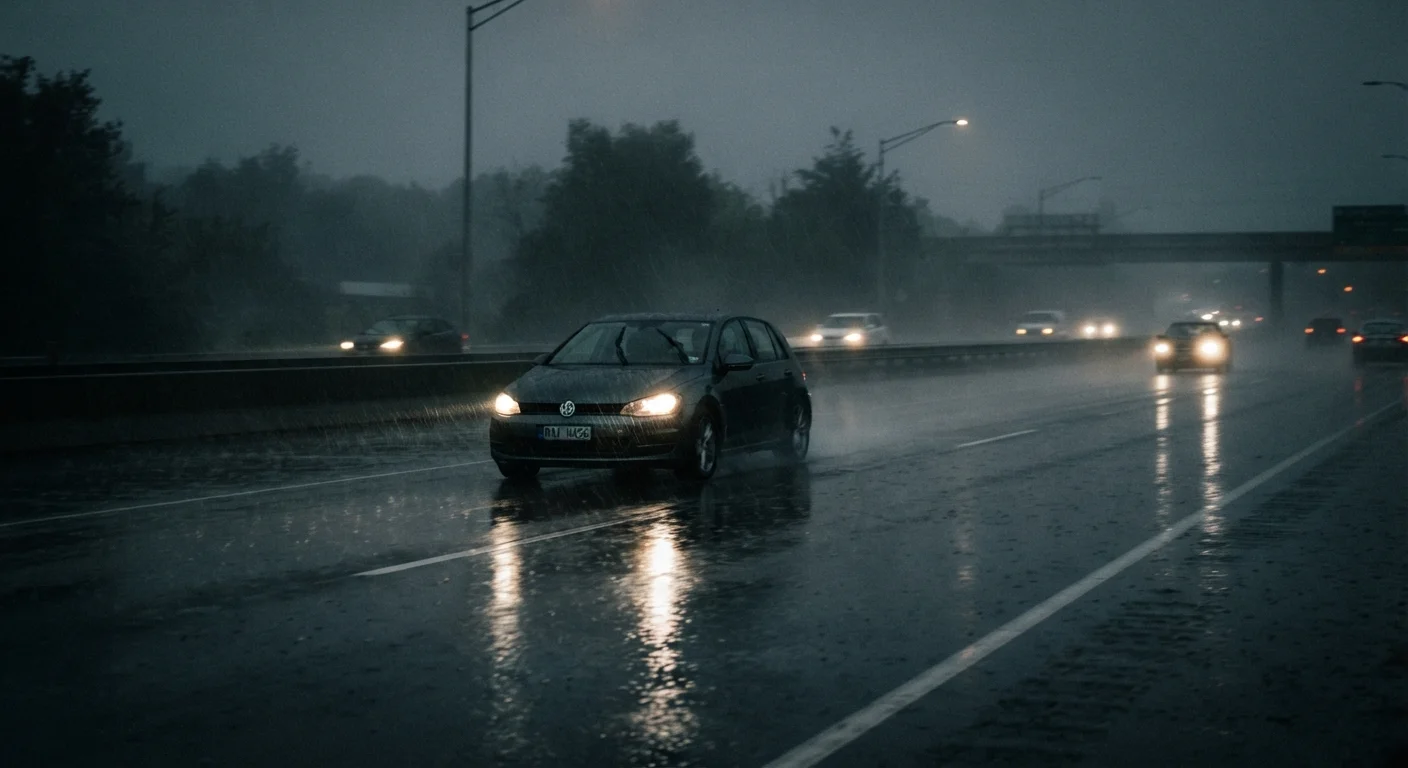
Rain primarily attacks traction. Water creates a film between your tires and the road surface. If tire tread can't channel that water away fast enough - especially at higher speeds - your vehicle can hydroplane, meaning it briefly rides on a layer of water rather than pavement. Steering and braking become nearly ineffective during hydroplaning.
Key adjustments for rain:
- Reduce speed progressively as rain intensifies; posted limits assume dry conditions.
- Increase following distance to at least four seconds - wet braking distances are substantially longer.
- Turn headlights on even in daylight rain; many states legally require this.
- Avoid sudden steering inputs or hard braking if you feel the vehicle start to float - ease off the accelerator and steer straight.
- Avoid standing water when possible; depths as shallow as six inches can affect low-clearance vehicles.
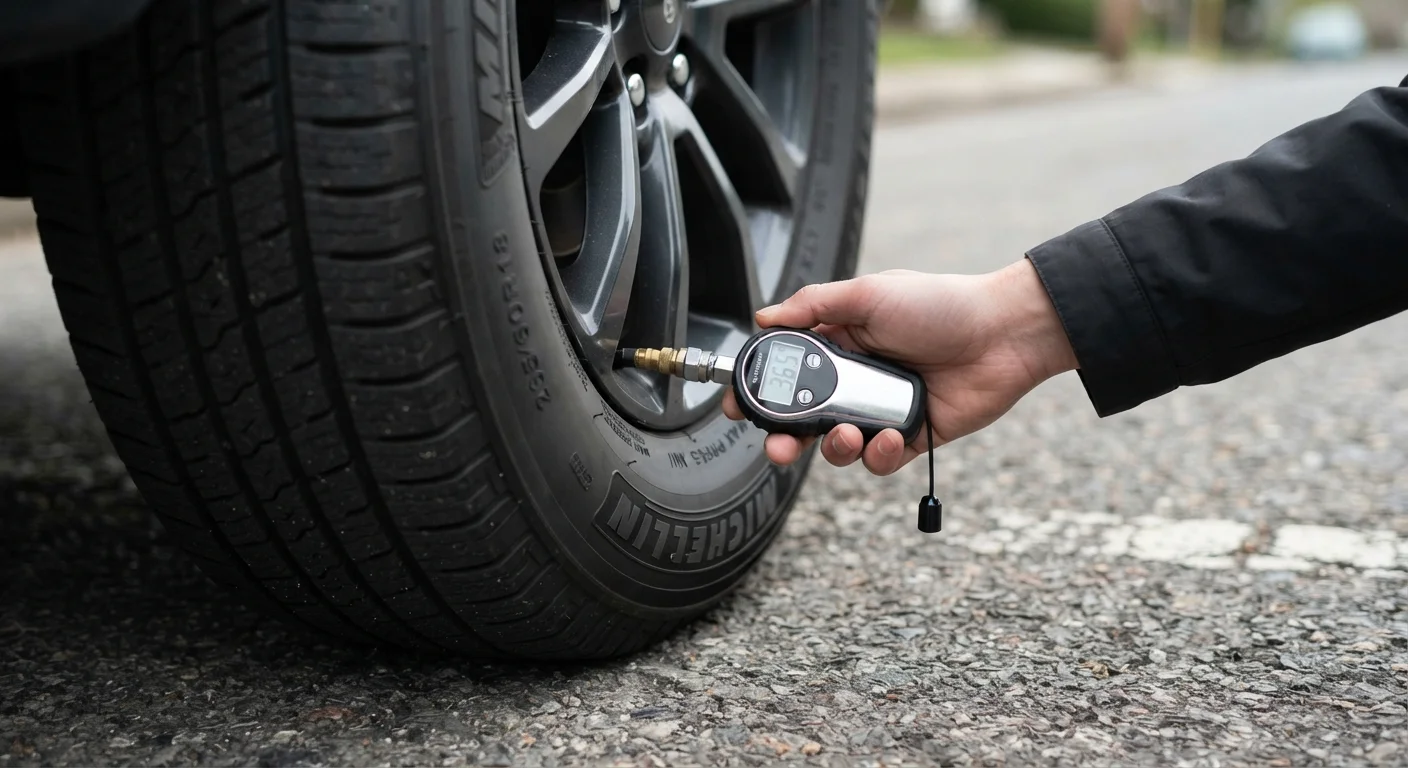
Tire condition plays a critical role here. Worn tread dramatically increases hydroplaning risk. Know the tread depth and pressure numbers that matter before wet-weather season arrives.
Test Your Brakes Early on Wet Roads
When you first encounter wet pavement, find a safe moment to gently apply your brakes at low speed to gauge how much grip is available. This quick test gives you real feedback on conditions before you need to stop in an emergency. Repeat this assessment after heavy rain begins or if road conditions appear to change.
Driving in Snow and Ice: The Low-Traction Environment
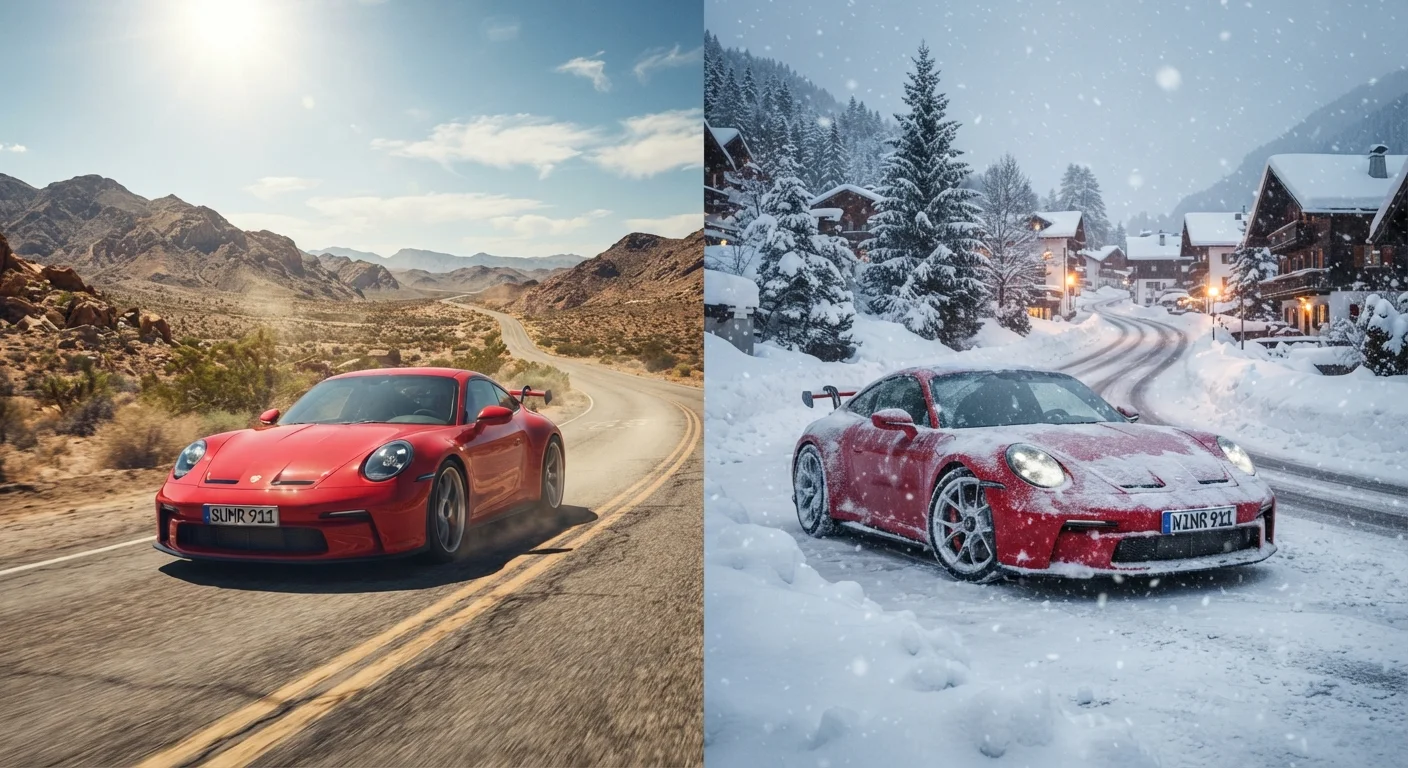
Snow and ice present the most severe traction loss of any common weather condition. Packed snow can reduce available grip by 30-50% compared to dry pavement; black ice - a nearly transparent glaze that forms when moisture freezes on pavement - can reduce it by 90% or more. The challenge is that black ice is often invisible until you're already on it.
Key adjustments for snow and ice:
- Accelerate and decelerate slowly to avoid wheel spin or lockup; smooth, gradual inputs are everything.
- Follow at a distance of eight to ten seconds - stopping distances can triple on snow and increase even further on ice.
- Know your braking system: if you have ABS (anti-lock braking system), apply firm, steady pressure; if not, threshold-brake gently to avoid lockup.
- Treat bridges, overpasses, and shaded road sections as higher-risk - they freeze before surrounding pavement.
- If your vehicle begins to skid, steer gently in the direction you want to go and avoid overcorrecting.
Winter preparation matters as much as in-the-moment technique. Seasonal maintenance checks - including battery condition, antifreeze levels, and wiper blades - can prevent breakdowns in the worst possible circumstances.
All-Season Tires Aren't Winter Tires
All-season tires are engineered for moderate temperature ranges and light winter conditions - not sustained sub-freezing temperatures or heavy snow and ice. In states that regularly see hard winters, all-season compounds can stiffen and lose grip in ways that catch drivers off guard. If you drive frequently in true winter conditions, dedicated winter tires offer meaningfully better performance.
Driving in Fog: Managing Near-Zero Visibility
Fog is uniquely dangerous because it creates an illusion of safety - at low speeds in light fog, conditions can feel manageable right until visibility drops sharply. Dense fog can reduce sightlines to under 100 feet, which at 45 mph gives a driver roughly 1.5 seconds to identify and respond to a hazard.
Key adjustments for fog:
- Use low-beam headlights, not high beams. High beams scatter off water droplets and reflect light back at the driver, worsening visibility.
- Use rear fog lights if your vehicle has them - they help drivers behind you see your position.
- Reduce speed well below the posted limit; drive at a pace that allows you to stop within your visible range.
- Use road markings and the right edge of the road as guides rather than the centerline, which pulls attention toward oncoming traffic.
- If fog is severe, pull completely off the road - not just onto the shoulder - turn off your lights, and wait.
Fog shares key dynamics with night driving: limited visibility demands the same heightened attention and reduced speed. Understanding why low-light driving is genuinely harder reinforces many of the same principles.
Speed management is central in every adverse condition. Posted limits and safe speeds aren't always the same thing - a concept that becomes especially consequential when visibility or traction is compromised.