How U.S. Road Signs Are Organized
American road signs follow a standardized system defined by the MUTCD (Manual on Uniform Traffic Control Devices), published by the Federal Highway Administration. Every sign's shape, color, and placement carries meaning - not just the text or symbol on it. Drivers who understand the system can process signs faster and respond more accurately, even in unfamiliar territory.
Signs fall into three primary categories: regulatory (what you must or must not do), warning (hazards or changes ahead), and informational/guide (destinations, distances, services). A fourth category - construction and work-zone signs - uses orange and black to flag temporary conditions.
| Sign system standard | MUTCD (Manual on Uniform Traffic Control Devices) (Federal Highway Administration) |
| Primary sign categories | Regulatory, Warning, Informational/Guide, Construction |
| Regulatory sign colors | Red, white, and black - indicating legal obligations (MUTCD) |
| Warning sign shape | Diamond (yellow or orange for work zones) (MUTCD) |
| Guide sign colors | Green (highways/routes), Blue (services), Brown (recreation) (MUTCD) |
For a broader look at how signs fit into the full framework of U.S. traffic rules, see our guide to U.S. traffic laws for new and returning drivers.
Regulatory Signs: These Are Legal Requirements
Regulatory signs communicate laws that apply at that specific location. Ignoring them can result in traffic citations, collisions, or both.
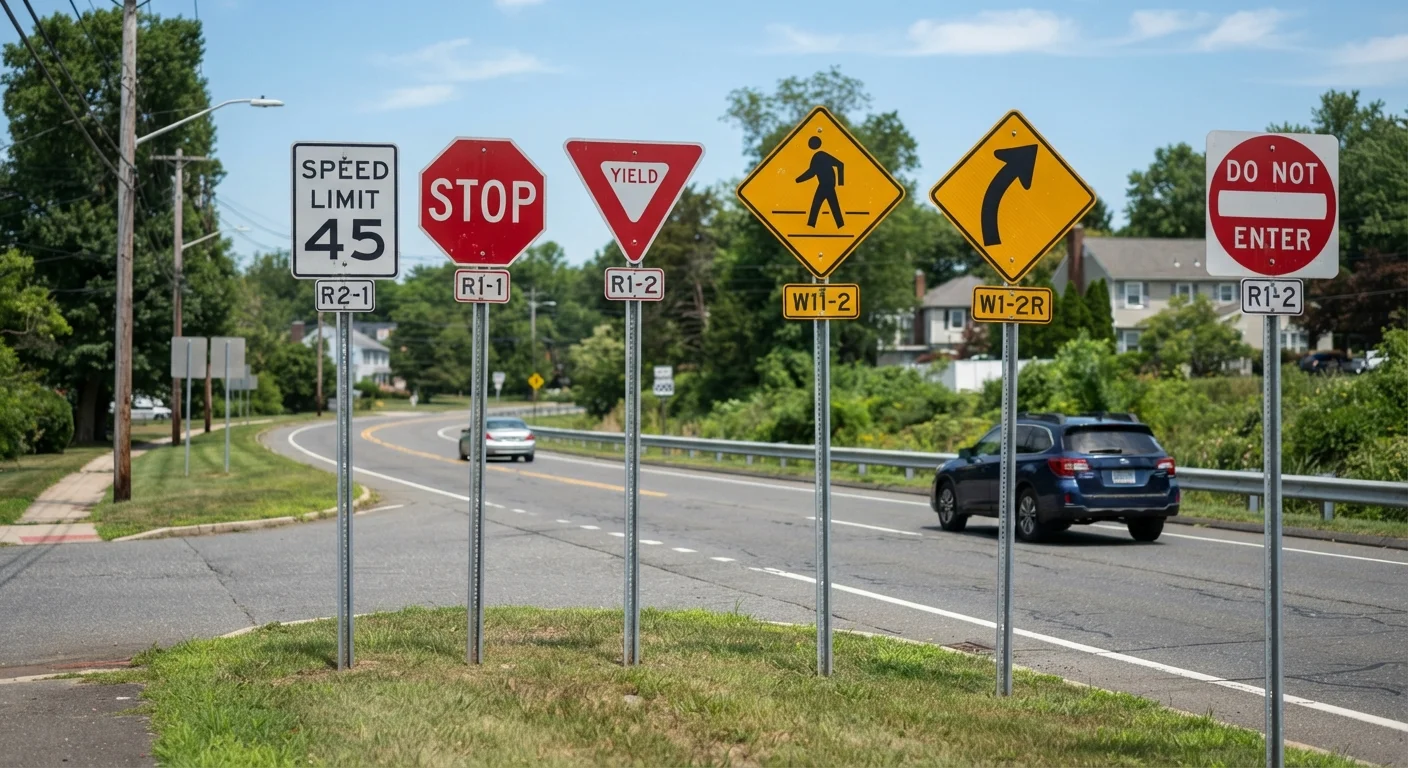
- Stop (red octagon): Come to a complete stop before the stop line or crosswalk. Proceed only when the intersection is clear and it is your turn. A rolling stop is a legal violation in every U.S. state.
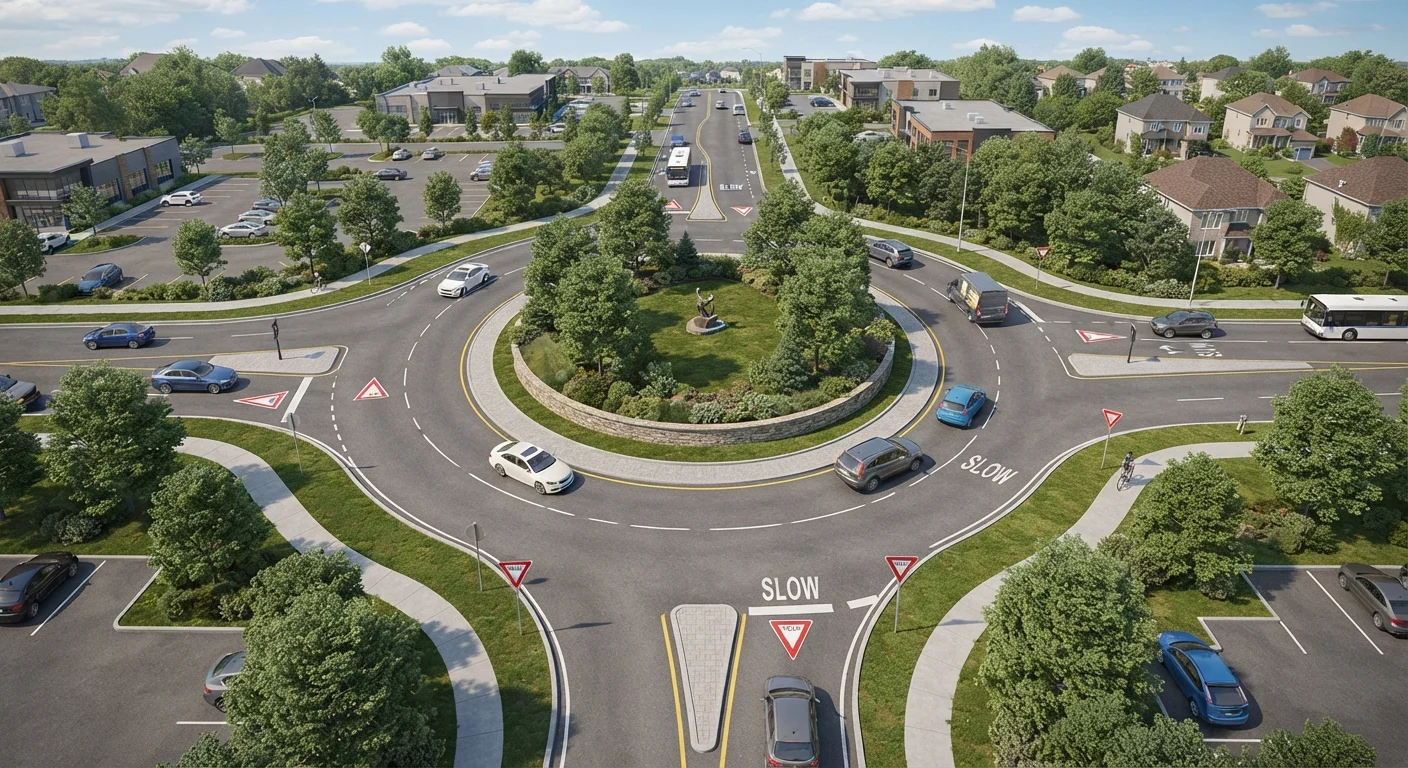
- Yield (downward-pointing red triangle): Slow down and give right-of-way to crossing traffic or pedestrians. Stop only if necessary. Roundabouts use yield rules rather than stop signs at entry points.
- Speed Limit (white rectangle): The posted number is the maximum lawful speed under ideal conditions. Driving at the speed limit during ice or heavy rain may still be considered unsafe and legally actionable.
- Do Not Enter / Wrong Way (red and white): These two signs often appear together on divided roads. Both signal that you are about to travel in the wrong direction - stop immediately and reverse or turn around safely.
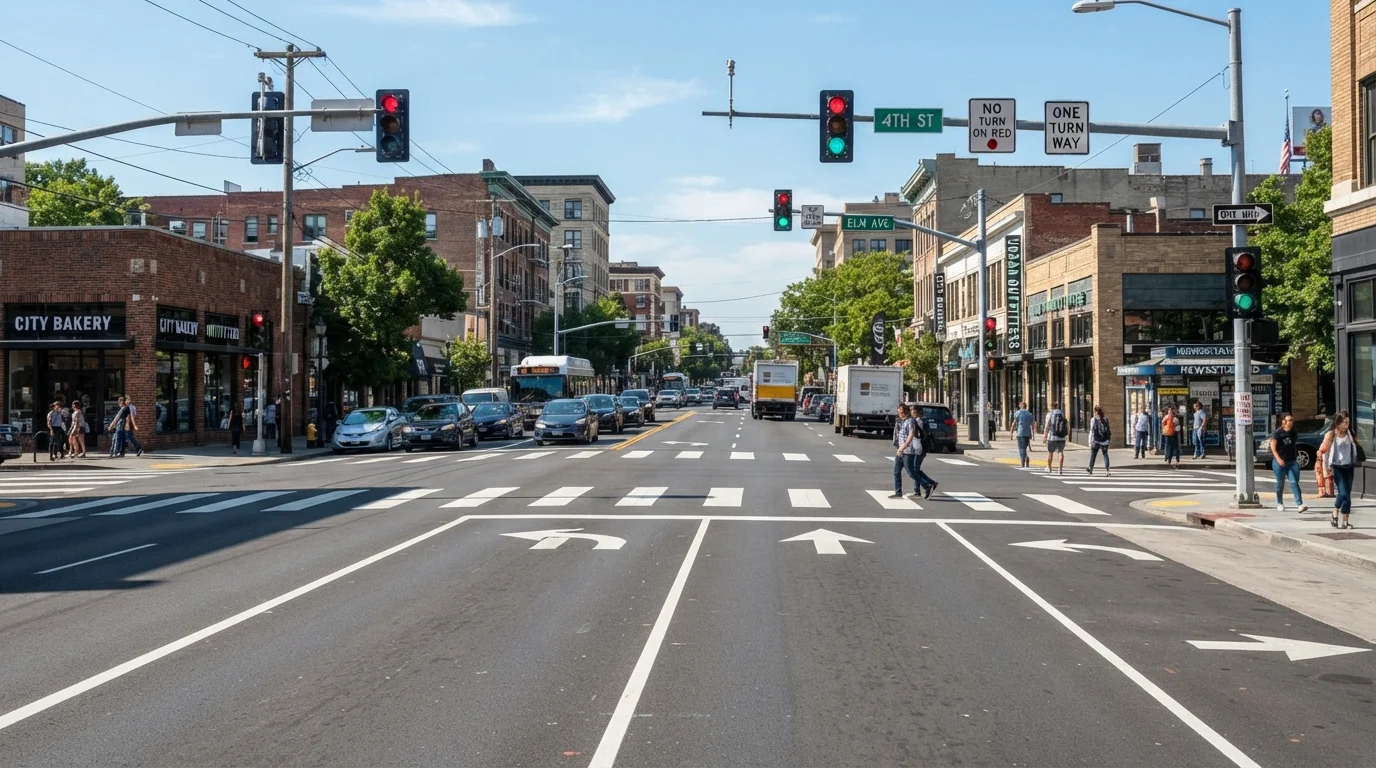
- No Turn on Red: Unless this sign is posted, most states permit a right turn on red after a complete stop. This sign removes that allowance entirely.
- One Way (black text on white or black on green): All traffic moves in the direction of the arrow. Turning against it is illegal and extremely dangerous.
MUTCD
The Manual on Uniform Traffic Control Devices, published by the Federal Highway Administration, sets the national standard for all road signs, signals, and markings in the United States.
Regulatory sign
A sign that communicates a specific traffic law applicable at that location. Failure to comply can result in a traffic citation or collision liability.
Warning sign
A diamond-shaped sign that alerts drivers to upcoming road conditions, hazards, or geometry changes. These signs describe physical realities, not legal mandates.
Right-of-way
The legal right to proceed through an intersection or road section before another vehicle or pedestrian. Yield and stop signs explicitly assign or restrict this right.
Work zone sign
Temporary orange-and-black signs used in construction and maintenance areas to redirect traffic, indicate reduced speed limits, and warn of changed road conditions.
Warning Signs: Read Them Early, React in Time
Warning signs are diamond-shaped and typically yellow (or orange in work zones). They alert you to road conditions, geometry, or hazards ahead - not laws, but physical realities that demand a change in speed or position.
- Curve / Winding Road: The road ahead bends significantly. Reduce speed before entering - not during - the curve.
- Slippery When Wet: The surface loses traction in wet conditions. This sign is especially common on bridges and shaded sections where black ice forms.
- Deer Crossing / Animal Crossing: Wildlife regularly crosses here, particularly at dawn and dusk. Scan the roadside, not just the pavement.
- Divided Highway Begins / Ends: One of the most misread signs. Begins means a median is about to separate oncoming traffic - move right. Ends means the separation disappears and two-way traffic returns on an undivided road.
- Pedestrian / School Zone: Watch for people on or near the roadway. Speed reductions are typically legally required in school zones during posted hours.
- Railroad Crossing (round, yellow with X): Tracks cross ahead. The advance warning circle is distinct from the crossbuck sign at the actual crossing. Treat both seriously.
Understanding warning signs is closely tied to defensive driving principles - anticipating hazards before they become emergencies.
Informational and Guide Signs - and What Drivers Often Miss
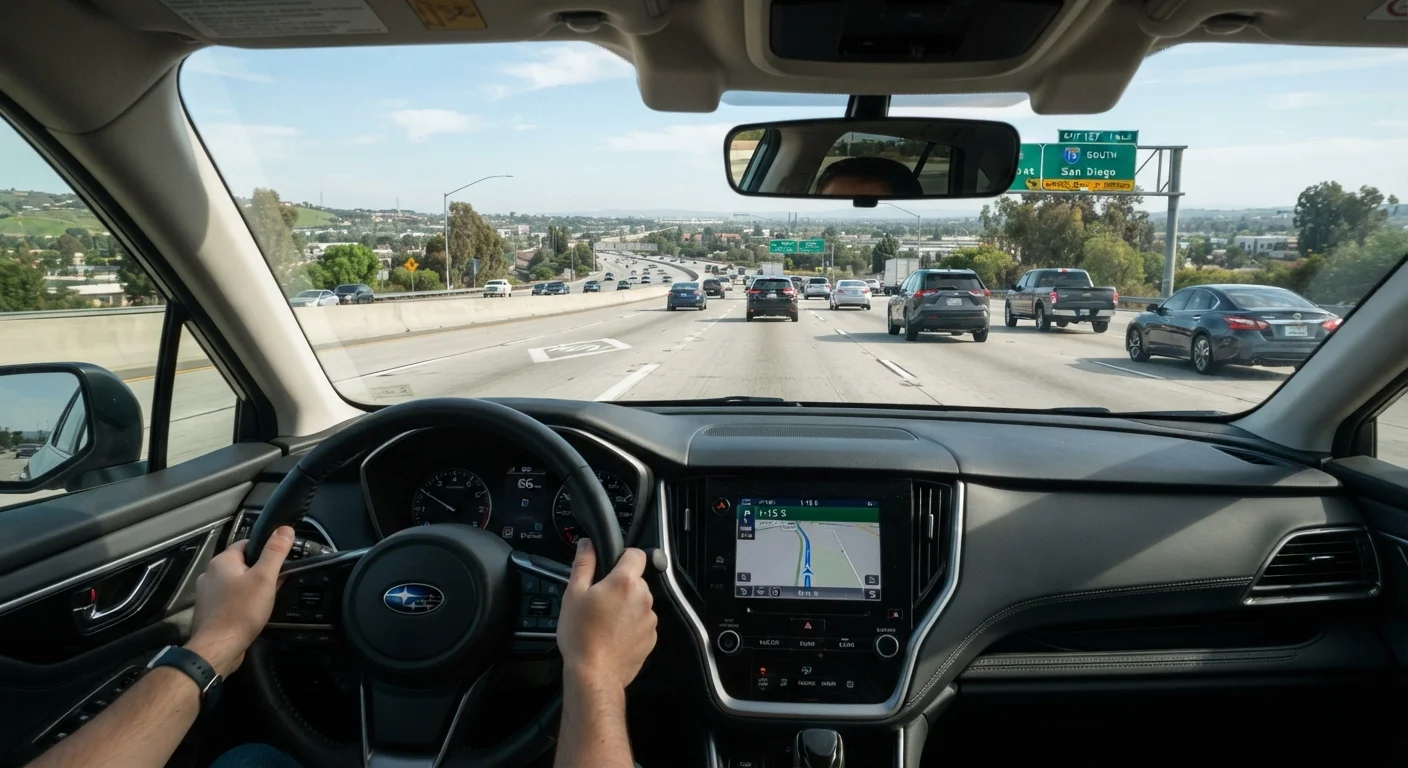
Green and blue signs direct rather than restrict. Green signs mark routes, distances, and highway destinations. Blue signs indicate services - fuel, food, lodging, hospitals - along the road ahead.
Brown signs designate recreational and cultural destinations: parks, historic sites, and scenic areas. These are easy to underestimate: they can precede abrupt turns into parking areas or unmarked intersections.
Signs vs. Pavement Markings: Which Takes Priority?
Signs and pavement markings work as a coordinated system under normal conditions. During active construction or emergency detours, temporary signs legally override permanent markings. When you see a flagger or portable sign, treat it as the current authority, regardless of what the painted lines indicate.
Pavement markings work alongside signs to reinforce rules. A solid white line means stay in lane; a broken white line permits lane changes. Double yellow centerlines prohibit passing in both directions. When a sign and a marking conflict - rare but possible during construction - treat the more restrictive instruction as binding until you can clarify.
Drivers who share roads with commercial trucks and cyclists should also note that some regulatory signs - such as clearance height limits and bike-lane boundaries - apply only to specific road users. See sharing the road with trucks, motorcycles, and cyclists for how those distinctions affect everyday driving decisions.
~500,000
Miles of U.S. roads with federal sign standards applied
The MUTCD governs signage on all roads open to public travel that receive federal funding, covering the vast majority of the American road network.
~30%
Of traffic fatalities linked to roadway departures
According to the Federal Highway Administration, roadway departure crashes - many of which involve misread or missed warning signs - represent a significant share of U.S. traffic deaths.