How Your Home's Plumbing System Works
Your home's plumbing is really two systems working in parallel. The supply system brings pressurized fresh water in from a municipal main or private well. The drain-waste-vent (DWV) system carries used water and waste out through gravity-fed pipes to a sewer line or septic tank. Understanding this division helps you reason clearly about where problems originate.
Supply system
The network of pipes that delivers pressurized fresh water from a municipal main or well to every faucet, toilet, and appliance in your home.
Drain-waste-vent (DWV)
The system of pipes that carries wastewater and sewage away from fixtures by gravity, while vent pipes maintain air pressure so drains flow freely.
Shutoff valve
A valve that stops water flow either to the entire house (main shutoff) or to a single fixture. Turning it off is the first step in handling most plumbing emergencies.
P-trap
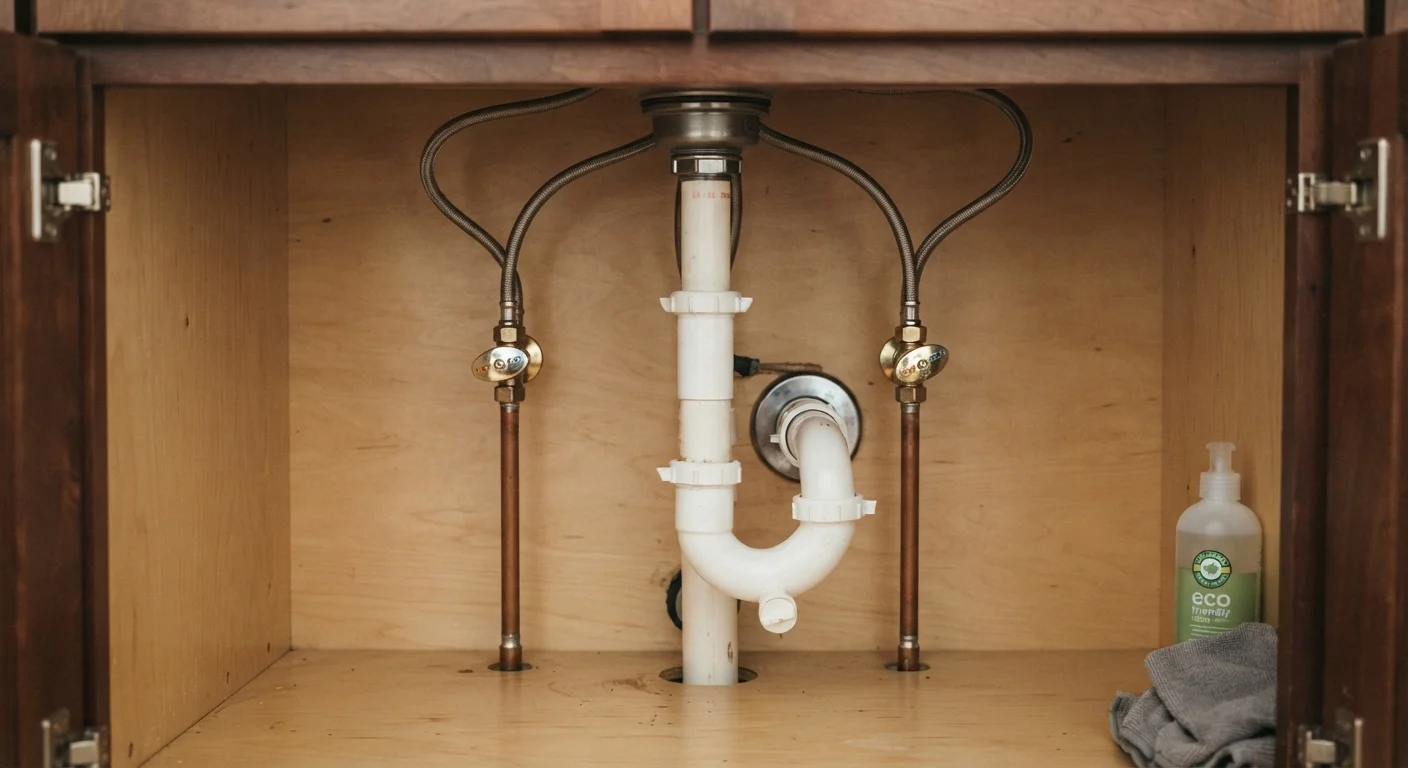
The curved pipe section beneath sinks and other fixtures that holds a small amount of water, creating a seal that blocks sewer gases from entering your home.
Water meter
A device installed by your utility that measures how much water flows into your home. It can also be used to detect hidden leaks.
Pressure relief valve (PRV)
A safety device on your water heater that releases pressure if it builds too high, preventing tank rupture. It should be tested periodically by a qualified technician.
Supply pipes are typically copper, CPVC plastic, or PEX tubing. They run under pressure, which is why a burst supply pipe causes immediate, significant water damage. DWV pipes are wider and slope slightly downhill so gravity does the work. They also connect to vent pipes - those stacks poking through your roof - which admit air and prevent the siphoning of water from drain traps.
Water heaters sit within the supply system, drawing cold water in and routing heated water to fixtures on demand. Your seasonal maintenance calendar should include flushing sediment from the water heater tank - a step that's easy to overlook until efficiency drops.
Locating and Using Your Shutoff Valves
Knowing how to stop water flow quickly is the single most important plumbing skill a homeowner can have. There are two levels of shutoff to understand:
- Main shutoff valve: Cuts water to the entire house. Look for it where the supply line enters - often the basement, utility room, crawl space, or exterior wall. In warmer regions, it may be in an in-ground box near the street curb.
- Fixture shutoff valves: Smaller valves located beneath sinks and behind toilets. These let you isolate a single fixture without cutting water to the whole house.
Do a Shutoff Valve Walk-Through Now
Don't wait for an emergency to locate your shutoffs. Walk through your home today and tag each fixture shutoff valve with a small adhesive label. If you share the home with others, make sure everyone knows where the main valve is and how to operate it. A ball valve turns off with a quarter-turn; a gate valve requires multiple full rotations.
Take five minutes this week to locate both types and confirm they turn freely. Valves that haven't moved in years can seize. If a valve is stuck or leaking around its stem, have a plumber service it - don't force it. Also note that some older homes have gate valves at the main, which are less reliable than the ball valves common in newer construction.
Pipe insulation in unheated areas is directly tied to shutoff readiness - if a pipe freezes and bursts, you need to act fast. See our guide on weatherproofing your home before winter for pipe protection steps.
Reading Your Water Meter
Your water meter is a free diagnostic tool most homeowners never use. It's typically located at the property line in a flush-to-ground concrete or plastic box, or inside near the main shutoff in colder climates.
Most meters display a series of digits showing total cubic feet or gallons used, plus a small leak indicator - often a triangle or star-shaped dial. To check for a hidden leak:
- Ensure no water is running inside or outside the home (including ice makers and irrigation).
- Note the meter reading or check whether the leak indicator is moving.
- Wait 15-30 minutes without using any water, then check again.
- If the reading changed or the indicator moved, you likely have a leak somewhere in the system.
Digital Meters and Smart Leak Detectors
Some municipalities now use digital or automated meter reading systems that can flag unusual consumption patterns between billing cycles. Additionally, Wi-Fi-connected leak detectors placed under sinks or near appliances can send alerts to your phone when moisture is detected. These tools don't replace plumbing knowledge, but they can provide an early warning that something needs attention.
Comparing your meter reading to your utility bill also helps catch billing errors and identify gradual increases in usage that might signal a slow, hidden leak - sometimes inside a wall or under a slab.
Common Plumbing Problems and When to Call a Pro
Some plumbing situations are well within a homeowner's reach. Others require a licensed plumber - both for safety and because local codes may legally require it. Here's a general breakdown:
| Situation | DIY-Friendly? | Notes |
|---|---|---|
| Running toilet | Often yes | Usually a worn flapper or float adjustment |
| Slow drain | Sometimes | A drain snake works for minor clogs; avoid chemical drain cleaners regularly |
| Dripping faucet | Often yes | Depends on fixture type and condition |
| Burst or leaking pipe | No | Shut off water immediately; call a licensed plumber |
| New pipe installation | No | Likely requires a permit and inspection |
Know Your Limits with DIY Plumbing
Work involving main supply lines, in-wall pipes, or gas-adjacent appliances carries real risk of water damage, injury, or code violations. Most jurisdictions require licensed contractors for significant plumbing work, and unpermitted repairs can complicate home sales or insurance claims. When in doubt, consult a licensed plumber before starting any job beyond basic fixture maintenance.
For anything involving gas lines near water heaters, main line connections, or work inside walls, always hire a licensed professional. Unpermitted plumbing work can create liability issues when you sell your home. Our article on permits, inspections, and codes explains when professional oversight is required.
Routine awareness goes a long way. Check under sinks periodically for moisture, note changes in water pressure, and don't ignore new sounds in your pipes. These small habits can catch problems early - before they appear on our list of commonly forgotten tasks that become expensive.