Why Paper Clutter Is Harder to Stop Than It Looks
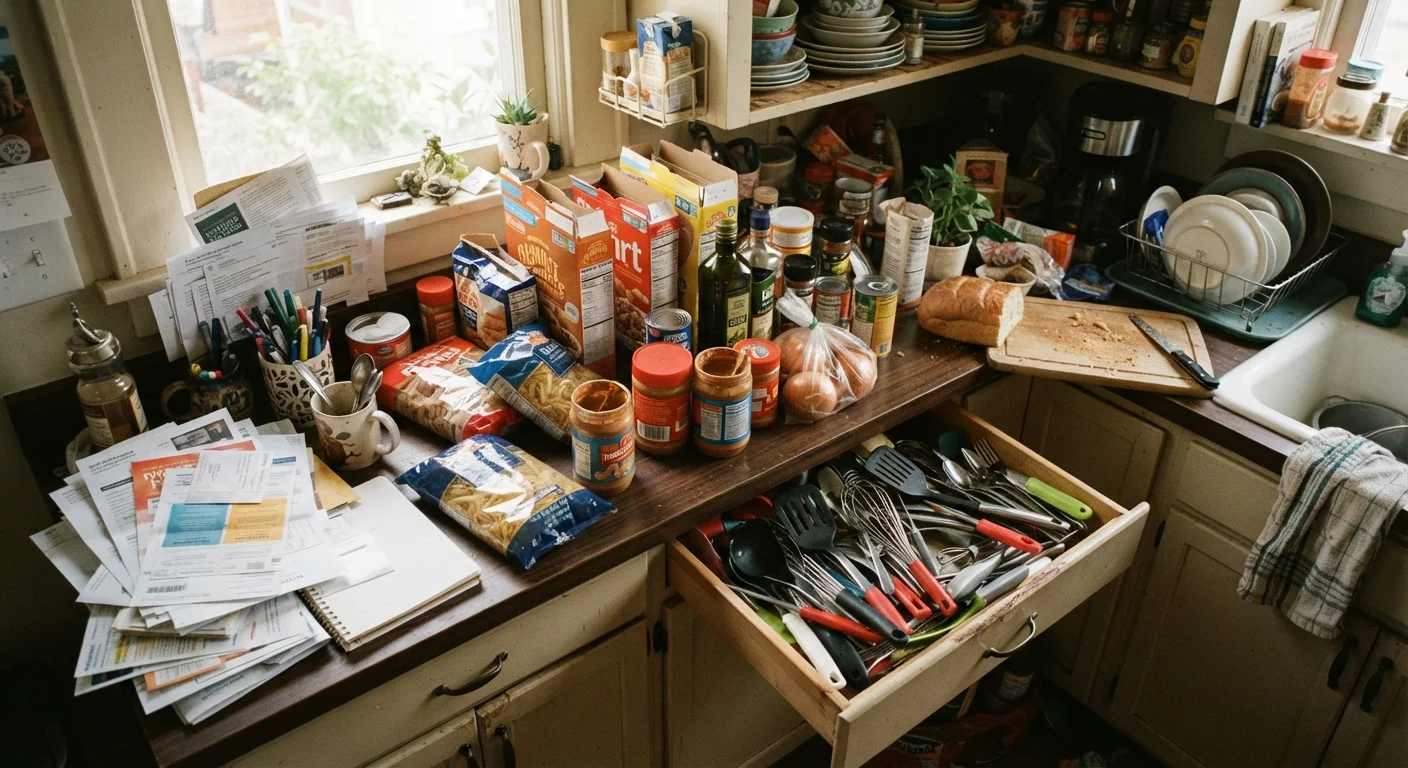
Paper doesn't accumulate because households are disorganized - it accumulates because there's no designated system to catch it. Mail arrives daily. School forms come home in backpacks. Receipts emerge from pockets and purses. Without a clear process, every flat surface becomes a potential landing zone.
The downstream effects go beyond visual clutter. Missing a bill due date, losing a warranty card, or failing to return a signed form all carry real consequences. The hidden costs of disorganization are often invisible until they aren't - a late fee, a duplicate purchase, an expired return window.
The good news: paper clutter is one of the more solvable household organization problems. It follows predictable patterns, enters through predictable channels, and responds well to simple structure. You don't need an elaborate system - you need a consistent one.
Inbox tray or wall-mounted mail sorter
Creates a single designated landing zone for all incoming paper so nothing migrates to countertops.
Cross-cut shredder
Safely destroys documents containing personal or financial information before disposal.
Hanging file folders or an accordion file
Organizes papers that need to be kept, sorted by category such as taxes, insurance, and medical.
Recycling bin near the mail station
Makes it frictionless to discard junk mail and packaging immediately upon sorting.
Label maker or adhesive labels
Keeps file categories readable and consistent, especially in shared households.
Flatbed scanner or scanning app
Converts important paper documents into digital files, reducing long-term storage needs.
How to Set Up Your Paper Management System
The steps below walk you through building a paper management routine from the ground up. If you're tackling broader clutter at the same time, this fits naturally into the kitchen or entryway phase of a room-by-room decluttering walkthrough.
What you will need
Identify your paper entry points
Before organizing, map out where paper actually enters and accumulates in your home. Common culprits include the kitchen counter near the door, a dining table, a home office desk, and the so-called junk drawer. School bags, coat pockets, and the car are secondary sources many households overlook.
Walk through your home with fresh eyes and note every surface that has a paper pile. This is your problem map - and the foundation for placing your sorting station strategically.
Set up a single landing zone
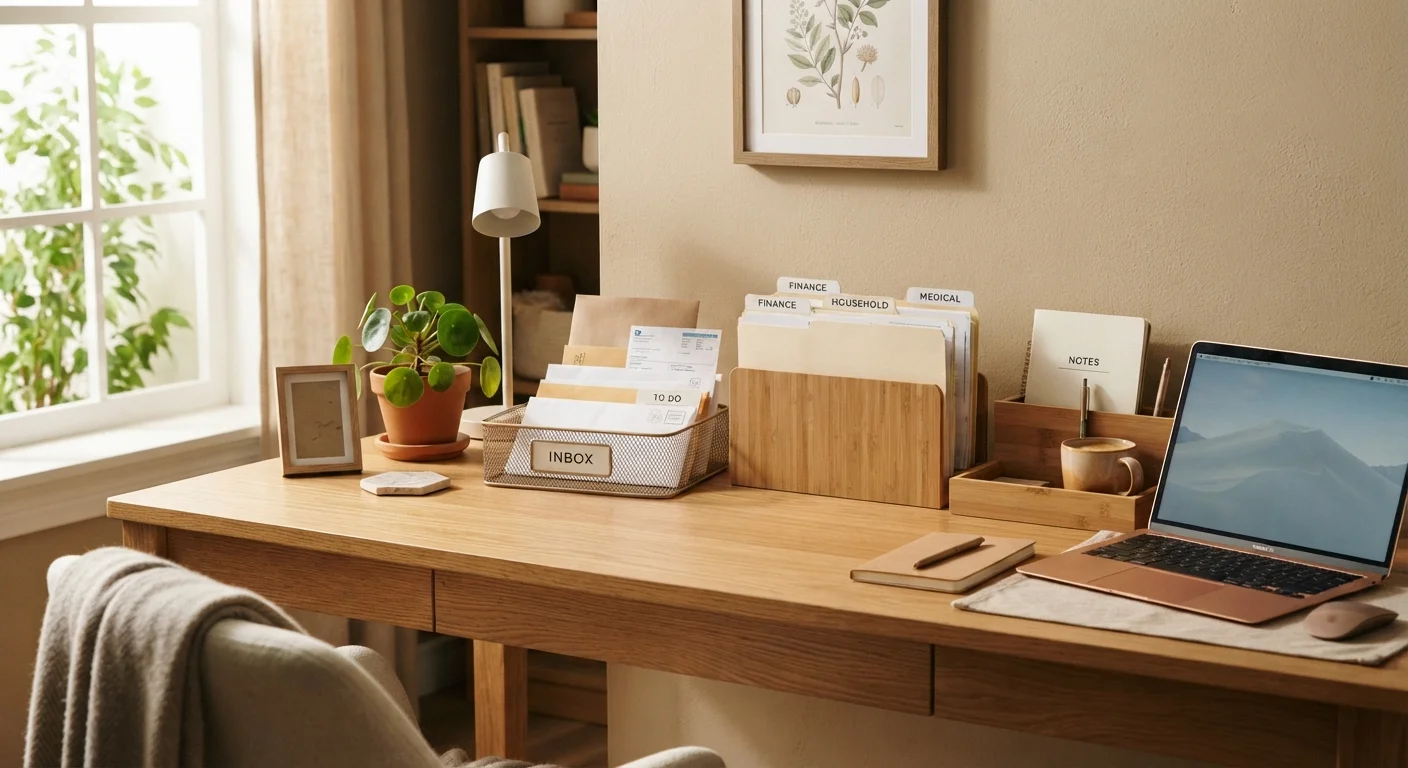
Consolidate all paper activity to one spot. Place a small inbox tray, a folder, or a wall-mounted sorter at the entry point you identified. This becomes the only place mail, school forms, receipts, and notes are allowed to land. Keep a recycling bin and your shredder within arm's reach of this station.
Resist the urge to create a complex multi-bin system upfront. One landing zone is what you need to start.
Sort every piece of paper into three categories
Handle each item that comes through the landing zone using three simple decisions:
- Act: Requires a response or action (a bill to pay, a form to sign, a permission slip to return). Move to a dedicated "to do" slot.
- File: No immediate action needed, but worth keeping (an insurance explanation of benefits, a tax document, a warranty). Move to your filing system.
- Recycle or shred: Everything else - junk mail, duplicate notices, expired coupons, packaging inserts.
Most incoming paper falls into that third category. Recognizing this makes it easier to act decisively rather than letting things accumulate "just in case."
Build a simple filing system for keepers
You don't need a filing cabinet for most households. An accordion file or a small set of hanging folders in a desktop holder works well. Use broad categories rather than narrow ones to reduce the friction of filing:
- Taxes & financial records
- Insurance (health, auto, home)
- Medical
- Home (mortgage, lease, utilities, warranties)
- Active projects or pending items
Label each section clearly. The goal is to be able to locate any document within two minutes - not to achieve perfect granularity.
Do a weekly 10-minute paper reset
Once the system is in place, maintenance is the key. Set aside ten minutes each week - Sunday evening or Monday morning works for many households - to clear the landing zone. Pay anything in the "act" pile that's due, file anything in the "file" pile, and shred or recycle the rest.
This weekly habit prevents the backlog that causes most paper systems to collapse. As noted in common organizing pitfalls, systems usually fail not from bad design but from skipped maintenance.
Reduce incoming paper volume over time
The most effective long-term strategy is receiving less paper in the first place. Switch recurring accounts - utilities, banks, credit cards - to paperless statements. Opt out of physical catalogs and marketing mailers through mail preference services. Request electronic copies of school communications where your district offers them.
Each account you convert represents a permanent reduction in sorting workload. Even a few switches per month compounds meaningfully over a year.
Go Digital Where It Makes Sense
Switching to paperless billing and e-statements for utilities, credit cards, and bank accounts can eliminate a significant portion of incoming mail. Store digital copies in a clearly labeled folder on a cloud service or your computer. Even scanning one or two high-volume accounts a month adds up quickly.
Shred Before You Toss
Documents containing your name, address, account numbers, or Social Security information should never go straight into the recycling bin. Identity theft is a real and common risk. Invest in a basic cross-cut shredder and use it for any paper with personal or financial identifiers before disposal.
Don't Discard These Documents
Some papers need to be kept for years, not weeks. Tax returns and supporting documents are generally recommended to keep for at least seven years. Documents like property deeds, insurance policies, and wills should be stored permanently in a secure location. When in doubt about retention timelines, consult a financial or legal professional.
Once your system is running, the structure that holds it together is less about perfect organization and more about consistent small habits. If you find your system starting to slip, it's worth reviewing why clutter keeps coming back - the behavioral patterns are often the same regardless of the category.