
Why Room-by-Room Works Better Than Whole-Home Overhauls
Decluttering an entire home in one weekend sounds satisfying in theory. In practice, most people stall by Sunday afternoon, surrounded by piles they no longer have energy to sort. A room-by-room approach sidesteps this by creating a series of achievable wins instead of one enormous task.
Each room has its own function, traffic pattern, and clutter type. Treating them separately means you can match your strategy to what's actually happening in each space. If you're new to intentional organizing, the foundational concepts guide covers the core habits worth building before you begin room-specific work.
Build Momentum With a First Win
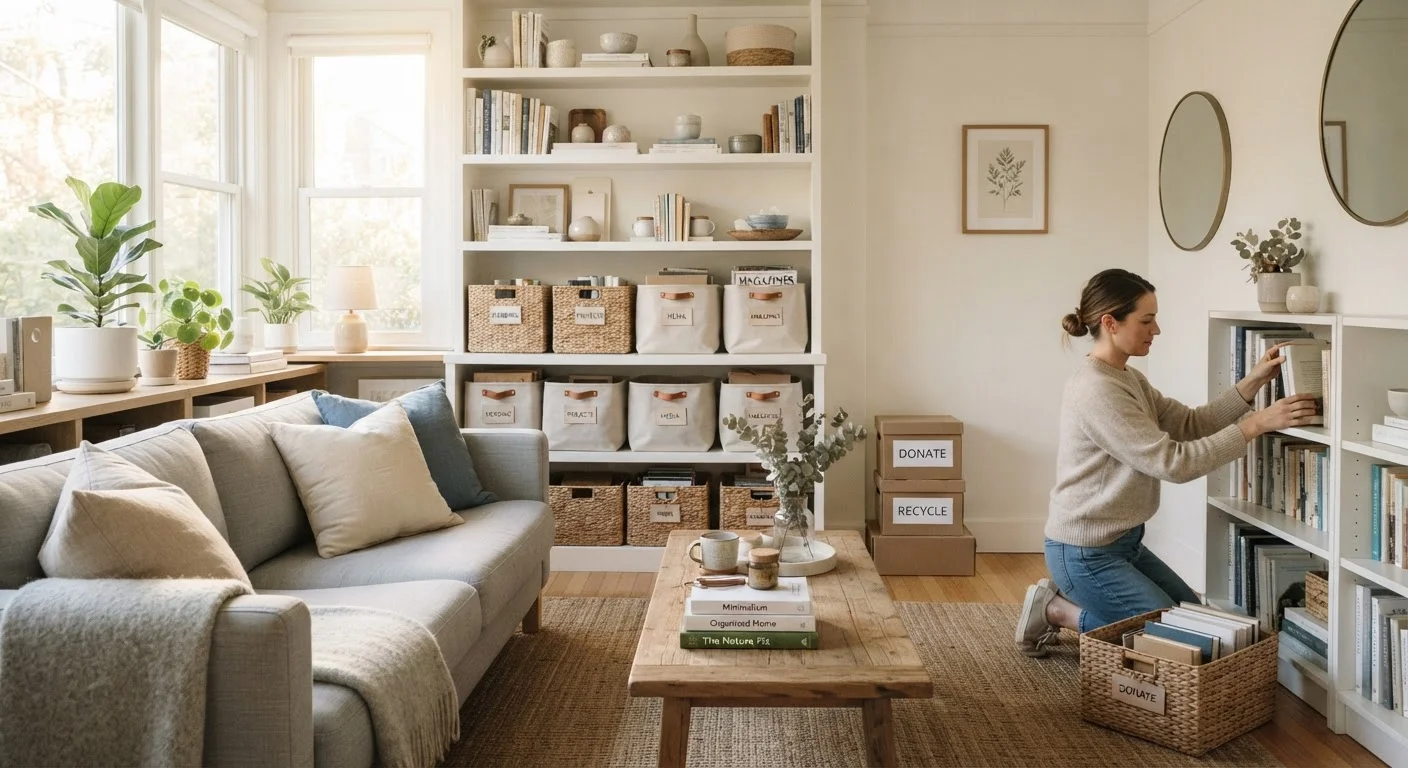
Start with the room that bothers you most, not the largest or most cluttered one. Completing a visible, high-use space first - like a kitchen counter or bathroom cabinet - creates the motivation to continue through harder areas. Small, concrete wins outperform grand plans that never start.
Start with the room that bothers you most - not necessarily the messiest one. A quick, visible win in a high-use space builds the motivation to keep going through rooms that feel more daunting.
Kitchen: The High-Traffic Starting Point
Kitchens accumulate clutter in concentrated bursts: duplicate utensils, expired pantry items, appliances used twice a year. Begin with the pantry and refrigerator. Check expiration dates, consolidate partial packages, and remove anything you wouldn't realistically cook with in the next three months.
Move to drawers and cabinets next. A common benchmark is keeping only the utensils you reach for in a typical week. Rarely used but functional items - a second set of mixing bowls, specialty gadgets - can move to a less accessible cabinet or leave the kitchen entirely.
25%
Homeowners who can't park in their garage
According to a U.S. Department of Energy survey, roughly one in four American households with garages cannot fit a car inside due to stored items.
3x
More time spent looking for misplaced items
Research from the National Association of Professional Organizers suggests disorganized households spend significantly more time searching for everyday items than organized ones.
Counter space deserves special attention. Every appliance on the counter competes for prep area and creates visual noise. If you haven't plugged something in recently, store it vertically in a cabinet or assess whether it earns its footprint.
Bedrooms: Personal Space, Personal Decisions
Bedrooms typically hold clothing clutter and sentimental items - two categories that require different decision-making. For clothing, a practical test is whether an item fits now, is in wearable condition, and has been worn in the past year. Seasonal exceptions apply, but honest assessment matters more than aspirational keeping.
Dressers and nightstands often collect items that belong elsewhere: chargers, books, paperwork, change. Clear these surfaces as a separate task from clothing, returning each item to its proper room or category.
Use the 'one-in, one-out' rule as a maintenance tool, not just a decluttering one. Every time a new item enters a room, something leaves - this keeps volume stable without requiring periodic overhauls.
Volume creep is the most common reason decluttered spaces revert. A consistent exchange rule addresses the root cause rather than the symptom.
When sorting clothing, turn all hangers backward at the start of a season. Anything still backward at season's end hasn't been worn - that's your removal list.
This passive tracking method removes the emotional guesswork from clothing decisions and gives objective data about actual use patterns.
Sentimental items don't require immediate decisions. Set them aside in a single box, label it with a date, and revisit in 30 to 60 days. This removes the pressure of in-the-moment emotional choices without forcing you to discard things prematurely.
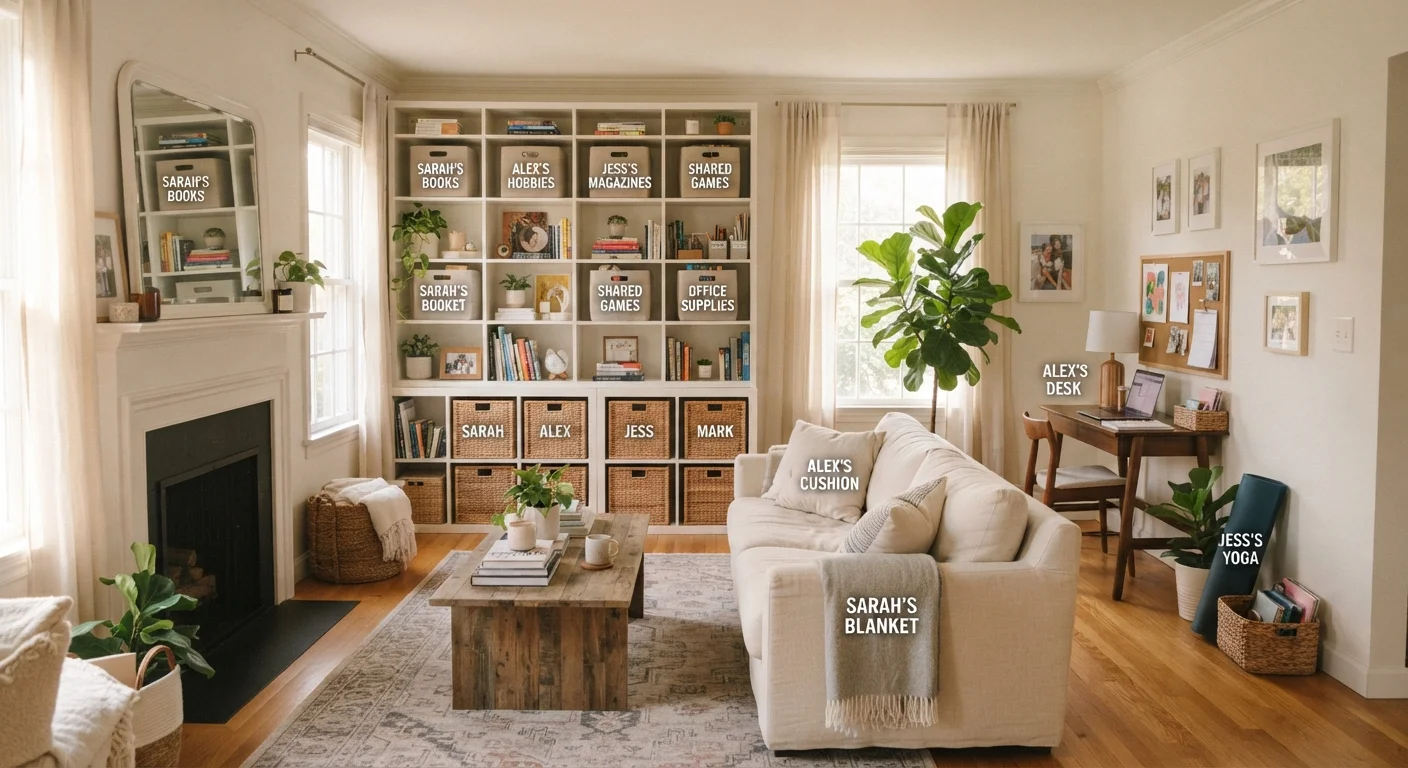
In homes with multiple residents, bedrooms reflect individual preferences and tolerances. The guide to organizing with multiple people offers strategies for households where everyone's habits don't naturally align.
Bathrooms: Small Space, Big Buildup
Bathrooms punch above their weight in clutter density. Expired medications, duplicate products, and trial-size items from travel accumulate in drawers and under sinks faster than most people notice.
Don't Skip Expired Products
Bathrooms and medicine cabinets often contain expired medications, skincare, and first-aid supplies that can lose effectiveness or become unsafe over time. Make expiration date checks a routine part of any bathroom declutter. For medication disposal, use a community take-back program when available - do not flush most medications, as this can affect local water systems.
Begin with a full sweep of the medicine cabinet and under-sink storage. Discard expired products - including over-the-counter medications, sunscreen, and skincare with visible degradation. For medication disposal, the FDA recommends using community drug take-back programs rather than flushing most medications, to protect water systems.
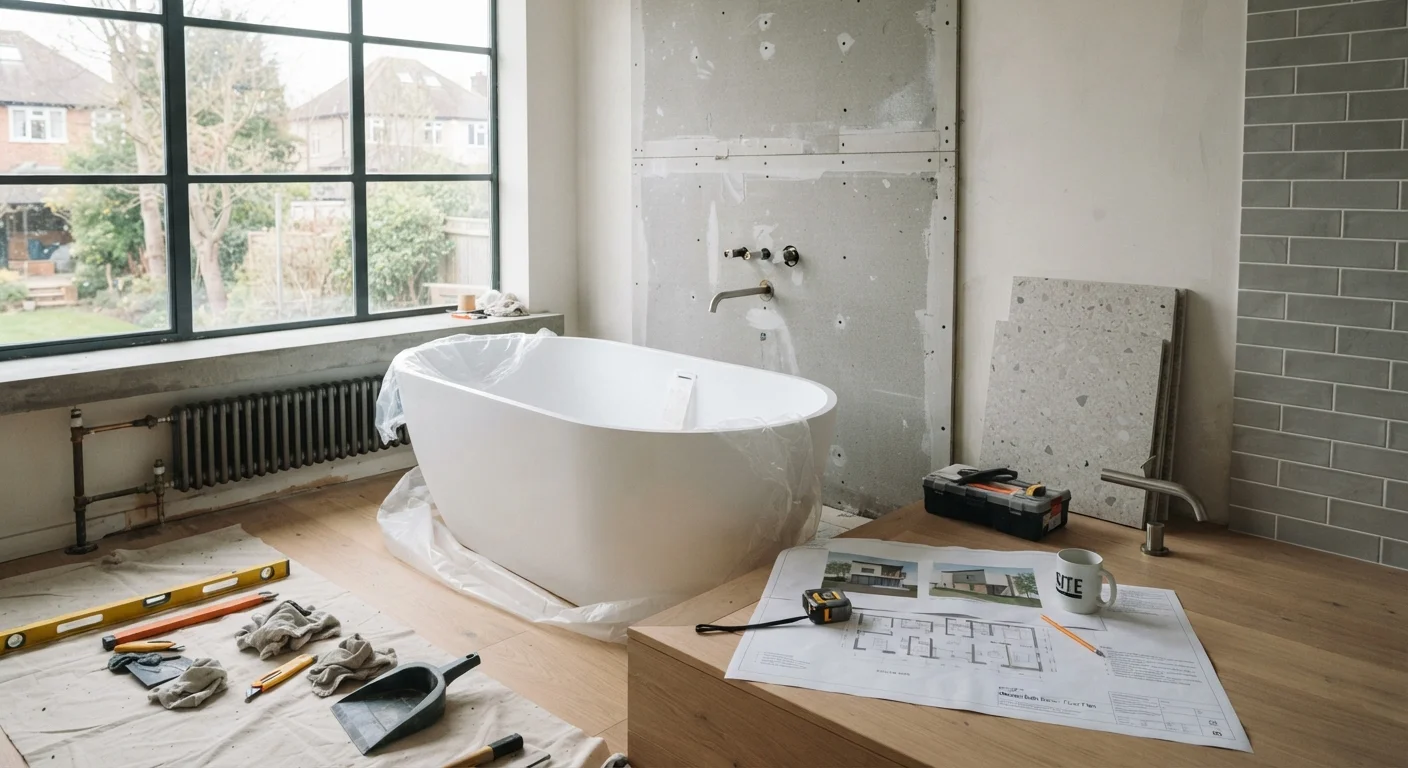
Consolidate duplicates: if you have three half-used bottles of shampoo, combine or finish before opening new products. Under-sink space often works better with small bins or pull-out organizers that make the back of the cabinet accessible. If you're considering a deeper bathroom refresh beyond organizing, the bathroom remodeling planning guide covers layout and storage planning from a renovation perspective.
Living and Common Areas: Shared Clutter Needs Shared Rules
Living rooms, dining rooms, and entryways absorb clutter from every direction because they're transition zones. Mail lands on the dining table. Shoes pile by the door. Remote controls multiply. Because these spaces are shared, lasting organization requires household-wide buy-in - not just one person's effort.
Establish one landing zone for incoming items like mail and keys, and a system for clearing it weekly. Every item that lives in common areas should have a designated home. If it doesn't, it will migrate to the nearest flat surface.
Open Layouts Amplify Visual Clutter
In open-plan homes, clutter in one zone is visible from across the entire floor, making the whole space feel disordered even when individual areas are relatively tidy. This makes maintaining a few clear surfaces - especially kitchen counters and dining tables - disproportionately impactful for how the home feels overall.
Open-concept floor plans create particular challenges because living, dining, and kitchen spaces visually blend together. What feels like a small amount of clutter in one zone reads as disorder across the whole floor. The open-plan living trade-offs article addresses how layout decisions affect everyday tidiness.
For garages and storage-heavy spaces adjacent to common areas, a separate approach is warranted. The garage organization guide walks through realistic decisions about what stays, what moves inside, and what leaves.
Maintaining Momentum After the First Pass
The first declutter pass creates clarity. What prevents backsliding is a simple maintenance rhythm. Most households find that a 15-minute weekly reset - returning items to their homes, clearing surfaces, addressing the landing zone - is more sustainable than seasonal overhauls.
Build in a light quarterly review for areas with high churn: the pantry, bathroom cabinet, and entryway closet. These spaces refill quickly and benefit from brief, regular attention rather than yearly excavation.
If your home's challenges stem from limited square footage rather than accumulation habits, the organizing for small apartments guide examines how tighter spaces can actually reinforce better habits over time. The goal isn't a perfectly staged home - it's a functional one that takes less energy to maintain each week.
Decluttering Alone Won't Sustain Organization
Removing items is only half the work. Without a simple system for where things live and a consistent habit of returning them, spaces revert within weeks. Before finishing each room, assign a clear 'home' to every category of item that remains. This step takes ten minutes and makes maintenance dramatically easier long-term.