How the Rule Actually Works
The appeal of the one-in-one-out rule is its simplicity. You buy a new jacket - an old jacket leaves. You get a new blender - a kitchen gadget goes into the donation box. The decision is made at the moment of acquisition, not weeks later when enthusiasm for organizing has faded.
That timing matters. Most clutter accumulates gradually through small, unconsidered additions: a novelty gadget here, a sale purchase there. The rule creates a pause - a moment to ask not just do I want this? but what am I willing to let go of to make room for it? That friction alone is useful, even before anything leaves the house.
Make the Outgoing Step Effortless
Keep a designated donation box in a closet or near your front door. When something needs to leave, it goes directly into the box - no separate errand required. Once the box is full, schedule a drop-off. This removes the friction that causes outgoing items to linger indefinitely.
For households that struggle with impulse purchases, placing a small donation box near the entryway or in a closet makes the outgoing step automatic rather than something to schedule later.
Where It Works Well - and Where It Falls Short
The rule is most reliable in categories with clear, comparable units: one pair of shoes in, one pair out. Clothing, books, kitchen tools, and children's toys all fit this model well. These are areas where accumulation happens fast and where most households already have more than they actively use.
It's less effective when categories don't map neatly. Sentimental items, mixed-use tools, and consumables (cleaning supplies, pantry staples) don't lend themselves to a simple swap. Trying to force the rule into those spaces often creates decision fatigue rather than calm.
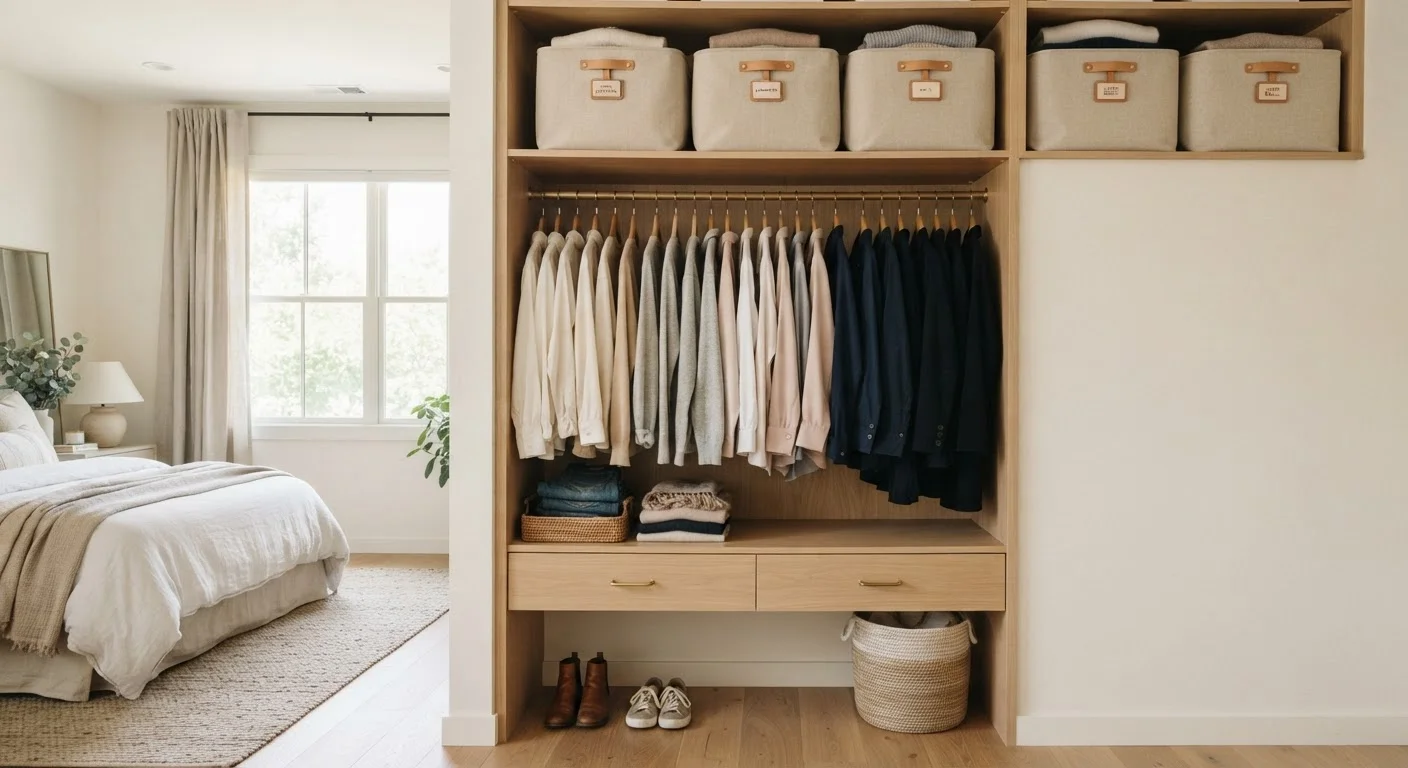
There's also a more fundamental limitation: the rule is a maintenance strategy, not a reset. If a closet is already overflowing, removing one item for every new one preserves the problem at its current scale. In that case, a more deliberate initial declutter is the necessary first step - something a seasonal closet rotation can help structure.
~300,000
Average items in a U.S. home
A figure frequently cited by professional organizers based on surveys of American household possessions, illustrating why maintenance habits matter.
80%
Items rarely or never used
Research on household clutter suggests the large majority of items stored in homes are used infrequently, underscoring the value of intentional acquisition habits.
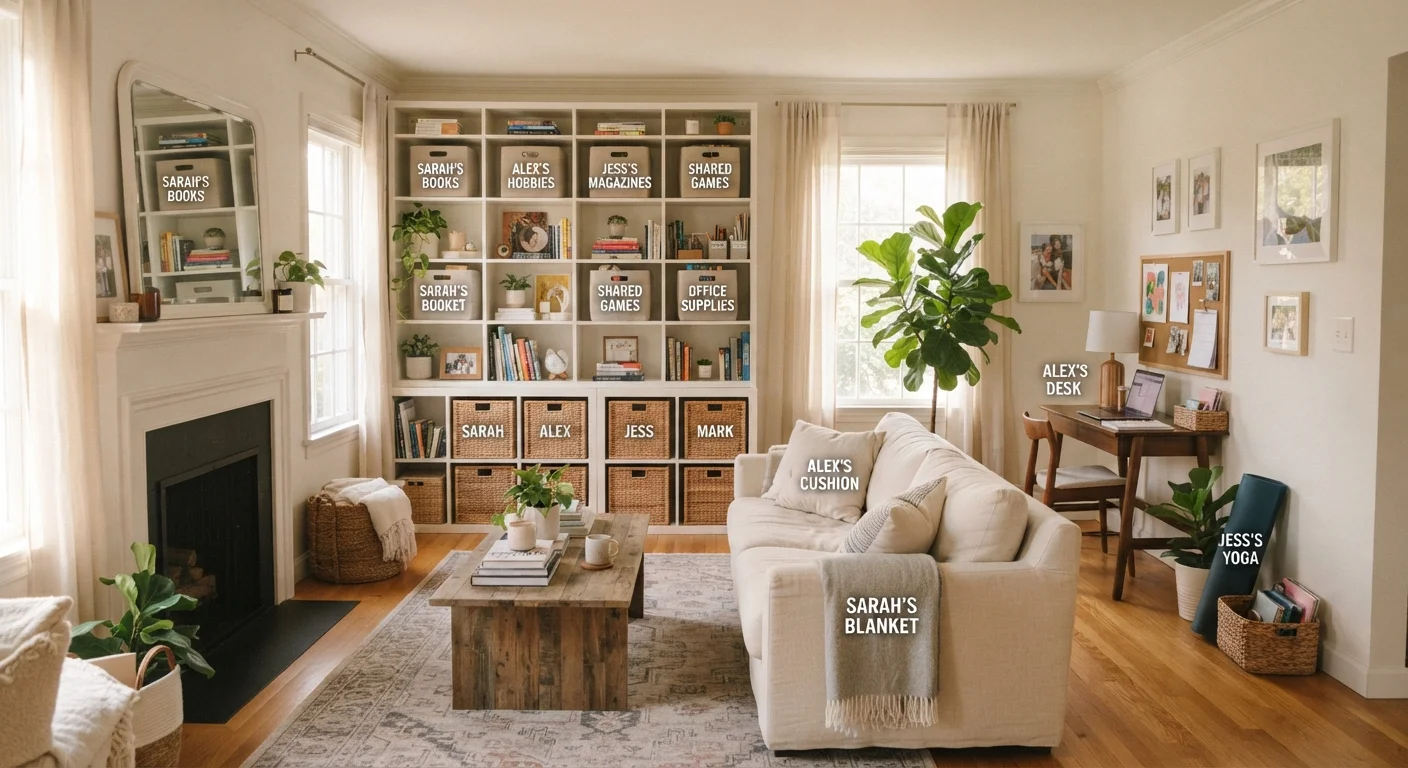
Shared households present another common friction point. The rule only holds if everyone participates. When one person is diligently swapping out and another is bringing items in freely, the math doesn't work. See how other households have approached this in our guide on organizing shared spaces.
Adapting the Rule to Fit Your Household
Treating the one-in-one-out rule as a rigid law tends to make it fragile. A more durable version treats it as a default with deliberate exceptions. Here's how to adapt it:
- Apply it category by category. Start with one high-accumulation area - most households find clothing or books the easiest entry point - before expanding.
- Use one-in-two-out when you're already overstocked. If a category is genuinely cluttered, swapping at a 1:2 ratio reduces volume while maintaining the habit.
- Set a periodic reset date. Pair the rule with a quarterly or seasonal review so categories that drift can be corrected before they become unmanageable.
- Agree on household-level rules, not just personal ones. In homes with multiple people, a shared understanding of which spaces the rule applies to prevents quiet backsliding.
In smaller living spaces especially, maintaining these boundaries is less optional. The constraints that come with limited square footage can make the one-in-one-out rule feel more natural - and its absence more immediately obvious. Our article on organizing small apartments explores why limits can actually build better habits.
If you've tried similar rules before and found they unraveled quickly, it may be worth examining why rather than just recommitting. Some systems that look tidy on paper collapse for structural reasons. Organizing habits that unravel fast covers the most common failure points honestly.
Finally, consider that organizing isn't only about what sits on shelves - it's also about how you use vertical and unused space. A home that makes good use of wall storage naturally has more tolerance for what comes in. Vertical space most homes ignore is worth reading alongside this rule.