Why Accessorizing Feels Tricky
Accessories have a paradoxical quality: the right ones make an outfit feel finished and intentional, while too many create visual noise that dilutes the whole look. The challenge isn't a lack of options - most of us already own plenty - it's knowing how to edit with purpose.
Part of the difficulty is that accessorizing advice tends toward extremes. "More is more" clashes with "keep it minimal," leaving everyday dressers without a practical middle ground. The good news is that a few grounded principles can replace the guesswork entirely. If you're also working on building a cohesive wardrobe, the capsule wardrobe framework offers a useful starting point for thinking about what you actually need.
Core Practices for Balanced Accessorizing
These principles apply across body types, budgets, and personal styles. Think of them as a decision-making filter, not a rulebook.
Choose one focal point per outfit and let everything else support it.
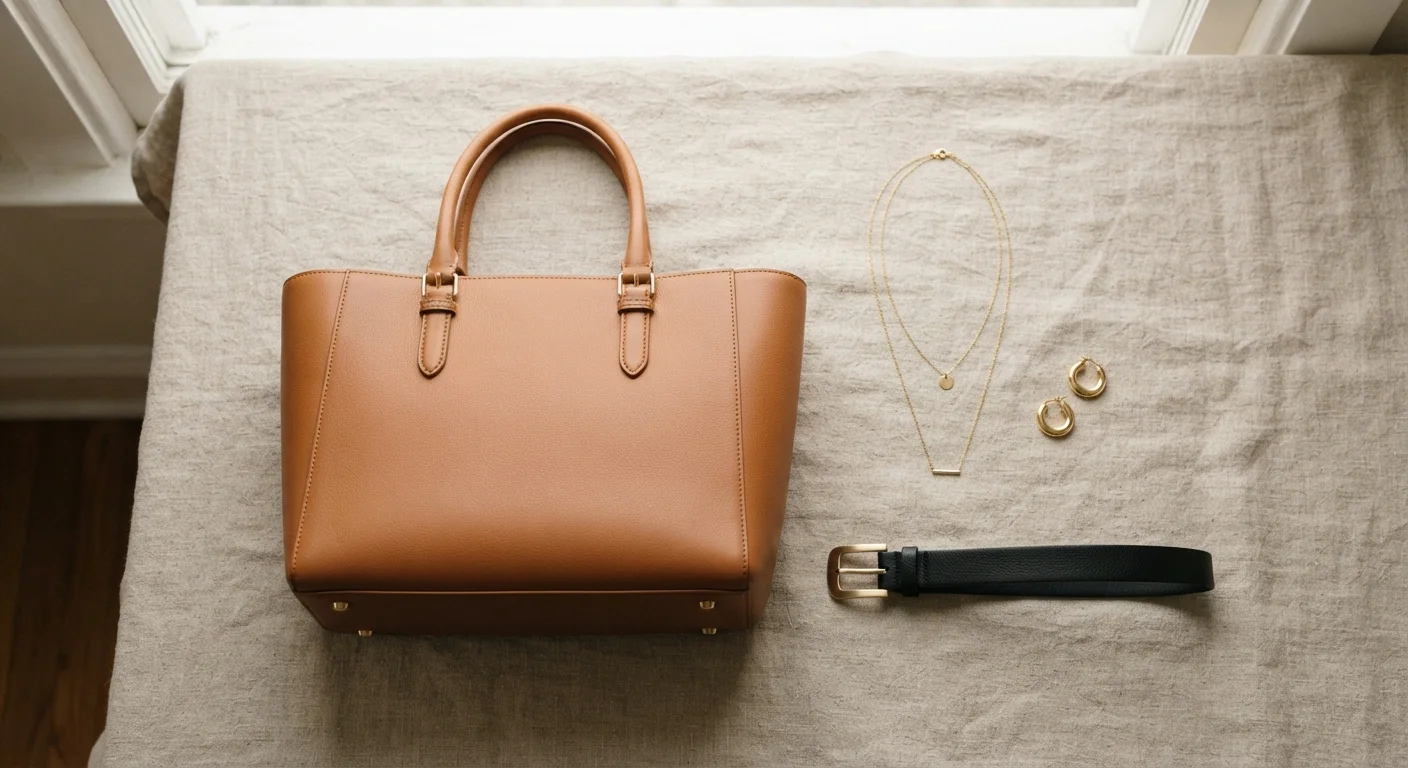
When every accessory competes for attention, none of them land. Designating a single focal point - a statement earring, a bold belt, an interesting bag - gives the eye somewhere to rest and the outfit a clear intention.
Match accessory scale to your outfit's visual weight.
A delicate pendant necklace can disappear against a heavy knit sweater, while a chunky chain may overwhelm a lightweight silk blouse. Proportion keeps the whole look cohesive rather than accidentally mismatched.
Remove one piece before you leave the house.
This is one of the most frequently cited styling habits among fashion professionals, and for good reason: it forces a moment of honest editing rather than just accumulating. It's easier to remove than to judge the total in advance.
Consider texture and material alongside color.
Accessories don't just add color - they add surface. Mixing too many competing textures (metallics, matte leather, woven fabric, and glossy resin all at once) can create visual clutter even when colors coordinate well.
Build a small, intentional accessories collection rather than a large, unfocused one.
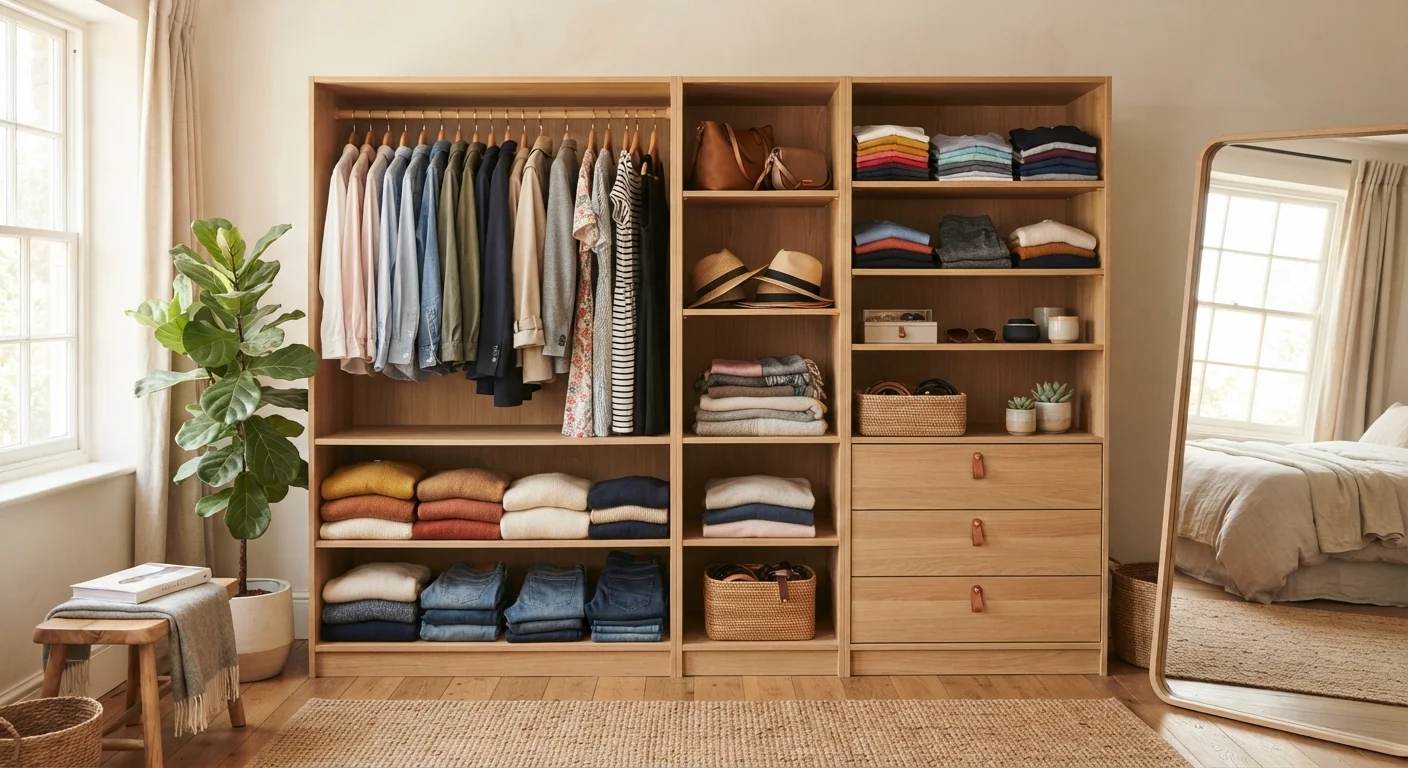
A crowded jewelry dish makes decision-making harder, not easier. Curating a tighter set of pieces you genuinely reach for reduces morning friction and ensures what you own actually gets worn.
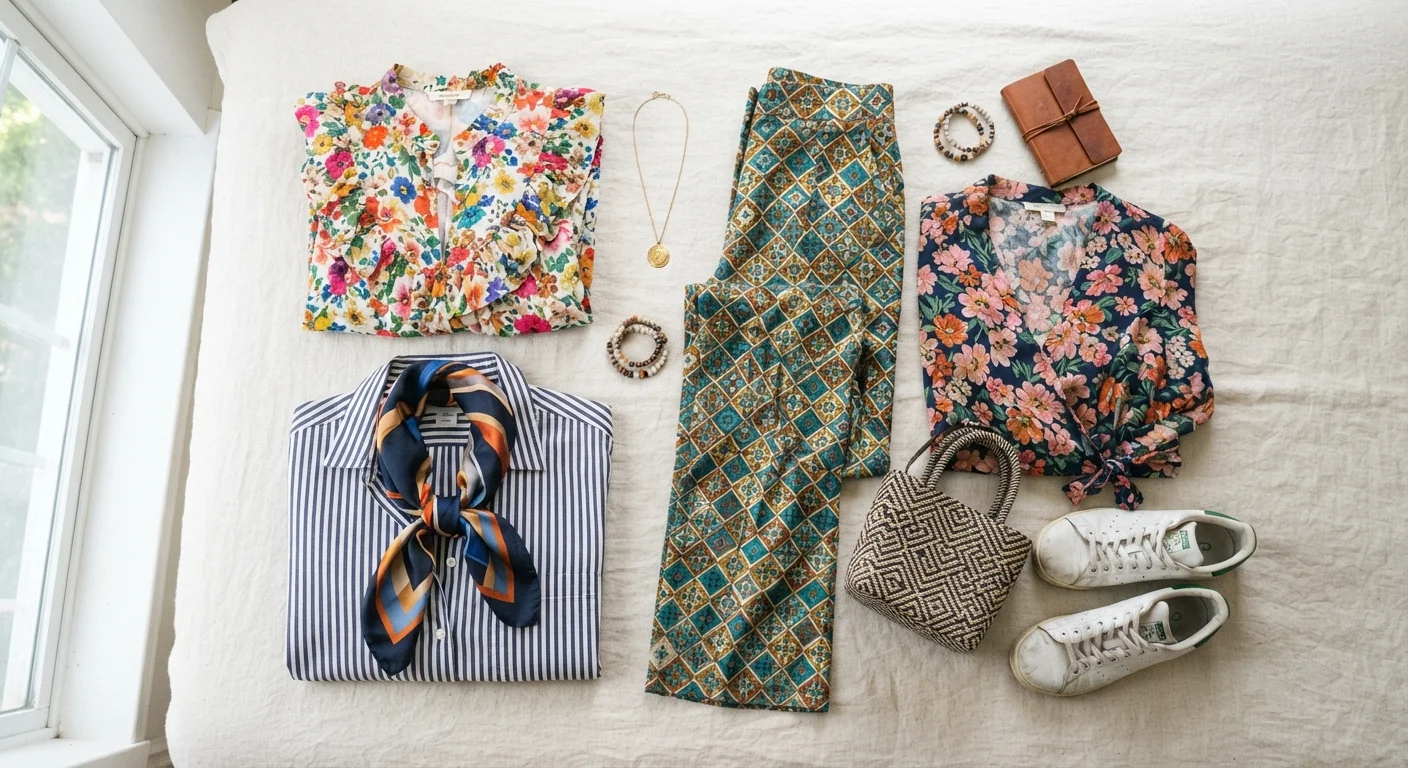
Outfit complexity is another factor worth considering. A patterned or heavily textured outfit - the kind explored in our guide on patterns and prints - generally calls for simpler accessories so neither element overwhelms the other.
Quick Ways to Refine Your Approach Today
You don't need to overhaul your jewelry box or buy anything new to start accessorizing more intentionally. These quick wins work with what you already have.
If you're unsure whether a piece belongs in your rotation at all, shopping your own closet first can help you rediscover forgotten gems - and clarify which accessories actually earn their keep.
Matching Accessories to the Occasion
Context shapes everything. A chunky statement necklace that works beautifully at a weekend brunch can feel out of place in a formal meeting - and vice versa. Understanding the occasion's dress code reduces the guesswork significantly. Our dress codes guide breaks down exactly what each formality level calls for in plain language.
A Note on Personal Style and Rules
These practices are frameworks, not mandates. Some personal styles - maximalism, for instance - intentionally layer many accessories as an expressive choice. If that approach feels authentic to you and the occasion allows it, there's no universal rule against it. The goal of any editing practice is intention, not conformity. For more on navigating personal style versus outside expectations, see our piece on personal style vs. trend chasing.
Accessories also interact with the rest of your outfit's "visual weight." A simple, monochrome look can handle a bold earring or a standout bag. A maximalist outfit - lots of layering, print, or embellishment - benefits from restraint. This tension between statement pieces and basics is something worth thinking through deliberately; the article on statement pieces vs. wardrobe basics covers that balance in depth.
“Style is knowing who you are, what you want to say, and not giving a damn. Accessories are the punctuation of that sentence - useful when precise, distracting when overused.”
— Tim Gunn, Fashion consultant and author
Ultimately, the most effective accessorizing reflects you - your comfort, your context, and what you actually feel good wearing. For more on dressing with confidence rather than conformity, see our piece on why "flattering" is more complicated than fashion suggests.