What Each System Actually Does
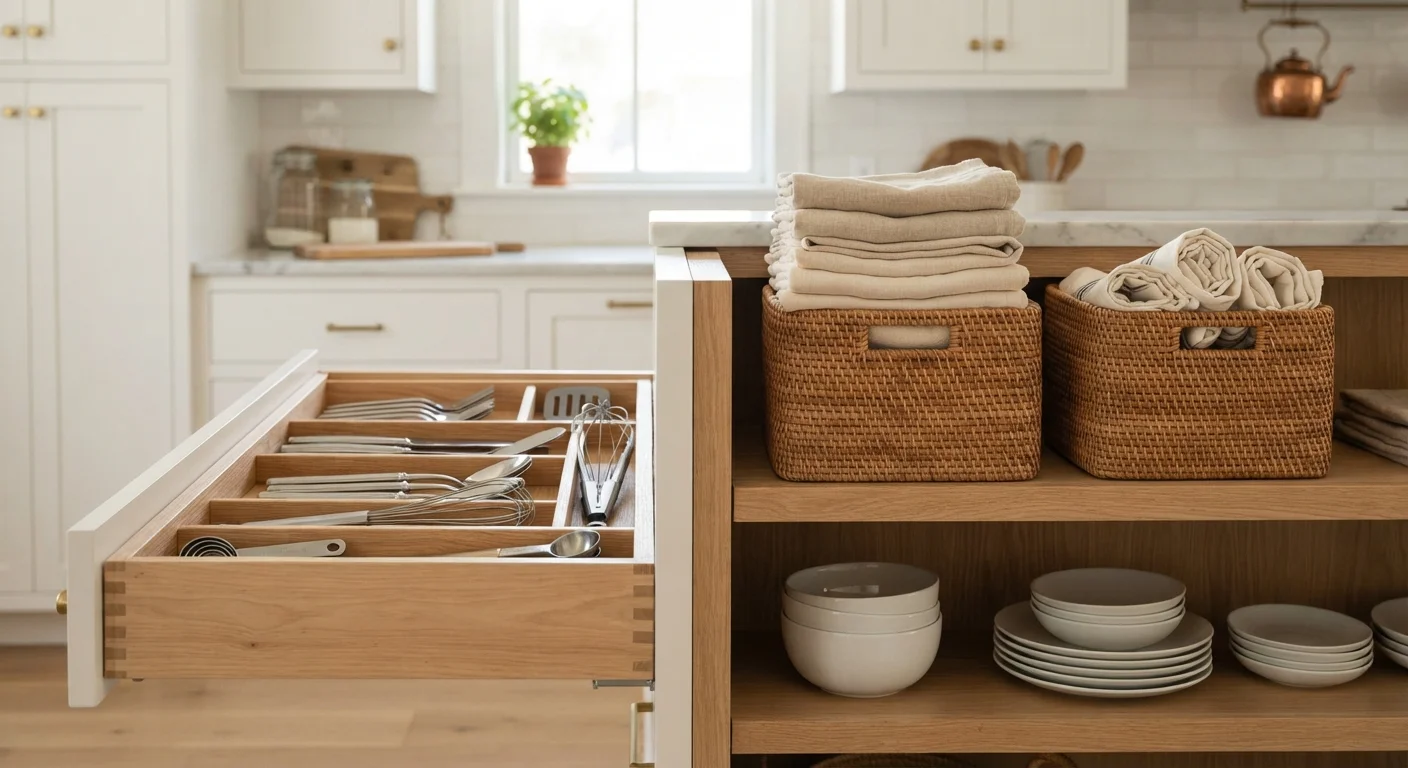
Drawer dividers create fixed or adjustable compartments inside an enclosed space. They work by physically separating items so that each category - cutlery, socks, office supplies - stays in its own lane. Because the drawer closes, contents are hidden from view and protected from dust.
Open bins are containers without lids, typically placed on shelves, in closets, or on counters. They rely on the user dropping items back into the right container rather than into a specific slot. The tradeoff: access is faster, but loose items can migrate if habits aren't consistent.
Understanding that distinction - separation by compartment versus separation by container - is the starting point for deciding which approach fits a given space. For a deeper look at how storage philosophy affects the whole home, see our piece on zone-based vs. category-based organizing.
Where Each One Holds Up - and Where It Struggles
| Drawer Dividers | Open Bins | |
|---|---|---|
| Best location | Enclosed drawers, cabinets | Shelves, closets, counters, floors |
| Ideal item size | Small, flat, or fine items | Bulky, irregular, or grouped items |
| Access speed | Moderate - drawer must open | Fast - fully open and visible |
| Flexibility over time | Lower (adjustable versions help) | High - easy to reconfigure |
| Maintenance required | Low once established | Moderate - habits must be consistent |
| Works for multiple users | Moderately - requires shared habits | Well - intuitive for all ages |
| Dust and debris exposure | Low - contents enclosed | Higher - open to environment |
Drawer dividers tend to perform best in spaces where items are small, flat, or prone to tangling - think junk drawers reformed into functional ones, sock drawers, or bathroom vanity pulls. Once set up correctly, they require very little maintenance because the physical structure enforces the system.
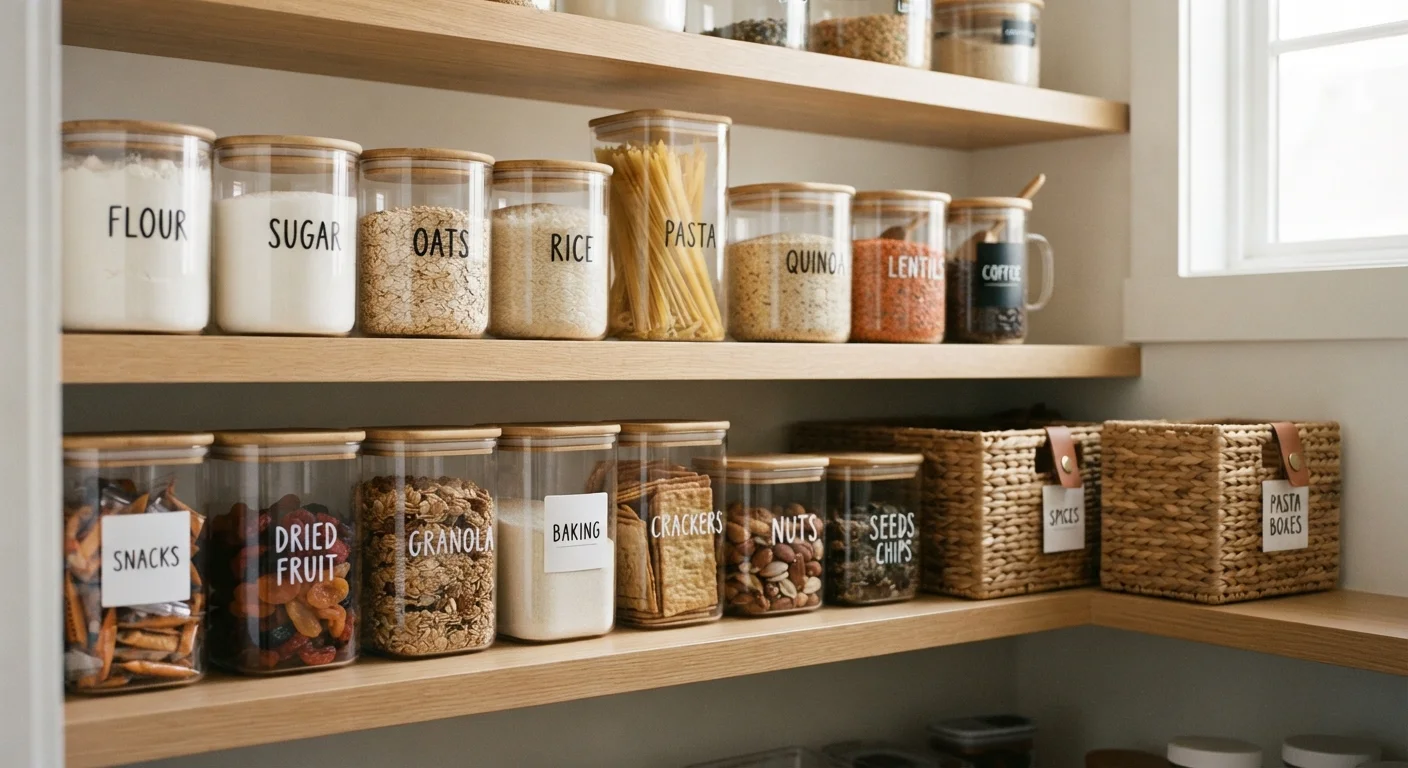
Open bins, by contrast, thrive where items are bulky, awkwardly shaped, or pulled out frequently. A mudroom bin for gloves and hats, a pantry bin for onions and potatoes, or a toy bin in a living room all benefit from the grab-and-go access. The weakness is entropy: without consistent habits, bins become catch-all zones quickly.
Bins Without Boundaries Become Clutter
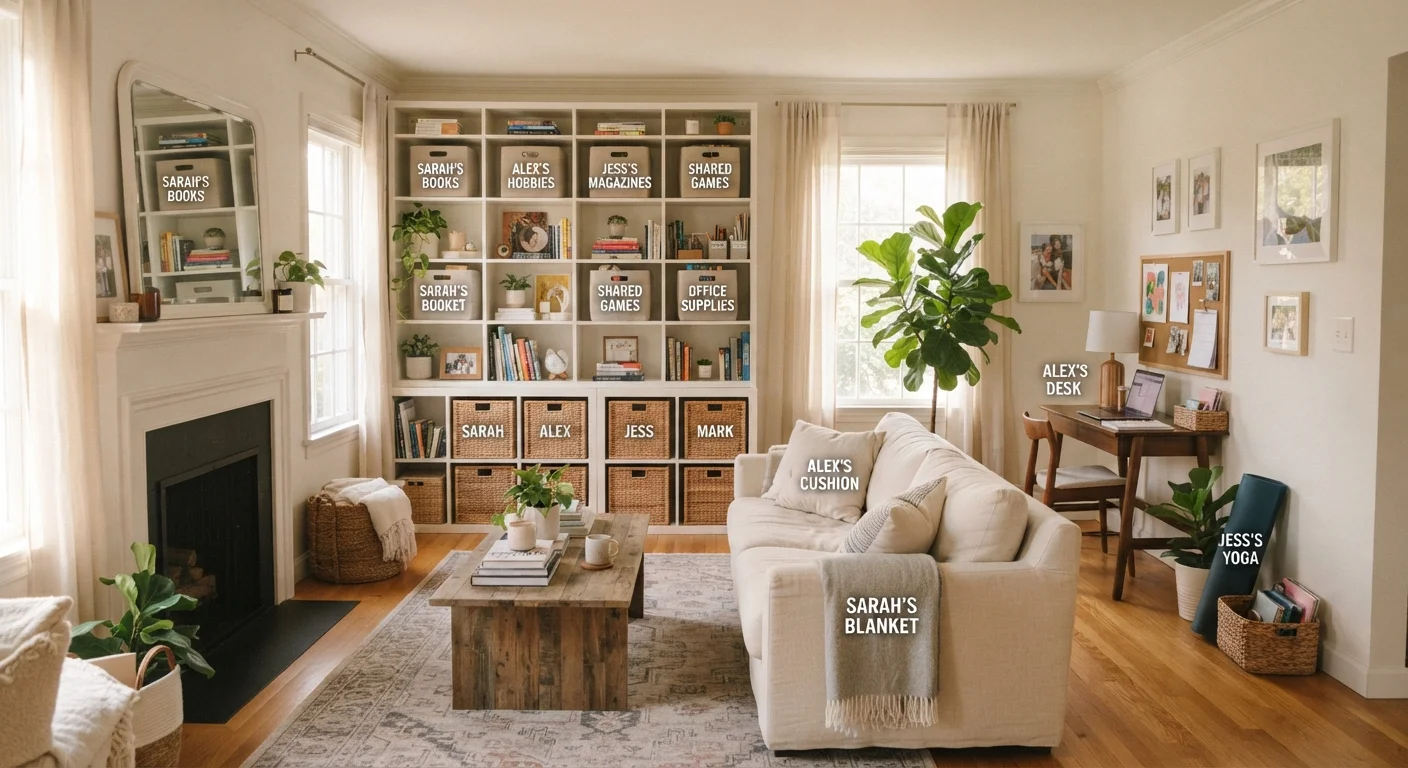
Open bins look tidy at setup but can deteriorate quickly in high-traffic areas if there's no clear rule about what belongs inside. Before committing to bins in a shared space, decide on categories in advance and make sure everyone in the household understands them. A bin with no defined purpose is, functionally, just a box.
If your household includes children or multiple adults with different organizing habits, shared-space strategies can help you build systems that hold up for everyone.
Long-Term Durability: The Honest Picture
Over months and years, both systems are only as durable as the habits around them. That said, some structural differences affect staying power.
Drawer dividers have a built-in enforcement mechanism - items either fit in a slot or they don't. This makes the system self-correcting in low-traffic drawers. However, if your storage needs change (you add a new category, the contents grow), fixed dividers can become a liability. Adjustable versions reduce this problem significantly.
Open bins are more flexible as life changes. You can add a bin, swap one out, or resize the groupings without any reconstruction. The trade-off is that the system depends entirely on behavioral consistency. Without clear labeling or visual cues, the bins tend to blur together over time. Pairing bins with a labeling approach - explored in our guide on labeling systems at home - can extend their useful life considerably.
Mix Both Systems Deliberately
Rather than committing to one approach for the whole home, audit each space individually. Ask what gets accessed most often, by whom, and how often contents change. Drawer dividers work where discipline is built in by the structure; open bins work where flexibility and speed matter more. Using both - intentionally - usually outperforms either alone.
For a broader look at why well-intentioned systems often collapse, see organizing habits that unravel fast.
How to Choose - and When to Use Both
The most effective home storage setups rarely rely on just one approach. A useful rule of thumb: use dividers where precision matters and items are small; use bins where speed and flexibility matter and items are large or frequently rotated.
In practice, this often looks like drawer dividers in the kitchen, home office, and bathroom - and open bins in the pantry, mudroom, laundry area, and garage. If you're working on a garage setup specifically, our garage organization guide walks through how to match storage tools to the types of items typically stored there.
Finally, don't overlook the vertical dimension. Both bins and dividers can be incorporated into wall-mounted shelving or pegboard systems - an underused opportunity in most homes. Our article on vertical space almost every home ignores covers how to put those surfaces to work alongside your containment choices.